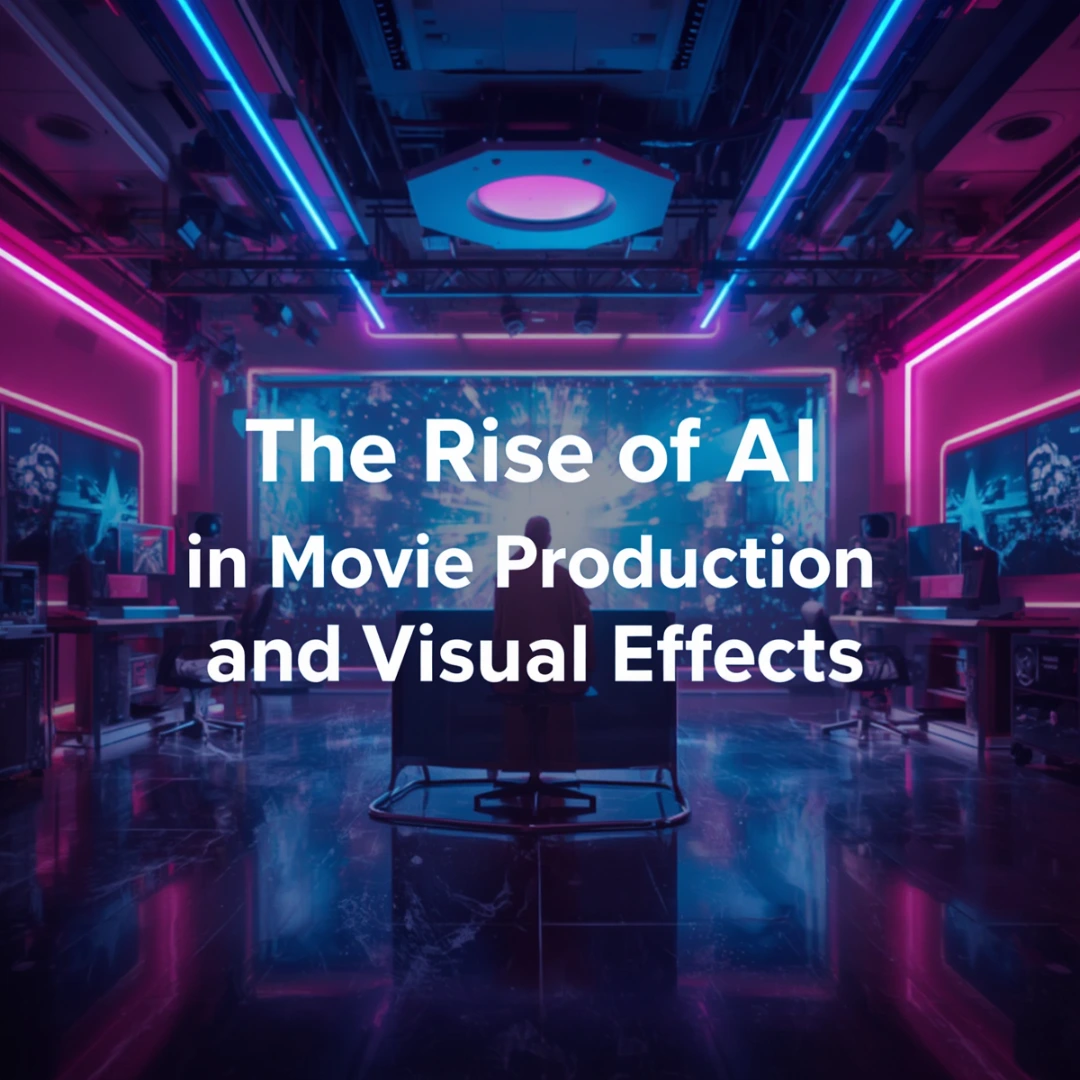
In order to tell better tales and produce memorable cinematic experiences, the film industry has always welcomed new technologies. Every technical advancement has changed filmmaking, from the addition of sound and color to digital cameras and computer-generated imagery (CGI). Artificial Intelligence (AI), another ground-breaking invention, is currently transforming the entertainment sector.
AI is no longer exclusive to tech firms or research labs. It has grown to be a crucial tool in filmmaking, assisting producers in increasing productivity, cutting expenses, and producing breathtaking visual effects that were previously unattainable. AI is developing into a potent helper that improves every step of the production process, even though human creativity is still at the core of filmmaking.
As AI technology continues to evolve, it is changing how movies are planned, filmed, edited, and presented to audiences around the world.
AI Is Transforming Pre-Production
Every successful film starts well in advance of the commencement of filming. Script analysis, budgeting, scheduling, casting, location planning, and storyboarding are all part of the pre-production phase. In the past, these jobs needed a lot of manual labor and precise departmental coordination.
By evaluating scripts, determining production needs, and assisting filmmakers with budget and schedule estimation, artificial intelligence is improving pre-production efficiency. AI-powered software can swiftly identify changes in the scene, calculate the amount of visual effects needed, and plan production schedules according to the resources at hand.
Production teams can devote more time to creative choices that enhance the film's overall quality and less time to tedious planning duties thanks to this automation.
Smarter Visual Effects Creation
These days, visual effects are a crucial component of filmmaking. VFX artists use cutting-edge technology to bring their creative ideas to life, whether they are working on large-scale action scenes, mythical creatures, or future cities.
AI is significantly improving visual effects by automating many complex processes that previously required countless hours of manual work.
Some of the major advantages AI brings to visual effects include:
✔ Faster image processing and rendering
✔ More realistic CGI characters
✔ Improved background replacement
✔ Enhanced motion tracking
✔ Better facial animation and expressions
These capabilities allow artists to create highly detailed visual effects while reducing production time and maintaining exceptional quality.
AI Is Making Editing Faster
Film editing is one of the most time-consuming stages of movie production. Editors must review hundreds of hours of footage before assembling the final version of a film.
Video clips can be automatically arranged, key scenes can be identified, faces can be identified, audio can be synchronized, and optimal camera angles can be suggested by AI-powered editing software. This significantly accelerates the editing process without taking the place of the editor's artistic judgment.
AI acts as an intelligent helper that manages tedious technical tasks rather than making creative decisions on its own, freeing up editors to focus on pacing and plot.
The result is a more efficient workflow that saves valuable production time.
Enhancing CGI and Digital Characters
Over the past 20 years, computer-generated imagery has grown more lifelike. These developments are being accelerated by artificial intelligence, which enhances the speech, movement, and emotional expression of virtual characters.
In order to produce more realistic animations, machine learning algorithms can examine human body language and face expressions. AI also contributes to the creation of realistic textures, lighting effects, and environmental features that give computer-generated scenes a nearly lifelike appearance.
These improvements allow filmmakers to create immersive fantasy worlds while maintaining a high level of visual realism.
As AI technology advances, digital characters will become even more lifelike and emotionally expressive.
AI Improves Sound Design
Sound is a critical component of cinematic storytelling. Background music, dialogue, sound effects, and environmental audio all contribute to the emotional impact of a film.
By automatically eliminating undesired background noise, enhancing speech quality, syncing audio and video, and producing lifelike sound effects, artificial intelligence helps sound engineers.
AI-powered tools can also help composers experiment with musical arrangements and identify audio elements that best match the emotional tone of specific scenes.
Although human musicians and sound designers remain essential, AI greatly improves production efficiency during post-production.
Supporting Creative Decision-Making
Contrary to common misconceptions, AI is not replacing filmmakers. Instead, it is becoming a valuable creative assistant.
AI can be used by directors and producers to assess various editing techniques, determine storyline trends, and study audience preferences. These insights support artistic vision while assisting creative teams in making well-informed judgments.
AI can also assist in generating concept art, exploring multiple visual styles, and rapidly creating storyboards that help visualize scenes before filming begins.
By reducing repetitive tasks, AI gives creative professionals more time to focus on innovation and storytelling.
Virtual Production Is Changing Filmmaking
Virtual production is one of the most fascinating advances in contemporary cinema. Filmmakers can build lifelike virtual worlds without visiting real-world locales by utilizing AI-powered technology, LED walls, and real-time rendering.
Actors play against digital backdrops that react to lighting and camera movements in real time. By assuring realistic lighting, perspective, and environmental interactions, artificial intelligence aids in the optimization of these virtual settings.
Virtual production reduces production costs while providing filmmakers with greater creative flexibility.
This technology became increasingly popular for large-scale productions and continues to reshape how movies are made.
AI Helps Reduce Production Costs
High-caliber film production frequently necessitates a substantial financial outlay. By automating repetitive production jobs, increasing planning accuracy, and reducing errors throughout the filmmaking process, AI helps cut expenses.
By streamlining editing, visual effects, scheduling, and post-production workflows, AI allows studios to complete projects more efficiently.
AI-powered solutions that make cutting-edge filmmaking processes more accessible without requiring enormous costs also benefit indie filmmakers and smaller production businesses.
As AI software becomes more affordable, high-quality movie production will become available to a wider range of creators.
Challenges and Ethical Considerations
AI has many benefits, but there are drawbacks for the film industry as well. Filmmakers, performers, and viewers continue to have crucial conversations about issues like copyright, digital likeness rights, deepfake technology, and employment displacement.
As AI is incorporated more deeply into filmmaking, upholding ethical norms and transparency will be crucial. To guarantee that technology is utilized sensibly and politely, human oversight is still required.
Rather than replacing creative professionals, AI should be viewed as a tool that enhances artistic expression while supporting the filmmaking process.
The Future of AI in Filmmaking
It is anticipated that artificial intelligence will become increasingly more significant in the future of film. Script development, customized visual effects, sophisticated virtual actors, automatic localization, and interactive storytelling could all be aided by future AI systems.
AI may ultimately be used by filmmakers to produce completely immersive movie settings where viewers encounter narratives in completely novel ways. Filmmaking will continue to become quicker, more effective, and more imaginative thanks to real-time rendering, intelligent editing, and AI-powered production tools.
As technology evolves, collaboration between human creativity and artificial intelligence will define the next generation of movie production.
Conclusion
One of the biggest technological developments in the history of filmmaking is the emergence of artificial intelligence in visual effects and film production. From planning and editing to CGI, sound design, and virtual production, AI is revolutionizing every phase of the production process. Filmmakers are able to produce more realistic and visually stunning cinematic experiences while working more effectively thanks to these developments.
Even though AI is still developing, effective storytelling still requires imagination and creativity. Rather, it is giving filmmakers strong tools that enhance production processes and broaden creative options. Audiences should anticipate films that are more technologically sophisticated, visually spectacular, and immersive than ever before as the film industry embraces this new era of innovation.