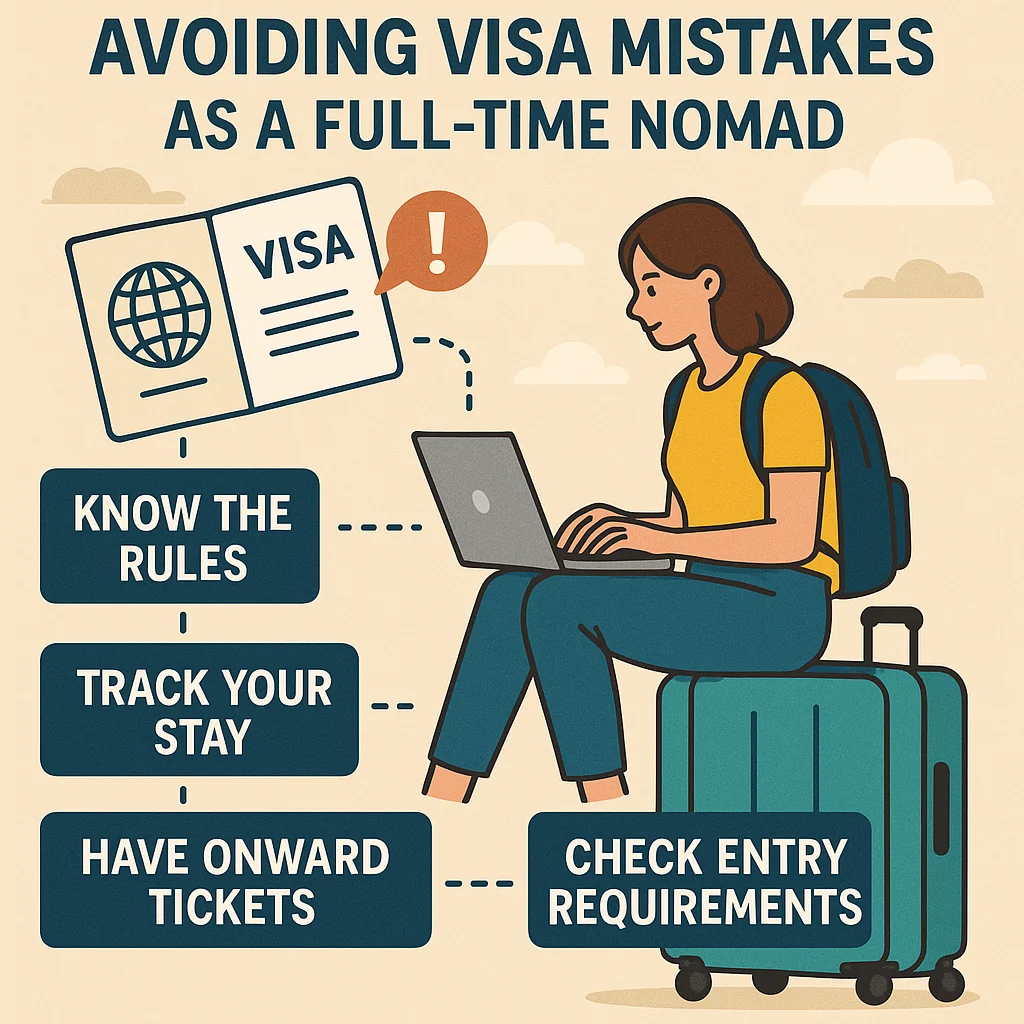
Introduction
The freedom to work from anywhere, travel the world, and live your life as you see fit is the essence of the digital nomad lifestyle. However, that freedom also entails a level of legal complexity, particularly with regard to visas. Many would-be nomads jump right in without fully comprehending the regulations governing international travel, which can result in expensive and distressing visa errors.
Getting your visa game in order is essential if you intend to live as a nomad full-time. To help you travel with confidence and stay within the law, this guide will explain the most frequent visa errors made by digital nomads and how to avoid them.
Why Visas Matter More Than You Think
A visa is your official authorization to remain in a country; it's more than just a stamp on your passport. Fines, deportation, and even a ban from entering that country (or others in the same region) can follow overstaying or breaking the terms of a visa. Even worse, a single error could compromise your long-term travel plans.
You might not always fall neatly into one of the more conventional visa categories, such as business or tourist, if you're a digital nomad. Understanding your options and responsibilities is therefore crucial.
Common Visa Mistakes Digital Nomads Make
1. Overstaying the Visa Duration
This is the most frequent error by far. Numerous nations grant 30-, 60-, or 90-day tourist visas. Unintentional overstays can occur from losing track of time or misinterpreting entry requirements.
Tip: To keep track of when your visa expires, use an app or calendar reminder. Alerts can be sent in advance by services like Google Calendar or TripIt.
2. Assuming Visa-Free = Work-Permit-Free
You are not legally permitted to work in a country just because you are able to enter it without a visa (for example, EU nationals traveling to Japan). In certain nations, working remotely for a non-local company is still regarded as "working."
Tip: Find out if you can work remotely while on a tourist visa at your destination. Seek out nations that provide particular visas for digital nomads that address this.
3. Not Understanding Visa Runs Are Dying Out
Nomads used to spend a day abroad and then return to renew their visa. This practice has been severely restricted in many countries.
Tip: Instead of depending on frequent border crossings, apply for the appropriate visa if you plan to stay for an extended period of time.
4. Ignoring Schengen Rules
There are certain restrictions when visiting the Schengen Area in Europe: 90 days during any given 180-day period in each of the member nations.
Tip: To prevent overstays, keep track of your entire stay in Schengen nations, not just specific ones.
5. Applying for the Wrong Visa Type
It can be problematic to apply for a tourist visa when your true intention is to work remotely. Giving evasive responses when questioned at immigration may raise suspicions.
Tip: Be truthful and detailed. If questioned, state that you are a freelancer or remote worker who does not accept local jobs. When possible, use digital nomad visas.
6. Misunderstanding Entry vs. Exit Rules
Visa days are counted from the date of approval in some countries and from the date of entry in others. Some offer a grace period, while others demand departure by midnight on the expiration date.
Tip: If you plan to stay for a long time, carefully review the embassy's website or speak with immigration attorneys.
7. Not Having Proof of Onward Travel
Many nations require documentation of your departure, such as a return ticket or other travel documents. At the airport, you might not be allowed to board if you don't have it.
Tip: To prove to immigration that you aren't overstaying, use services like OnwardTicket or reserve a refundable flight.
8. Overlooking Health and Insurance Requirements
In order to grant a visa, a number of nomad-friendly nations now demand travel or health insurance. Ignoring this could result in the denial of your visa.
Tip: Obtain coverage from companies that satisfy the visa requirements for digital nomads, such as SafetyWing, Genki, or World Nomads.
Countries Offering Digital Nomad Visas
Digital nomad visas are becoming available in an increasing number of countries, which is revolutionary for frequent visitors. Among the well-liked choices are:
-
Portugal (D7 visa)
-
Estonia (Digital Nomad Visa)
-
Barbados (12-Month Welcome Stamp)
-
Croatia (Digital Nomad Residence)
-
Mexico (Temporary Resident Visa)
-
Indonesia (Second Home Visa)
Each has its own eligibility rules, income requirements, and application processes.
How to Stay Compliant
1. Do Your Research — Always
Consult the official immigration website or give the embassy a call before traveling to any country. Blogs and forums are useful, but they aren't always current.
2. Use Digital Tools
Apps that track visa requirements, durations, and border regulations include Traveltime, Nomad List, and Sherpa. Some even send out reminders when it's time to renew or leave.
3. Get Help When Needed
Consult an immigration lawyer or visa consultant if you're not sure. Avoiding long-term headaches is worth the initial expense.
4. Be Organized
Save copies of your proof of income, proof of housing, proof of insurance, entry and exit stamps, and visa documents. They might be requested by immigration officials, particularly when submitting an extension application.
Final Thoughts
Although visa regulations can be convoluted and annoying, if you remain proactive and knowledgeable, it's easy to avoid mistakes. Your nomad life simply cannot function without visas, so it is important to treat them with the same level of importance as your work tools.
Keep in mind that each nation has its own laws. In Portugal, what works in Thailand won't work. You can live a digital nomad lifestyle without worrying about legal issues if you do your research and follow the law.
If you're serious about living and working around the world, being smart about visas isn’t optional — it’s essential.
Let your passport be a tool of freedom, not a trap for costly mistakes.