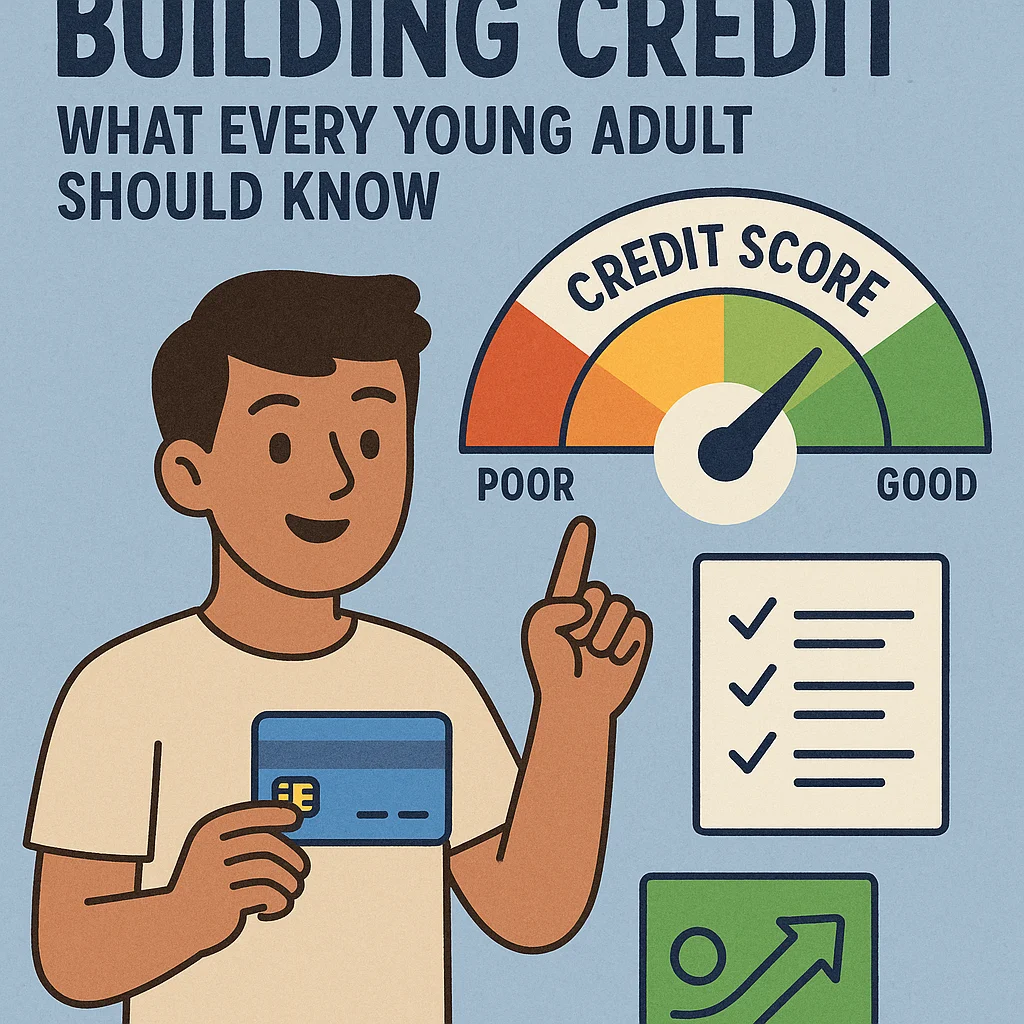
Your credit score is comparable to your financial passport in the modern world. Your credit is important whether you're applying for a loan, renting an apartment, purchasing a vehicle, or even setting up utilities. Unfortunately, young adults must learn about credit on their own because most schools do not teach it to us.
Building credit early and responsibly can lead to many opportunities in the future, especially if you're just starting out in your financial journey. We'll go over what credit is, why it matters, how to build it wisely, and typical blunders to avoid in this extensive guide.
What Is Credit?
Your ability to borrow money and pay it back later is referred to as credit. Your credit score is a three-digit figure that represents your overall creditworthiness; it usually ranges from 300 to 850. Your credit report is a record of your borrowing history.
Major Credit Bureaus:
There are three primary credit reporting agencies:
-
Equifax
-
Experian
-
TransUnion
Each keeps tabs on your financial activity and reports it to lenders, landlords, insurance companies, and other parties who must determine how risky you are.
Why Does Credit Matter?
1. Loan and Credit Card Approvals
Your credit score affects both your interest rate and your ability to obtain loans or credit cards. Lower interest corresponds to a higher score.
2. Rental Applications
In order to determine how consistently you will pay rent, landlords frequently look up your credit. Housing costs may increase if your credit score is low.
3. Employment Opportunities
Credit reviews are part of background checks for some employers, particularly in the government or financial sector.
4. Lower Insurance Premiums
Your credit score may be used by renters' and auto insurance companies to determine your rates.
5. Starting a Business
Do you require a business loan? The approval process is frequently impacted by your personal credit, particularly if you're a new business owner.
The Five Factors That Make Up Your Credit Score
Understanding the components of your credit score can help you make smarter decisions:
1. Payment History (35%)
This is the most crucial element. It displays if you have made on-time payments on previous credit accounts.
Tip: Always pay at least the minimum balance by the due date.
2. Credit Utilization (30%)
This represents the portion of your credit limit that you are currently using. It's best to keep your usage below 30%.
Example: If your limit is $1,000, try not to carry a balance over $300.
3. Length of Credit History (15%)
The more time you have had your credit accounts open, the better. That's why it's important to start early.
4. Credit Mix (10%)
Lenders like to see that you can handle different types of credit: credit cards, student loans, auto loans, etc.
5. New Credit (10%)
It may be viewed as risky to open multiple accounts quickly. Every application might result in a hard inquiry, which could cause your score to drop a little.
How to Start Building Credit as a Young Adult
1. Open a Student Credit Card or Starter Card
You might be eligible for a student or secured credit card if you are older than eighteen and have some income. Beginners with little credit history are the target market for these cards.
Important: Use it for small purchases and pay off the balance in full every month.
2. Become an Authorized User
Request that a responsible adult, such as a parent, add you to their credit card as an authorized user. A portion of their credit history will be "inherited" by you, which raises your own score.
Note: You don’t even need to use the card—they don’t have to give you access.
3. Apply for a Secured Credit Card
A refundable security deposit, typically equal to your credit limit, is required for a secured card. If you're trying to rebuild or are just starting out, it's a great way to build credit.
Use it responsibly, and you can eventually upgrade to an unsecured card.
4. Use Credit-Building Tools
Take into account credit builder loans or services such as Experian Boost, which notify credit bureaus (typically excluded) of bills like rent and utilities.
5. Pay Bills on Time—Every Time
Avoid missing payments by setting up auto-pay or reminders. Your score can be negatively impacted for years by even one late payment.
6. Keep Credit Utilization Low
Even if you intend to pay it off, avoid using your card to its maximum limit. Remaining below 30% of your credit limit demonstrates responsible credit management.
7. Check Your Credit Reports Regularly
You’re entitled to one free credit report per year from each bureau at AnnualCreditReport.com. Check for errors or signs of identity theft.
Common Mistakes Young Adults Make (and How to Avoid Them)
❌ Spending More Than You Can Afford
Although credit cards may seem like "free money," they have high interest rates if you don't make your full payment.
Fix: Treat your credit card like a debit card. Only spend what you can pay off immediately.
❌ Missing Payments
Your credit score can be severely damaged by a single late payment, which can remain on your record for up to seven years.
Fix: Set calendar reminders or use auto-pay to never miss due dates.
❌ Closing Old Credit Accounts
Your credit score may drop and your credit history may be shortened if you close your oldest account.
Fix: Keep old accounts open unless they have high fees.
❌ Applying for Too Many Cards at Once
Your score may be marginally impacted by each credit inquiry. Several inquiries in a short period of time raise a red flag for lenders.
Fix: Apply for new credit only when needed.
❌ Ignoring Your Credit
Not having a credit card does not imply that you are a frugal person; on the contrary, it indicates that you have no credit history, which can be equally detrimental when you need a loan.
Fix: Start with a small-limit card, secured card, or become an authorized user to start building credit safely.
What to Do If You Have Bad Credit
Bad credit isn’t a life sentence. You can repair it with consistent habits:
-
Pay all bills on time.
-
Pay down outstanding balances.
-
Limit new applications.
-
Dispute any inaccuracies on your credit report.
-
Consider a credit builder loan or secured card.
You can notice a noticeable improvement in one to two years, and you can see improvement in six to twelve months with effort.
The Long-Term Benefits of Good Credit
When you build credit early and manage it wisely, you gain access to:
✅ Lower interest rates
✅ Higher loan and credit limits
✅ Easier rental approvals
✅ Better job opportunities
✅ Access to premium credit cards and rewards
✅ More financial freedom and options
It’s a powerful financial asset that takes time to develop but is well worth the effort.
Final Thoughts: Start Small, Think Big
At first, building credit may seem overwhelming or confusing, but it all comes down to developing tiny, regular habits. Keep your balance low, pay your bills on time, use your card frequently, and frequently check the health of your credit.
Your prudent decisions today will pay off in the form of better loan terms, reduced interest rates, and peace of mind in a few years.
Remember: Credit is a tool—not a trap. Learn how to use it wisely, and it can become one of your greatest financial allies.