Introduction: The Fascination with 120 Years
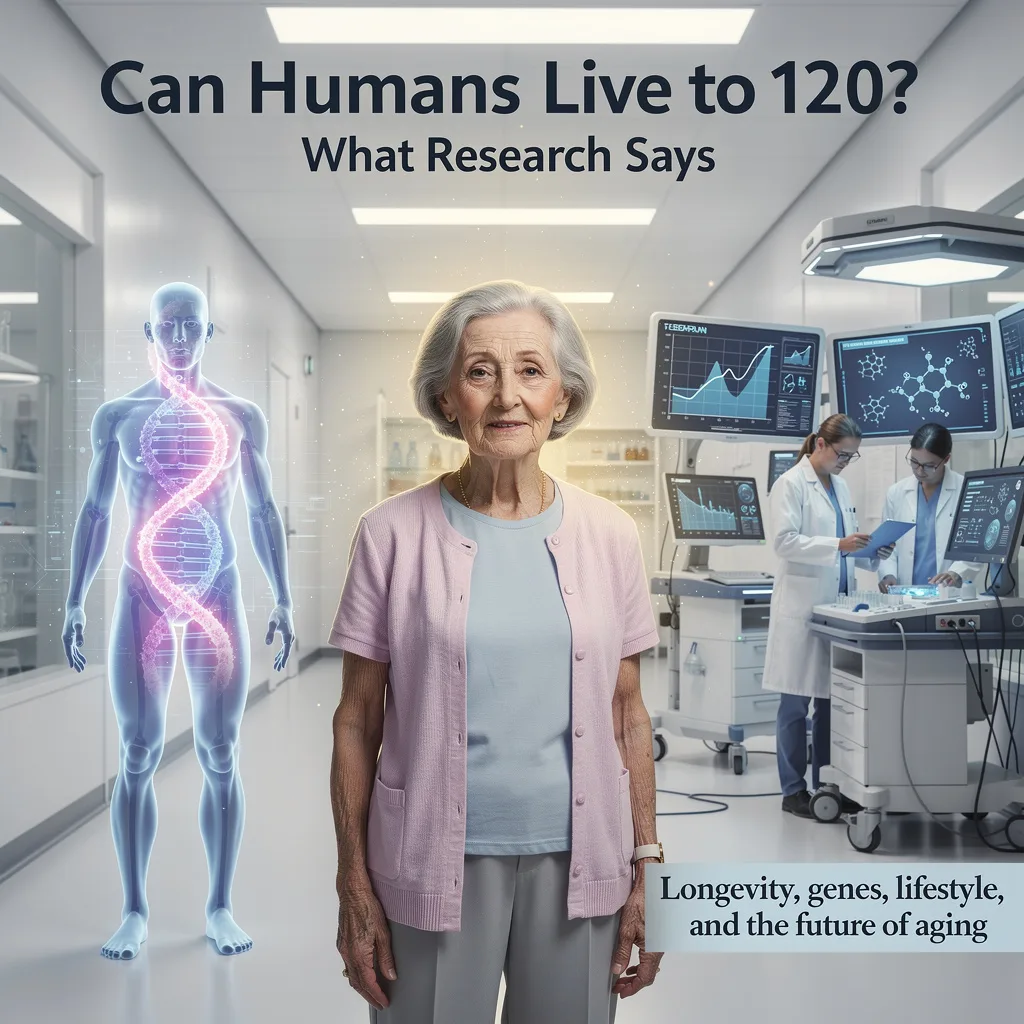
Humans have always been captivated by longevity. From ancient myths of long-lived sages to modern breakthroughs in biomedical science, the question persists: Can humans live to 120 years and beyond?
This question now lies at the nexus of lifestyle science, biology, genetics, and medicine. Some people have lived longer than 115 years, which has led scientists, medical professionals, and proponents of longevity to question whether humans may live to be 120 or even older.
We need to dig beyond anecdotes and into well-established research in order to respond to this: What can be learned about human limitations from biology and longevity studies? And what is the actual impact of genetics, medication, and lifestyle?
Understanding Lifespan vs. Life Expectancy
First, it’s important to separate two related concepts:
-
Life expectancy – the average number of years a group of people is expected to live, based on health, environment, and social conditions.
-
Maximum lifespan – the longest period any human has lived.
Because of improved nutrition, sanitation, and medication, life expectancy has increased significantly worldwide, while maximum longevity has changed far less. Although several nations currently have average life spans of above 80, the maximum human lifetime is still much less common and less variable.
The Current Longevity Records
Exceptional lifespan requires meticulous record-keeping. Jeanne Calment, a French woman who lived to 122 years and 164 days, has the longest confirmed human longevity. In lifespan study, her case continues to be the gold standard.
A number of people have survived past the age of 115, while a small number are close to or slightly over the age of 118. However, only few have reached the elusive 120 mark, and Calment's record has not been surpassed by any scientifically confirmed case.
Although scientists acknowledge that these outliers show what is biologically feasible, they do not establish that 120 is typical or easily attainable.
What Biology and Aging Research Reveal
Cellular Senescence: The Fundamental Limit
Cellular senescence, a process in which cells lose their capacity to proliferate and function, is at the core of aging. Senescent cells build up over time and cause tissue deterioration.
Telomeres – protective caps on chromosomes — shorten with each cell division. Cells cease dividing when they are dangerously short, which starts the aging process.
Humans have low telomerase activity, which causes telomeres to shrink over time, but certain creatures have methods to maintain telomere length. This adds to the biological limit on the amount of time tissues can operate at their best.
Damage Accumulation and Metabolism
The body produces oxidative free radicals and other metabolic byproducts in addition to continuously producing energy. These substances have the ability to harm biological structures, proteins, and DNA. This damage builds up over decades.
The body possesses mending systems, but as we age, their effectiveness decreases. The buildup of molecular damage may contribute to functional impairment well before someone reaches 120.
Organ Reserve and Decline
Vital systems such as the heart, lungs, kidneys, and brain have functional reserve – the potential to maintain performance despite stress.
As humans age, this reserve shrinks. For instance:
-
Heart muscle elasticity decreases.
-
Kidney filtration efficiency declines.
-
Neuronal connections in the brain become less plastic.
This progressive decline is linked to general aging, disease vulnerability, and eventual failure of systems.
Genes and Longevity: Nature’s Role
A person's potential lifespan is largely influenced by their genetic makeup. Research on centenarians and their families reveals that those who live extraordinarily long lives frequently have similar genetic characteristics.
Scientists have identified genes involved in:
-
DNA repair and protection
-
Metabolic efficiency
-
Immune system regulation
-
Reduced inflammation
Genetics, however, is not the whole story. It may set a theoretical range, but lifestyle, environment, and chance still play enormous factors in whether someone approaches the maximum of that range.
Real-World Factors That Influence Longevity
Lifestyle and Environment
While you may not be able to change your genetics, you can influence other longevity factors:
-
Healthy diet — nutrient-dense foods, antioxidants, and balanced macronutrients support cellular health.
-
Regular exercise — improves cardiovascular health, muscle mass, and metabolism.
-
Adequate sleep — influences hormone regulation, memory, and cellular repair.
-
Stress management — chronic stress accelerates wear-and-tear on multiple systems.
-
Social connection — isolation has been linked to shorter lifespans in multiple studies.
These lifestyle factors don’t guarantee a 120-year lifespan, but they improve the odds of healthy aging.
Emerging Science: Can Technology Push Limits Further?
Researchers are actively exploring ways to extend healthy lifespan — possibly beyond what’s historically been possible.
Here are key areas of study:
Senolytics: Targeting Senescent Cells
Senolytic medications are aimed to eliminate senescent cells from the body. Early animal trials indicate promise in preventing age-related decline and prolonging health span. Human trials are continuing.
Genetic and Cellular Therapies
Cellular aging may eventually be slowed down or reversed by methods like gene editing and stem cell treatment that replace or repair damaged DNA and cells.
Caloric Restriction and Metabolic Modulators
Studies show caloric restriction can extend lifespan in animals. Certain compounds that mimic this effect — such as resveratrol or metformin — are being investigated for human longevity impacts.
Artificial Intelligence and Personalized Medicine
AI is making it possible to better understand aging pathways and customize interventions based on each person's biology. Even if the maximum lifespan is limited, this customized method may maximize health span.
The Debate: Is 120 the Absolute Limit?
There are two main schools of thought:
1. There Is a Hard Biological Limit
This view holds that human physiology has built-in constraints:
-
Cellular repair systems decline inevitably.
-
Functional reserve diminishes past a certain age.
-
Genetic programs limit tissue regeneration.
From this angle, 120 might be a significant upper limit. Few individuals actually cross it, even though we might observe more people approaching it.
2. Limits Can Be Extended with Science
This viewpoint's proponents contend that as we learn more about the biology of aging, we will be able to take action to potentially prolong life past 120.
Whether through gene therapy, cellular medicine, or advanced pharmacology, this view sees aging as a challenge to be addressed, not an immovable ceiling.
Both perspectives have merit. Current evidence supports a natural limit near the 115–125 range, but science is rapidly evolving.
Health vs. Longevity: The Most Important Distinction
It’s crucial to remember: living longer is not valuable without living healthier.
Researchers increasingly focus on health span — the period of life spent free from serious disease and disability. Ideally, efforts to push maximum lifespan also enhance quality of life.
In other words:
The goal isn’t just can we live to 120? — but can we live well to 120?
A future where 120-year lifespans are common yet plagued by frailty is not desirable. The ideal is long life with vitality.
Realistic Outlook: What Research Currently Says
Based on existing biological insights and population data:
-
Very few people naturally reach 115+.
-
Jeanne Calment’s 122 remains unique.
-
Lifestyle strongly influences individual aging.
-
Genetics provides potential, not destiny.
-
Emerging science may extend health span first, and lifespan later.
-
120 is plausible but may remain rare without future breakthroughs.
So, can humans live to 120?
Yes — biologically possible, occasionally documented, and increasingly studied. But widespread 120-year lifespans are not yet a scientific reality, and many factors (genetic, environmental, and lifestyle) play into whether individuals ever reach that age.
Conclusion: The Future of Human Aging
The question "Can humans live to 120?" represents a deeper ambition to better understand aging, enhance health, and push the envelope of what is feasible.
Human life is limited by biology, yet science is finding methods to live longer, better lives. Even though 120 is still unusual today, it might become more achievable as our understanding of genes, cells, and systems expands.
As of right now, the best approach is to maintain your health span through diet, exercise, sleep, connection, and preventative treatment rather than merely pursuing longevity.
Long life without vitality isn’t a triumph — but long life lived well might just be one of humanity’s most remarkable achievements.