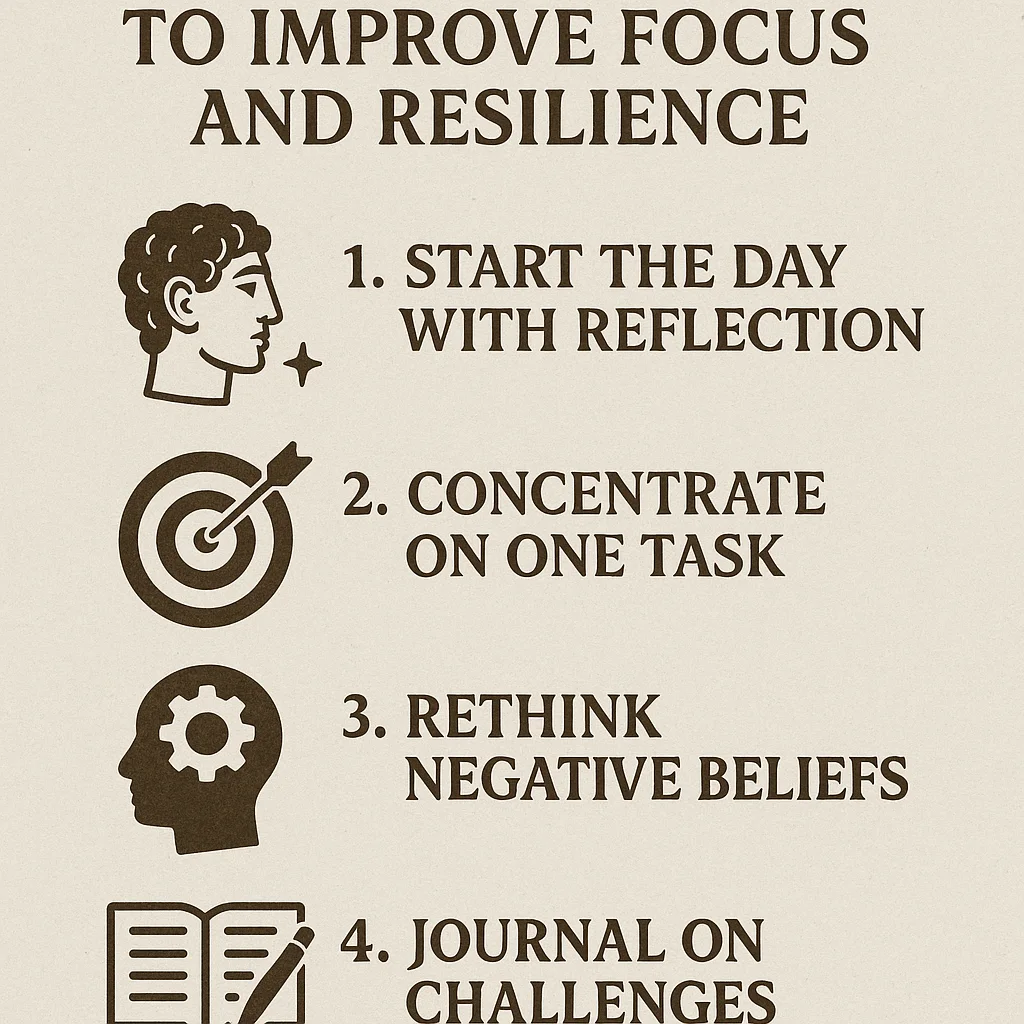
Introduction: Why Modern Minds Need Ancient Wisdom
We live in a time of high anxiety and constant distraction. Our attention is drawn in all directions by notifications. Social media fuels anger and jealousy. The future appears to be uncertain. The ancient philosophy of stoicism provides clarity in the midst of this chaos.
Stoicism is not about acting like a stone wall or repressing feelings. It's about acting with purpose, accepting what you can't, and controlling what you can. Daily habits—useful, recurring behaviors that fortify your mind—are at its core.
Using insights from Seneca, Epictetus, and Marcus Aurelius, we will examine everyday Stoic practices that you can incorporate into your life to increase resilience and focus. You only need to alter your approach to life, not your entire way of living.
1. Start the Morning with Premeditatio Malorum
“The wise man looks ahead and considers what may happen and prepares himself to meet it.” — Seneca
"Premeditation of evils" is the definition of premeditatio malorum. This is preparation, not pessimism. Stoics would mentally practice the worst-case scenarios—delays, criticisms, temptations, and losses—every morning.
Instead of being thrown off by problems, they were ready for them.
Current routine: List potential obstacles you may encounter throughout the day for five to ten minutes in the morning. Consider this:
-
What could derail my focus today?
-
What negative emotions might arise?
-
How will I respond calmly?
This trains your mind to anticipate without fear and builds mental resilience before the day even begins.
2. Journal to Build Awareness
“What injures the hive injures the bee.” — Marcus Aurelius
One essential Stoic practice is journaling. In essence, Marcus Aurelius wrote Meditations as a personal journal to help him think more clearly and define his values, not for other people.
You can separate the important from the irrelevant by keeping a journal. It strengthens your focus, facilitates emotional processing, and increases self-awareness, all of which are essential for resilience.
Modern habit:
-
In the morning: write what you aim to do and who you want to be today.
-
In the evening: reflect on what you did well, what you failed at, and what you’ll improve tomorrow.
It takes ten minutes, but when done regularly, it fosters humility, discipline, and clarity.
3. Practice Voluntary Discomfort
“Set aside now and then a number of days during which you will be content with the scantiest and cheapest of fare.” — Seneca
We do everything in our power to avoid physical, emotional, or mental discomfort. Comfort, however, is a bad teacher. In order to increase their strength and tolerance, resilient people willingly accept minor discomforts.
Stoics frequently engaged in abstinence or "voluntary poverty" to remind themselves that they were capable of enduring hardship.
Modern habit:
-
Take cold showers once or twice a week.
-
Fast for 12–16 hours occasionally.
-
Walk instead of driving when possible.
-
Sleep without a pillow for one night.
You're teaching your body and mind not to fear short-term discomfort, not punishing yourself. This strengthens resilience from within.
4. Apply the Dichotomy of Control
“Some things are up to us, and some things are not.” — Epictetus
This is the cornerstone of stoic concentration. Your anxiety decreases and your focus improves when you mentally distinguish between the things that are under your control and those that are not.
The economy, your boss's attitude, and traffic are all beyond your control. However, you have power over your thoughts, feelings, and behaviors.
Modern habit:
When you feel overwhelmed, stop and write down:
-
What’s in my control here?
-
What’s outside it?
-
What’s the best action I can take now?
By developing this habit, you can save mental energy and concentrate it where it's most needed.
5. Take a Stoic Walk (or Digital-Free Stroll)
Seneca and Marcus Aurelius both stressed the value of taking walks to observe nature and decompress. These days, we constantly walk while scrolling, which diverts our focus and depletes our energy.
Modern habit: Every day, go for a walk without using your phone. Not a podcast. No music. Simply take a stroll and reflect.
Take advantage of this time to think, process feelings, or express gratitude. Your nervous system will be reset, and your attention span—which is continuously being attacked by screens—will be restored.
6. Practice Mindful Speaking (and Listening)
“We have two ears and one mouth, so that we can listen twice as much as we speak.” — Epictetus
Unfocused conversation can lead to conflict and distraction. Stoics used words carefully. They spoke clearly, listened intently, and refrained from complaining, boasting, and gossip.
Modern habit:
-
Before speaking, ask: Is it true? Is it necessary? Is it kind?
-
Practice one full conversation a day where you deeply listen, without thinking about what you’ll say next.
Because you become less reactive and more intentional, this discipline enhances relationships and builds emotional resilience.
7. Evening Reflection (Stoic Inventory)
The day is over. Stoics thought about what they had done before going to sleep. They were learning, not passing harsh judgment on themselves. "Holding court with the self," Seneca said.
“What bad habit did I curb today? How am I better? What did I do well?”
Modern habit:
-
Ask yourself:
-
What did I do well today?
-
Where did I let distractions win?
-
What would I do differently tomorrow?
-
This promotes accountability and advancement over time. You sleep with wisdom rather than regret.
8. Memento Mori: Remember You Will Die
“You could leave life right now. Let that determine what you do and say and think.” — Marcus Aurelius
This Stoic practice, far from being morbid, brings clarity and urgency. You stop wasting time on pointless things when you realize that it is limited. You concentrate on the important things.
Modern habit:
-
Keep a small reminder on your desk (a coin, a quote, a skull image).
-
Ask: If this were my last day, would this deserve my attention?
This habit helps you avoid trivial distractions and instead direct your energy to meaningful work and relationships.
9. Read One Stoic Passage Daily
A stoic habit involves thinking as much as doing. Your mind gets stronger like a muscle when you take a little daily dose of stoic philosophy.
Modern habit:
-
Read a short quote or page from Meditations, Letters from a Stoic, or Discourses each morning.
-
Reflect on it. Write your own interpretation.
This maintains your resilience and sharp focus. Stoicism turns into a way of life rather than merely something you read about.
Final Thoughts: Turn Philosophy into Practice
Stoicism is a discipline of day-to-day behavior rather than lofty ideals. Reading quotations or admiring Marcus Aurelius from a distance is insufficient. Your consistent actions are what give you power.
You don’t need to uproot your life. Just start where you are:
-
Journal in the morning.
-
Walk without your phone.
-
Practice voluntary discomfort.
-
Review your day honestly.
-
Focus on what you control.
Your life will be subtly changed by these habits. You'll start to feel calmer and less reactive. You will become more focused and resilient—not because things became easier, but because you became stronger.