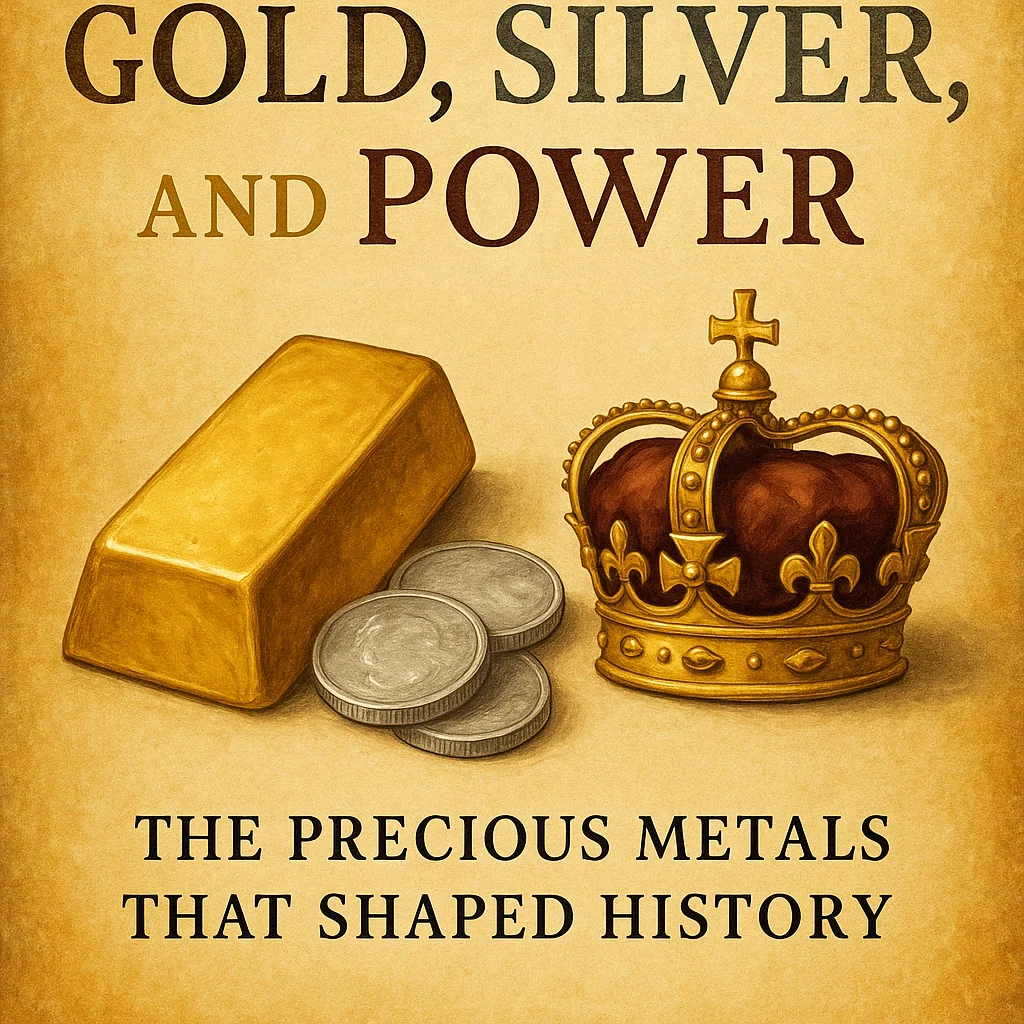
Gold, Silver, and Power: The Precious Metals That Shaped History
Gold and silver have traditionally represented riches, power, and trust, from prehistoric temples to contemporary central banks. These glistening metals were used to build empires, propel exploration, spark wars, and even stabilize global financial systems in addition to adorning crowns and palaces. Gold and silver have fascinated people for as long as civilization has existed, and their tale is one of ambition, politics, and money.
From the beginning of trade until the digital era, let's examine how these precious metals influenced human history.
1. The Ancient Allure: Gold and Silver in Early Civilizations
Ancient societies understood the unique qualities of gold and silver long before there were contemporary economics. They were exquisite, uncommon, and—above all—imperishable. These metals persisted while livestock matured and food spoiled.
Egypt: Gold of the Gods
Gold was considered divine in ancient Egypt, not just a kind of money. Gold was thought to be the gods' flesh, and pharaohs were frequently referred to as "the golden ones." Tutankhamun's tomb was filled to the brim with golden objects that demonstrated both riches and spiritual significance. Egypt was one of the richest kingdoms in antiquity because its Nubian mines were among the first organized sources of gold.
Mesopotamia and Silver as Standard
In contrast, silver had a different but no less important function in Mesopotamia. The Babylonians and Sumerians utilized silver by weight as a means of exchange, in contrast to Egypt, where gold was king. Silver-based contracts and debts, some of the earliest "monetary systems" in history, are recorded on clay tablets.
The Greek and Roman Legacy
By producing standardized gold and silver coins, the Greeks and Romans improved the idea even more. These coins projected state power in addition to facilitating trade. A gold coin with the likeness of Augustus Caesar or Alexander the Great was more than just cash; it was metal propaganda.
2. Empires Forged in Metal: Power, Trade, and Conquest
Precious metals didn’t just symbolize wealth; they enabled empires to expand and endure.
The Spanish Conquest and the Silver Flood
The Spanish Empire actually found a wealthy vein in the sixteenth century. Unimaginable amounts of silver were generated by the silver mines of Zacatecas, Mexico, and Potosí, Bolivia, which fueled Europe's economic growth.
However, there was a price for this affluence. The flood of New World silver caused global inflation known as the "Price Revolution," while millions of Indigenous laborers died in the mines. By connecting the Americas, Europe, and Asia into a single, extensive metallic trading network, a precious metal for the first time influenced global economic dynamics.
China and the Silver Connection
In the meantime, China had shifted to a silver-based economy during the Ming dynasty. American silver was transported by Spanish galleons across the Pacific to the Philippines, where it was traded for silk, porcelain, and spices in Chinese marketplaces. In actuality, this worldwide silver circuit served as the first international currency exchange system in history.
3. Gold: The Metal of Kings and the Birth of the Gold Standard
While silver moved global commerce, gold defined global power.
Colonial Expansion and Gold Rushes
Exploration and colonization were fueled by gold fever. Entire populations moved across continents in search of wealth during the California Gold Rush (1848) and the Klondike (1896). Dusty frontiers were converted into prosperous settlements by gold, only to become ghost towns when the metal ran out.
These rushes accelerated industrialization, changed populations, and expanded nations—they weren't merely motivated by personal greed. Innovation was frequently spurred by the technology created to extract and transport gold.
The Gold Standard Era
Gold had established itself as the foundation of international banking by the 19th century. The Gold Standard was established when countries tied their currencies to predetermined amounts of gold. It restricted governments' capacity to print money in times of crisis, but it also promoted global stability and trade confidence.
A country's power under this system was directly correlated with its gold reserves. Controlling the world's gold flows was just as important to Britain's dominance in the 19th century as its military might.
4. The Silver Struggle: From Prominence to Decline
Silver’s role as money declined over time, but not without a fight.
The Bimetallic Debate
Bimetallism, the idea of using both gold and silver as money, was a topic of discussion in numerous countries during the 19th century. William Jennings Bryan's well-known "Cross of Gold" speech in 1896 was the result of intense political struggles over this topic in the United States.
Proponents of silver claimed it would boost the money supply and assist farmers who were struggling with debt. Supporters of gold asserted that it guaranteed stability and legitimacy on a global scale. In the end, the gold group prevailed, and silver's decline as a significant monetary metal began.
Industrial Uses Take Over
Silver's significance shifted to industry and technology as it left the monetary system. Silver's monetary value declined, but photography, electronics, and eventually solar energy kept it useful.
5. Wars, Gold Reserves, and the Modern Financial Order
The 20th century saw gold once again at the heart of global upheaval.
World Wars and Gold Movements
Countries rushed to acquire gold reserves to support their currencies and fund armies during both World Wars. As the ultimate repository of value, gold was traded, stolen, smuggled, and concealed.
The Bretton Woods Agreement (1944), backed by gold at a fixed rate of $35 per ounce, established the US dollar as the world's reserve currency following World War II. As a result, gold once again became the silent motor of the world economy.
The End of the Gold Standard
When US President Richard Nixon terminated the dollar's convertibility to gold in 1971, that all changed. The "Nixon Shock" essentially put an end to the Gold Standard and ushered in the age of fiat money, which is backed by public confidence and governmental edict rather than metal.
However, central banks kept hoarding gold reserves even in the absence of the gold standard. Gold continues to be a hedge against inflation and instability today, demonstrating that its influence transcends state policies.
6. The New Alchemy: Digital Gold and Modern Parallels
The story doesn’t end with paper money. In the digital age, gold and silver have taken on new meanings.
Bitcoin: The “Digital Gold”
The same factors that make precious metals valuable—scarcity, divisibility, and resistance to control—are also present in Bitcoin, sometimes referred to as "digital gold." Similar to the limited amount of gold in the earth's crust, its supply is limited to 21 million coins.
Investors today use both real and digital gold to hedge their portfolios, demonstrating that our interest in long-lasting, uncorruptible value has just changed rather than vanished.
Silver’s Technological Renaissance
In the meantime, silver's use in technology keeps expanding. Medical equipment, electric cars, and solar panels all depend on it. While gold continues to be the metal of remembrance, silver has, in a sense, acquired a second life as the metal of the future.
7. The Timeless Allure of Precious Metals
Why do gold and silver continue to captivate humanity, even in a world of data and digits?
because they are a tangible representation of trust. A gold coin or silver ingot feels real—heavy, unchangeable, eternal—in contrast to computerized balances or paper money. They take us back to a period when riches could be held in one's palm and value had weight.
Even though economies have changed from barter to blockchain and empires have come and gone, we always want for something unique and durable. Gold and silver continue to determine our perception of value, whether they are used as coins, crowns, or cryptographic codes.
Conclusion: Power, Permanence, and the Price of Desire
Human aspiration is reflected in the history of gold and silver. These metals connected continents, constructed temples, overthrew dynasties, and corrupted monarchs. They are both lovely and vicious, representing both human avarice and divine promise.
The tale is the same for both Wall Street's gold ETFs and the golden pharaohs of ancient Egypt: precious metals are more than just commodities; they are symbols of strength, confidence, and the never-ending need for stability in a changing world.
Even in the age of algorithms, their luster endures.