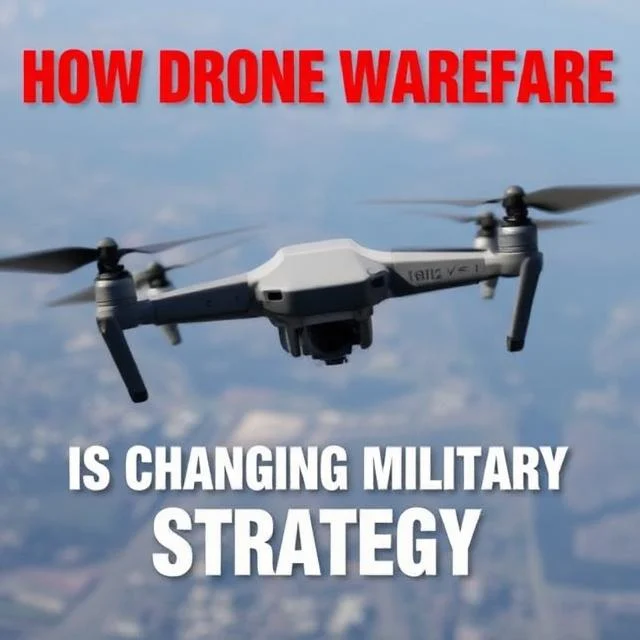
The nature of conflict has always changed in tandem with advancements in technology. Every development, from the invention of gunpowder to the development of nuclear weapons and cyber capabilities, has altered military doctrine and strategic thought. One of the most significant changes in international military strategy in the twenty-first century has been drone warfare. Unmanned aerial vehicles (UAVs), also referred to as drones, are becoming essential parts of contemporary military systems rather than being only experimental devices.
Drones have changed how countries guard their borders, fight wars, gather intelligence, and carry out targeted operations. Both battlefield tactics and long-term strategic planning have been drastically altered by their capacity to operate remotely, stay in the air for extended periods of time, and carry sophisticated observation or strike capabilities.
The Rise of Unmanned Systems
Drones, which were first created for surveillance missions, have matured into adaptable platforms that can carry out a variety of tasks. The primary purpose of early UAVs was surveillance, providing commanders with real-time battlefield intelligence without endangering pilot lives. Precision-guided ammunition, sophisticated sensors, and AI-powered navigation systems are already standard aboard drones.
Their growing use reflects several advantages:
✔ Reduced risk to military personnel
✔ Lower operational costs compared to manned aircraft
✔ Extended endurance for surveillance missions
✔ Rapid deployment in high-risk environments
Due to these features, drones are appealing instruments for both large powers and smaller countries looking for affordable defensive capabilities.
Precision and Asymmetrical Warfare
Asymmetrical battles, in which conventional military forces take on non-state entities or rebel groups, have been greatly impacted by drone warfare. Drones reduce the need for massive force deployments by enabling pinpoint targeting of particular people or sites.
Counterterrorism efforts now heavily rely on precision strikes. Compared to traditional bombing campaigns, drones can track and engage targets with less collateral damage by utilizing real-time intelligence. Nonetheless, disagreement persists despite the appearance of accuracy. Even unintentional civilian casualties might exacerbate ethical discussions and political unrest.
Commercial drones have also turned into disruptive tools for tiny armed organizations. The ability of modified consumer drones to carry explosives or carry out surveillance presents new difficulties for traditional military units. Because of its accessibility, airpower is no longer only available to highly developed military.
Strategic Shifts in Military Doctrine
Military doctrine has changed as a result of the use of drones in the armed forces. The focus of traditional air dominance tactics was on using fighter jets and bombers to control the sky. Nowadays, complex defense systems can be overpowered by swarms of tiny, well-coordinated drones.
A major strategic innovation is drone swarms. Forces can overwhelm opposing defenses by deploying several inexpensive drones at once. It's possible that some will reach their targets even if they are intercepted. With this strategy, traditional air defense systems that are built to fend off fewer, more costly aircraft are put to the test.
Key strategic shifts include:
✔ Emphasis on networked warfare systems
✔ Integration of artificial intelligence in battlefield coordination
✔ Increased focus on counter-drone technologies
✔ Reduced reliance on large-scale troop deployments
These changes reflect a broader move toward technologically driven warfare.
Intelligence, Surveillance, and Reconnaissance
Intelligence gathering is one of the areas where drone warfare has had the most effects. Continuous surveillance above war areas is made possible by drones fitted with high-resolution cameras and sensors. This ongoing observation improves situational awareness and makes it possible to react quickly to new dangers.
Dominance of information is just as crucial to modern military strategy as weapons. By providing command centers with real-time data, drones help to achieve this domination. UAVs provide a complete operational picture when paired with satellite photography and cyber intelligence.
Adversaries are psychologically impacted by ongoing surveillance as well. Drones flying overhead all the time can interfere with movement and planning. This psychological component has developed into a nuanced yet potent element of contemporary combat.
Counter-Drone Technologies and Defense
The demand for countermeasures grows as drone capabilities do. Anti-drone system development is becoming a top priority for military strategists. These include directed-energy missiles, sophisticated radar systems that can identify tiny UAVs, and electronic jamming devices.
The goal of counter-drone tactics is to neutralize threats before they get to military or vital infrastructure targets. Continuous adaption is necessary due to the quick speed of drone invention. Defense systems need to advance at the same rate as offensive technologies.
This dynamic creates a technological cycle: as drones become more advanced and autonomous, countermeasures become more sophisticated. The interplay between offense and defense shapes the broader strategic environment.
Ethical and Legal Implications
There are serious moral and legal concerns with drone warfare. Although remote operations keep decision-makers away from the battlefield, they also lessen the hazards to soldiers. This distance may reduce the threshold for utilizing force, according to critics.
International law finds it difficult to adapt to the rapid advancements in technology. Concerns about civilian protection, accountability, and openness are still major issues. These discussions are heightened by autonomous drones, which are able to choose targets without direct human supervision.
Important considerations include:
✔ Clear rules of engagement
✔ Accountability for operational decisions
✔ Protection of civilian populations
✔ Oversight of autonomous systems
Balancing military effectiveness with humanitarian principles remains a complex challenge.
The Global Spread of Drone Technology
Drone technology is no longer limited to a small number of developed countries. Nowadays, many nations manufacture or purchase UAVs. The power dynamics in the region have changed as a result of its widespread adoption. Smaller countries don't need to invest in costly air forces to project influence beyond their borders.
Drones are more likely to be used in regional conflicts as their number grows. Drone tactics have also been used by non-state entities, which has complicated security dynamics. The global strategic situation is becoming increasingly uncertain as more entities have access to sophisticated systems.
Artificial Intelligence and the Future of Drone Warfare
Drone missions will likely involve considerably more artificial intelligence. AI makes coordinated swarm activity, target recognition, and autonomous navigation possible. Although these features improve operational effectiveness, they also give rise to questions of human error.
Drone networks working in tandem with manned systems may be a key component of future military tactics. This approach is reflected in the idea of "human-machine teaming." Drones might serve as force multipliers rather than a complete replacement for soldiers.
AI-driven drones could transform logistics, reconnaissance, and defensive strategies. However, ensuring ethical use and preventing accidental escalation will require strict governance frameworks.
The Long-Term Strategic Impact
Both military tactics and geopolitical considerations have changed as a result of drone warfare. When developing defense infrastructure, nations must increasingly take drone strike vulnerabilities into account. Important resources including military installations, communication centers, and energy infrastructure need to be better protected.
Additionally, drones offer strategic adaptability. Leaders are able to react swiftly to new threats without using a lot of troops. Crisis management and diplomatic discussions are impacted by this adaptability.
Long-term impacts include:
✔ Greater reliance on remote operations
✔ Increased investment in cybersecurity and AI
✔ Blurring of lines between conventional and unconventional warfare
✔ Ongoing debates about arms control and regulation
The strategic environment will continue evolving as drone capabilities expand.
Conclusion
Modern military strategy has been drastically altered by drone warfare. Drones provide new operational benefits by fusing technological innovation, perseverance, and precision. They lower personnel risks, improve intelligence collection, and more effectively enable targeted actions.
Nevertheless, there are drawbacks to these advantages. Risks that need to be properly controlled are created by rapid growth, ethical issues, and legal ambiguities. Complicating matters further is the incorporation of artificial intelligence.
Drone technology will have a greater impact on international security as it develops further. Military plans will place a greater emphasis on AI integration, counter-drone defenses, and unmanned systems. Networks of intelligent devices acting across land, sea, air, and cyberspace will characterize warfare in the future, rather than just human warriors on conventional battlefields.