For the most of human history, fate and health were decided by chance—the genetic draw. For better or worse, we inherited the physical characteristics, disease susceptibilities, and subtle codes that molded our bodies and minds from our parents.
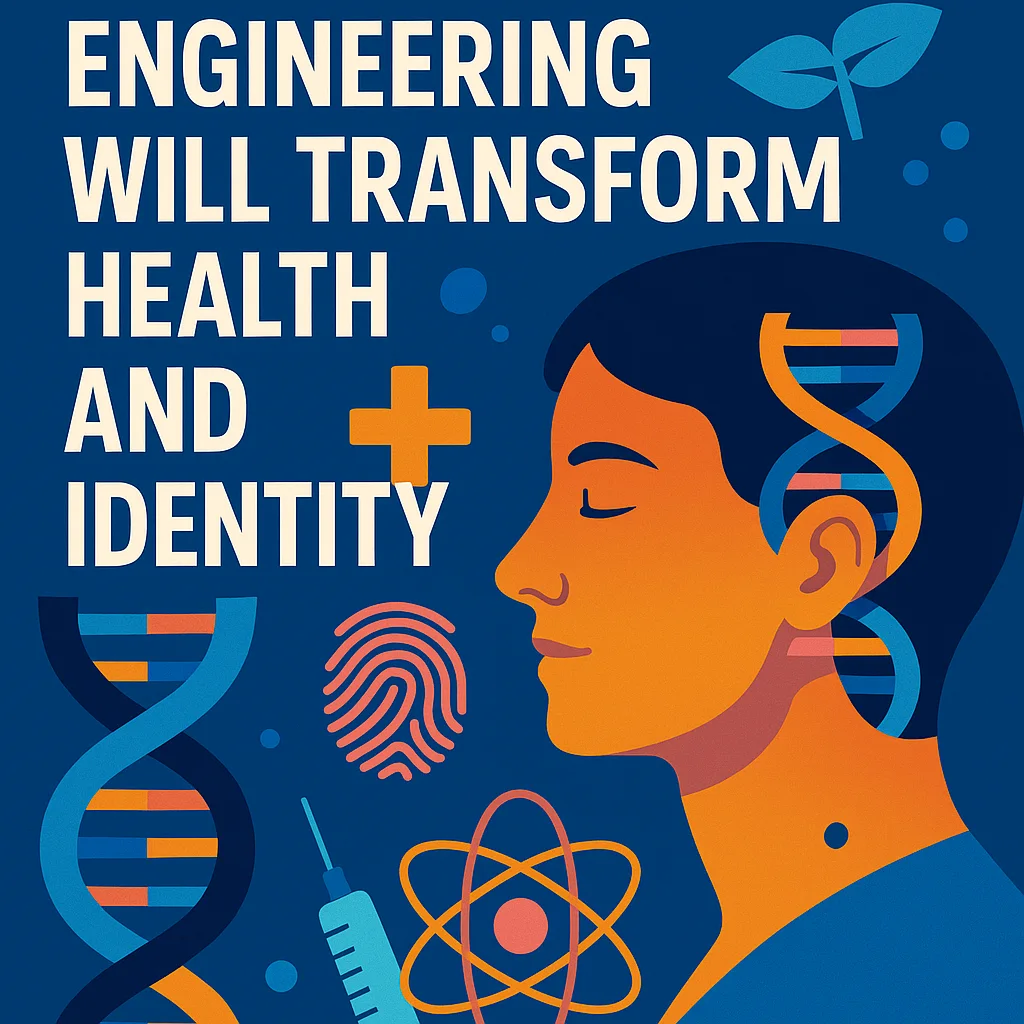
However, that luck is changing in the twenty-first century. The development of genetic engineering is changing our understanding of biology, health, and even human identity itself, particularly with the use of cutting-edge technologies like CRISPR-Cas9.
Genes can now be altered, created, and optimized; they are no longer only inherited. Redefining what it means to be human, prolonging life, improving capacities, and curing genetic illnesses are just a few of the many ramifications.
This is the tale of how genetic engineering will permanently alter the human experience by altering our identity and genetics.
1. The Dawn of a Genetic Revolution
In a nutshell, genetic engineering is the alteration of DNA, which is the basic code that dictates how each cell operates. The actual revolution started in 2012 when researchers Jennifer Doudna and Emmanuelle Charpentier introduced CRISPR-Cas9, a molecular tool that can cut and rewrite DNA with previously unheard-of accuracy, despite the fact that scientists had been tampering with genes for decades.
Like a pair of biological scissors, CRISPR enables researchers to target, eliminate, or swap out particular genomic sequences. Complex lab work that used to take years can now be completed in a matter of weeks or even days.
The impact has been immediate and profound:
-
Genetic diseases once thought incurable are now being corrected in living patients.
-
Crops and livestock are being engineered to withstand drought, disease, and climate change.
-
Entire species can be altered to control ecological problems, such as mosquitoes carrying malaria.
However, human health and identity may be the most revolutionary frontier since the distinction between creativity and medicine becomes hazy when we start editing ourselves.
2. Health in the Age of Genetic Precision
The most evident and potential application of genetic engineering is in the field of medicine. Doctors have been treating symptoms for ages, but now they can address the root cause—our DNA.
1. Curing Genetic Disorders
Single-gene mutations cause over 6,000 disorders, including sickle-cell anemia and cystic fibrosis. Through the editing of defective genes or the insertion of functional ones, CRISPR has already demonstrated efficacy in repairing these flaws in clinical studies.
The first CRISPR-based treatment for sickle-cell disease was approved by the FDA in 2023, demonstrating that genetic repair is a reality rather than a pipe dream.
2. Preventing Inherited Diseases
In addition to treatment, genetic screening and embryo editing can completely stop the spread of illness. Preimplantation genetic diagnosis (PGD) allows parents to choose embryos free of genetic defects. In the future, it might be possible to completely eradicate some inherited diseases from family lines when combined with CRISPR.
3. Personalized Medicine
Now that complete genome sequencing is more reasonably priced, medical professionals can create treatments that are specific to each patient's genetic profile, modifying medication types, dosages, and therapies according on how your particular DNA reacts.
Precision medicine, where treatment is as individualized as your fingerprint, is replacing "one-size-fits-all" medicine.
3. Engineering Longevity and Resistance
If genes dictate health, they may also hold the key to longevity.
Researchers have discovered genetic markers associated with cellular repair, metabolism, and aging. Some people have uncommon variations that inhibit biological deterioration, such as centenarians. Researchers hope to increase human longevity—not just in years, but in healthy years—by examining and reproducing these genetic patterns.
CRISPR and similar technologies could allow future generations to:
-
Slow aging by modifying genes related to cell repair and telomere length.
-
Boost immunity against viruses and bacteria through genetic resistance.
-
Enhance recovery from injuries or degenerative diseases by reprogramming stem cells.
Living longer is only one aspect of the quest for longevity; another is reprogramming biology to withstand entropy and time.
However, a more profound concern arises as humans start to take charge of their own evolution: How will this alter who we are?
4. Redefining Identity: The Genetic Self
Beyond biology, our DNA is an integral element of who we are. It ties us to our heritage, our characteristics, and even our sense of ourselves.
Genetic engineering challenges that connection. If we can alter our DNA, what does it mean to be “natural”?
1. The End of Genetic Fate
Our genes were a sort of fate up until this point. We could care for them, but we couldn't alter them. Identity becomes malleable in a post-genetic age, based on decision rather than heredity.
For improved cognitive function, increased physical stamina, or aesthetic preferences, a person may decide to modify their genes. Human identity may eventually become programmable, much like software.
2. The Rise of Designer Genetics
This idea, sometimes referred to as "designer babies," inspires both curiosity and anxiety. Editing for enhancement (intelligence, attractiveness, or talent) touches a moral limbo, yet editing to eliminate sickness seems morally right.
Will genetic privilege create new forms of inequality, where the wealthy can literally engineer superiority?
3. The Question of Authenticity
Will authenticity become meaningless when characteristics are selectable? Will people identify more with their technological design or with their natural origins?
Humanity may need to reinvent what it means to be human if genes become editable and identity itself becomes customizable.
5. Cultural and Ethical Crossroads
Genetic engineering is not just a scientific issue — it’s a cultural and ethical revolution.
1. Playing God or Perfecting Creation?
Some critics contend that altering life is immoral and that humans shouldn't be able to change nature's code. Others believe that humans are taking charge of their own fate, which is a logical progression of development.
Religion, philosophy, and science now intersect at the same question:
Should we do everything we are capable of doing?
2. Equity and Access
Social inequality may worsen if genetic improvement is still costly. Imagine a time in the future where the wealthy are not only richer but also more resilient, intelligent, and long-lived.
Without control, genetic engineering might lead to a hereditary class split, in which the potential of people is actually divided according to their financial status.
3. Genetic Privacy and Data
The most intimate information you can think of is your genetic code. Protecting DNA data against abuse by corporations, governments, and insurers is crucial as genetic testing and editing grow more widespread.
The concept of genetic privacy may soon be as important as digital privacy is today.
6. Beyond Health: Evolution by Design
The most significant effect of genetic engineering may not be improving health or treating illness, but rather changing evolution itself.
Natural selection drove evolution for billions of years; it was blind, unpredictable, and slow. It is now directed by deliberate design.
Humans are becoming the first species capable of editing its own evolution.
This could lead to:
-
Enhanced cognition: Genes linked to learning, memory, and emotional regulation could create new forms of intelligence.
-
Space adaptation: Genetic modifications could prepare humans for life on Mars or other planets.
-
Environmental resilience: Humans might become resistant to pollutants, radiation, or extreme temperatures.
To put it succinctly, genetic engineering has the potential to produce post-humans—beings tailored to any future environment.
However, there are existential concerns associated with such power. We must choose what is still human as soon as we create new human forms.
7. The Emotional Side of Genetic Control
It’s easy to view genetics as a scientific puzzle, but at its core, it’s deeply personal.
Imagine parents choosing the qualities their child should possess out of love, fear, or hope rather than conceit. Imagine someone erasing a genetic disorder that has plagued their family for many generations.
Not only will genetic engineering change medicine, but it will also change how we feel about love, grief, and legacy.
Our history has always been shaped by the genes we inherit. We get to edit that story now. However, every edit has significance, just like any great force.
8. The Path Forward: Balancing Innovation and Humanity
The future of genetic engineering will be defined not just by what we can do, but by what we choose to do.
International norms for gene editing are already being debated by governments, scientists, and ethicists. UNESCO and the World Health Organization have asked for oversight to stop abuse while promoting potentially life-saving research.
In the coming decades, humanity will face defining choices:
-
Should we edit embryos to prevent disease?
-
Should enhancements be legal or limited?
-
Should AI design genes beyond human comprehension?
Every answer will shape the next chapter of human evolution.
Conclusion: The New Definition of Being Human
Genetic engineering is a mirror, not just a medical advancement. It makes us face the aspects of being human that we cherish most: our imperfections, uniqueness, and mortality.
We might be able to prevent suffering, treat genetic illnesses, and even prolong life in the near future. However, we will also reinvent identity, diversity, and destiny in the process.
Humanity has always been shaped by nature. Now, for the first time, we are shaping nature itself.
The biggest obstacle we have going ahead will be moral rather than scientific. Because the question is not whether we can create a better human being when we can change the code of life.
It’s whether we can remain humane while doing it.