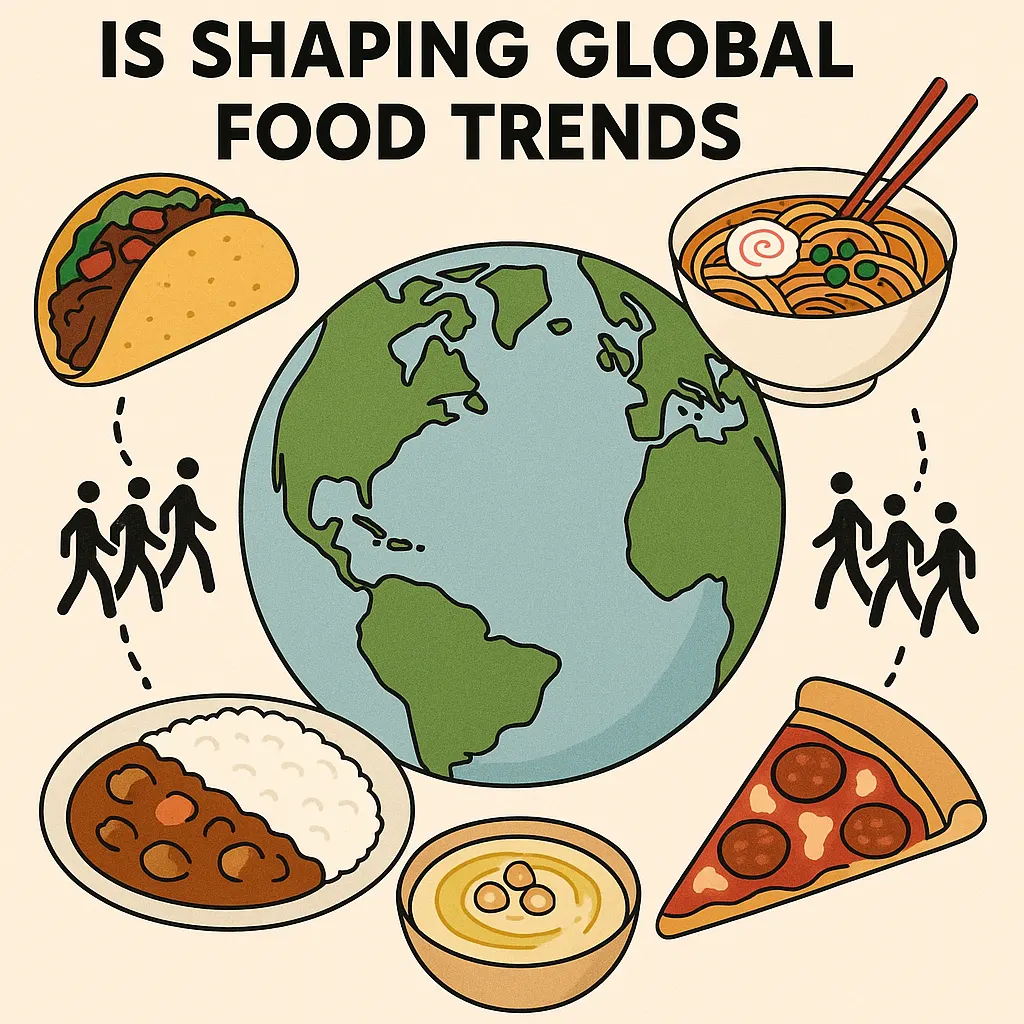
Introduction: Food as a Story of Movement
There is a universal language in food. It narrates tales of identity, culture, and origins. However, those tales are no longer confined to certain regions in the very globalized world of today. People take their culinary customs with them when they relocate, whether for employment, safety, opportunity, or lifestyle. The world's eating habits have undergone a dramatic change as a result of this migration.
One of the most significant factors influencing international cuisine trends is migration. Once-exotic ingredients are now commonplace in the pantry. Traditional recipes are being reimagined. Street food is a global phenomenon. Immigrant entrepreneurship is the foundation of entire restaurant scenes.
Global food culture has evolved into a dynamic, varied, and ever-changing mirror of migration patterns.
A Historical Connection: Migration and Culinary Exchange
There has always been a connection between migration and food. All throughout history:
-
Noodles, spices, and teas were transported throughout Asia, the Middle East, and Europe over the Silk Road.
-
Local cuisines were indelibly altered by the Columbian Exchange, which brought chili peppers to South Asia, potatoes to Ireland, and tomatoes to Italy.
-
Sugar, coffee, and cocoa were among the ingredients exchanged as a result of trade and colonization.
The scope and rate of change are different now. Food knowledge is spreading more quickly than ever thanks to modern migration, global trade, refrigeration, and digital influence.
What once took centuries now takes months.
Diaspora Communities: Guardians of Food Identity
Food serves as a reassuring link to one's home when individuals travel. Traditions are maintained by diaspora populations through:
-
Family recipes
-
Religious food customs
-
Local ethnic grocery stores
-
Community-run restaurants
In strange places, these meals provide a feeling of identity and belonging. They also serve as entry points for people to learn about other cultures.
Examples include:
-
Indian communities in the UK making curry a national favorite
-
Mexican diaspora in the U.S. popularizing tacos, burritos, and salsa across the country
-
Turkish workers in Germany giving rise to the beloved döner kebab
-
Vietnamese families in France influencing the development of banh mi—a perfect blend of French bread and Vietnamese flavors
The cultural character of diaspora cuisines is preserved even when ingredients and flavors change to suit new environments.
The Rise of Fusion Food: A Culinary Collaboration
The rise of fusion cuisine is one of the most obvious effects of migration.
Fusion is a celebration of culinary creativity and ethnic mingling, not merely a fad. It illustrates how individuals negotiate their identities, respecting customs while welcoming novel experiences.
Popular examples include:
-
Korean-Mexican fusion (kimchi tacos, bulgogi burritos)
-
Japanese-Peruvian cuisine (Nikkei food—ceviche with soy-based flavors)
-
Indian-inspired pizzas and pasta in North America and Europe
-
African-Caribbean flavor crossovers in the UK and Canada
Fusion is a direct outcome of different chefs working together, experimenting, and using cuisine to express stories.
Immigrant Entrepreneurship: Redefining Local Cuisine
The food economy is heavily influenced by immigrants. Particularly in Western cities, the restaurant industry frequently flourishes due to migrant-owned enterprises.
They introduce:
-
New dining concepts
-
Authentic flavors
-
Affordable street food experiences
-
Jobs within local communities
Think of New York—its culinary identity is intertwined with immigrant ingenuity. Chinese takeaways in London, Ethiopian cafés in Washington D.C., Lebanese shawarma restaurants in Paris—each has molded hometown tastes.
What begins as "ethnic food" frequently turns into just local cuisine over time.
Supermarkets Are Becoming Global Pantries
Restaurants and retail grocery culture have both grown as a result of migration. Nowadays, mainstream supermarkets frequently carry:
-
Spice blends like garam masala, za’atar, and gochugaru
-
Asian noodles and sauces
-
Fresh ingredients like tofu, okra, plantains, and tamarind
-
Tortillas, seaweed, halal meat, and more
Multicultural tastes have become commonplace, as evidenced by the fact that items that were once exclusive to ethnic retailers are now available on ordinary shelves.
Convenience food has transformed too:
-
Pre-made sushi packs
-
Instant ramen varieties
-
Global-flavored snacks
Curiosity follows exposure, and popularity follows curiosity.
Street Food Globalization: Local Classics Go Worldwide
Street cuisine is now able to travel across borders more quickly than formal dining ever could thanks to migration. Easy meals become cultural ambassadors:
-
From Berlin to New York, people adore Thai pad thai.
-
Nowadays, Middle Eastern falafel is a popular vegetarian choice worldwide.
-
Ramen from Japan has become a global favorite, inspiring craft stores all over the world.
-
In Europe and the United States, Latin American empanadas and arepas are becoming more popular.
These cuisines are appealing to people all across the world because they are tasty, reasonably priced, and steeped in tradition.
Technology, Media, and Influencers Amplify Food Migration
Digital platforms accelerate the spread of food culture:
-
YouTube cooking channels teach global recipes step-by-step
-
TikTok food challenges introduce viral international dishes
-
Instagram popularizes visually stunning cuisines
-
Food delivery apps allow experimenting without leaving home
Migration-driven cuisine influence spreads quickly when a dish, such as matcha sweets, Korean fried chicken, or birria tacos, becomes popular online.
It is now easier and more accessible than ever to appreciate culture.
Taste Evolution: Consumers Love to Experiment
Taste preferences are changing due to migration, particularly among younger generations:
-
They are more adventurous with flavors
-
They seek unique and authentic dining experiences
-
They value cultural storytelling behind meals
This shift is visible in restaurant trends:
|
Old Preference |
New Trend |
|---|---|
|
Familiar comfort food |
Culinary exploration |
|
Standardized menus |
Seasonal, regional, and diverse flavors |
|
Fast food |
International street food |
|
Dining formality |
Casual fusion eateries |
Eating is no longer just about food—it’s about discovery.
Health and Sustainability: Learning from Other Cultures
Many migrant food traditions place importance on:
-
Plant-based diets
-
Fresh and minimally processed ingredients
-
Herbal and spice-based flavoring
-
Balanced meals
Examples:
-
The Mediterranean diet’s global reputation for heart health
-
Japanese cuisine known for longevity benefits
-
Indian spices like turmeric gaining modern wellness recognition
Health-focused cuisine trends are advanced by migration, which exposes more individuals to these practices.
Additionally, immigrant influence is reintroducing sustainable cooking practices like fermentation, local sourcing, and nose-to-tail dining.
Cultural Preservation vs. Commercialization
As demand grows worldwide, certain cuisines run the risk of being:
-
Oversimplified
-
Appropriated without cultural credit
-
Modified so far that authenticity fades
For example, "Tex-Mex" is very different from traditional Mexican cuisine. Sometimes its exact artistry is lost in sushi modifications. Although these changes aren't necessarily detrimental, they do pose concerns about maintaining tradition while welcoming change.
As cuisines change, representation and cultural tolerance must continue to be top concerns.
Political and Economic Impacts on Food Migration
The availability of food is influenced by migration policies. Visa restrictions, trade restrictions, and tight border laws might impede the development of cultural cuisine.
Meanwhile:
-
Refugee flows introduce new culinary traditions rapidly
-
International students expand multicultural dining scenes
-
Global workforce relocation increases demand for familiar foods
Food becomes intertwined with political landscapes and cultural diplomacy.
Innovations can even be sparked by international conflicts, such as when diaspora populations develop recipes using alternative products because of import restrictions.
Future of Global Food Trends: A Deliciously Borderless World
Migration will continue driving culinary change. We can expect:
✔ More hybrid restaurants blending multiple cultural influences
✔ Continued rise of street-food-inspired dining
✔ Southeast Asian, Middle Eastern, and African ingredients are making their way into mainstream markets
✔ Younger chefs redefining “authenticity” through personal expression
✔ Increased access to foreign foods through globalized supply chains
The global culinary culture will become increasingly more varied and entwined as tourism and immigrant populations expand.
In the end, global cuisine has an unbounded future, both on the plate and in our imaginations.
Conclusion: Food as a Journey Shared
Not only does migration shift people, but it also shifts memories, customs, and tastes. Every meal prepared in a new country serves as a gift to those who are open to trying new foods and a remembrance of one's origins.
Today's global culinary trends demonstrate how amazing things may happen when cultures collide:
-
New connections
-
New creativity
-
New cuisines
Food turns becomes a celebration of community and diversity. One dish at a time, the world's dining table expands and becomes richer as migration continues to influence our eating habits.