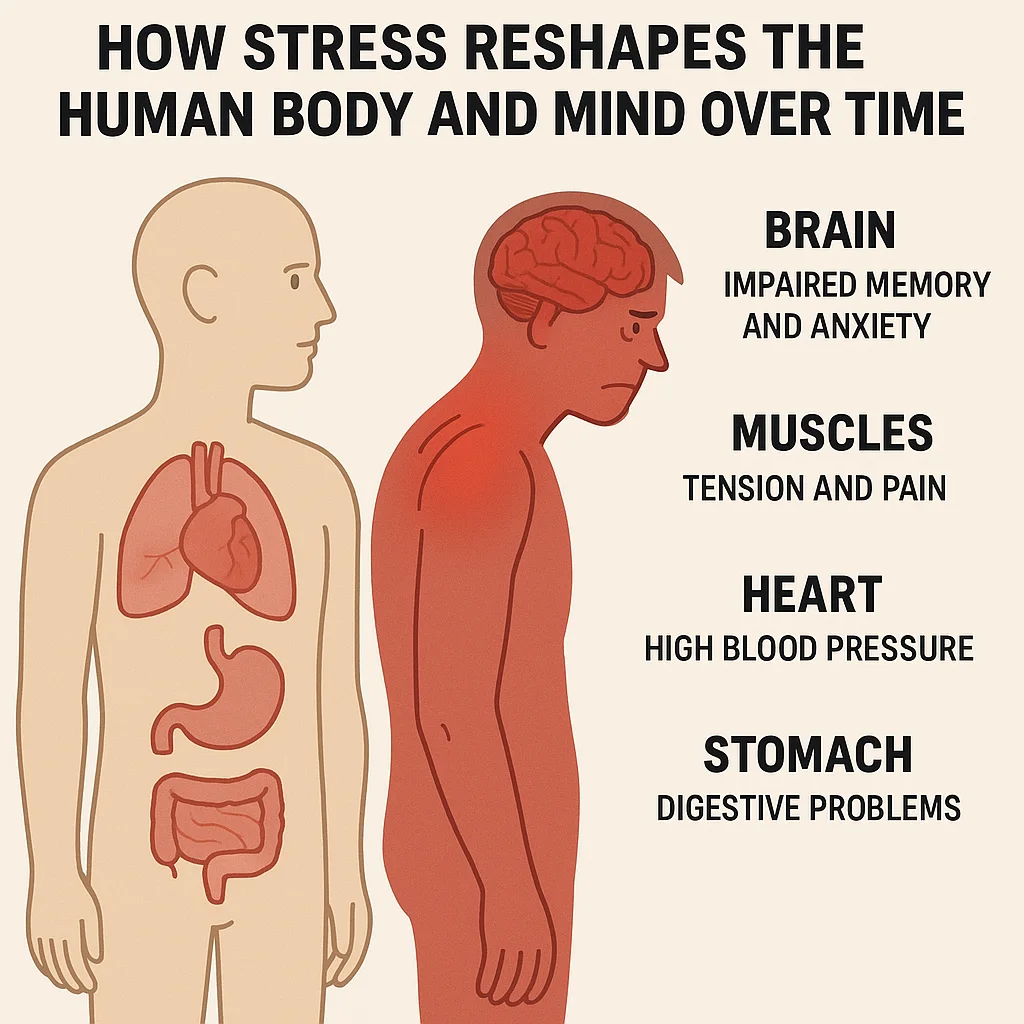
One of the most common yet underappreciated forces in human existence is stress. It goes beyond a difficult workday, an impending deadline, or a disagreement with a loved one. Persistent stress profoundly alters our bodies and minds. It gradually alters our thoughts, emotions, and bodily functions. Small amounts of stress can improve performance and even save lives, but long-term stress is like a slow-burning fire that damages everything in its path while initially remaining invisible.
This article will discuss the effects of stress on the body and brain, the long-term effects of unresolved tension, and resilience-building techniques.
The Nature of Stress: A Double-Edged Sword
Stress is fundamentally a survival mechanism. The brain triggers the "fight-or-flight" response when it senses a threat, whether it be imagined or real. Muscles tighten, breathing quickens, heart rate increases, and adrenaline surges. Our ancestors were able to withstand physical danger and evade predators thanks to this quick physiological change.
But there aren't many life-threatening predators in the modern world. Rather, our stressors are ever-present and include personal obligations, economic pressures, societal expectations, and never-ending emails. Modern stressors linger, and that's where the harm starts, unlike a predator attack that ends quickly.
How Stress Reshapes the Human Body
1. The Cardiovascular System: A Strain on the Heart
Prolonged stress causes the heart to beat more quickly and blood pressure to remain higher than it should. This ongoing stress causes plaque accumulation, damages blood vessels, and increases the risk of heart disease, stroke, and hypertension. What was formerly a short-term survival boost turns into a cardiovascular time bomb.
2. The Immune System: Weakened Defenses
First, stress hormones such as cortisol give the body a temporary advantage by boosting immunity. However, long-term exposure to cortisol weakens the immune system, increasing susceptibility to infections and delaying recovery. Frequent colds, flu, and other illnesses are common in people who are under a lot of stress.
3. The Musculoskeletal System: Chronic Tension
Muscles tighten and contract in response to stress as a defensive mechanism. This eventually results in back pain, headaches, stiff necks, and even migraines brought on by tension. The body gets trapped in a tightness loop, which exacerbates weariness and discomfort.
4. The Digestive System: Gut-Brain Turmoil
The gut-brain axis establishes a close connection between the gut and the brain. Stress changes gut motility and increases the production of stomach acid, which interferes with digestion. Irritable bowel syndrome (IBS), bloating, indigestion, and acid reflux can result from this. Stress may even alter the gut microbiota over time, impacting immunity and mood.
5. The Endocrine System: Hormonal Chaos
Often referred to as the "stress hormone," cortisol is essential during brief episodes. However, it upsets the balance of hormones when the body produces it continuously. Reduced testosterone levels in men, irregular menstruation, disturbed sleep, and weight gain (particularly belly fat) are all caused by elevated cortisol levels.
How Stress Reshapes the Mind
1. Structural Changes in the Brain
Stress physically changes the structure of the brain, not just in abstract ways. Chronic stress has been shown to shrink the hippocampus, a part of the brain linked to memory and learning. In the meantime, anxiety and emotional reactivity are increased by the hyperactivity of the brain's fear center, the amygdala.
2. Memory and Cognitive Decline
The prefrontal cortex, which is responsible for reasoning, focus, and decision-making, is hampered when stress hormones overflow the brain. Chronic stress slows cognitive function, damages memory, and even raises the risk of dementia and Alzheimer's disease over time.
3. Emotional Imbalance
Anger, frustration, and irritability are all heightened by stress. It can result in depression, burnout, and chronic anxiety disorders over the course of months and years. People who are less emotionally resilient become more reactive to even small setbacks.
4. Sleep Disruption
One of the main causes of insomnia is stress. The body's natural sleep-wake cycle is disrupted by racing thoughts and elevated cortisol levels, which prevents restorative sleep. A vicious cycle is created when stress is exacerbated by sleep deprivation.
5. Addictive Behaviors and Coping Mechanisms
Many people use digital distractions, alcohol, smoking, or overeating as coping mechanisms for stress. Although these might offer temporary respite, they frequently worsen the underlying issues and perpetuate unbreakable cycles.
The Long-Term Toll of Chronic Stress
When left untreated, stress can lead to some of the most prevalent and fatal health problems of our time:
-
Heart disease and stroke from prolonged strain on the cardiovascular system.
-
Diabetes due to insulin resistance linked to high cortisol levels.
-
Obesity fueled by hormonal imbalance and stress-related eating habits.
-
Mental health disorders such as depression, generalized anxiety, and PTSD.
-
Neurodegeneration, including memory decline and higher dementia risk.
The World Health Organization has even called stress “the health epidemic of the 21st century.”
How to Counter Stress and Build Resilience
1. Mindful Awareness
Stress thrives when left unchecked. Journaling, mindful breathing, and meditation are techniques that help keep the mind in the here and now and lessen anxiety and rumination.
2. Physical Activity
One of the best ways to reduce stress is to exercise. It improves cardiovascular health, increases endorphins, and decreases cortisol. Even a brisk walk can reframe a stressful day.
3. Restorative Sleep
Making regular, good sleep a priority is crucial. The body's equilibrium can be restored by establishing a relaxing evening routine, reducing screen time, and creating a restful environment.
4. Social Connections
Relationships of support act as a stress buffer. Emotional burdens can be lessened by sharing experiences, joining community groups, or simply talking with loved ones.
5. Reframing Perceptions
Not all stress is bad; a lot of the time, how we interpret stress makes it toxic. Obstacles become challenges rather than threats when one adopts a growth-oriented or stoic mindset.
6. Professional Help
Therapy, counseling, or medical assistance can offer structured relief when stress becomes unbearable. Two tried-and-true techniques are mindfulness-based stress reduction (MBSR) and cognitive-behavioral therapy (CBT).
The Paradox of Stress
Stress will always be a part of human existence. In actuality, growth, creativity, and survival all depend on a certain amount. Its dual nature—it can be both a motivator and a destroyer—is the source of the paradox. The goal is to develop resilience, awareness, and healthier coping mechanisms rather than to completely eradicate stress.
Final Thoughts
The body and mind are altered by stress, frequently in ways we are unaware of until the consequences become inevitable. The toll is indisputable, ranging from emotional instability to digestive distress, from memory loss to elevated blood pressure. But with conscious effort, we can reclaim control. We can make sure that stress makes us stronger rather than weaker by incorporating mindful practices, fostering social relationships, and respecting the body's need for balance and rest.
Your future self's health is influenced by how you manage stress now. The question is whether you will learn to master stress or allow it to control you.