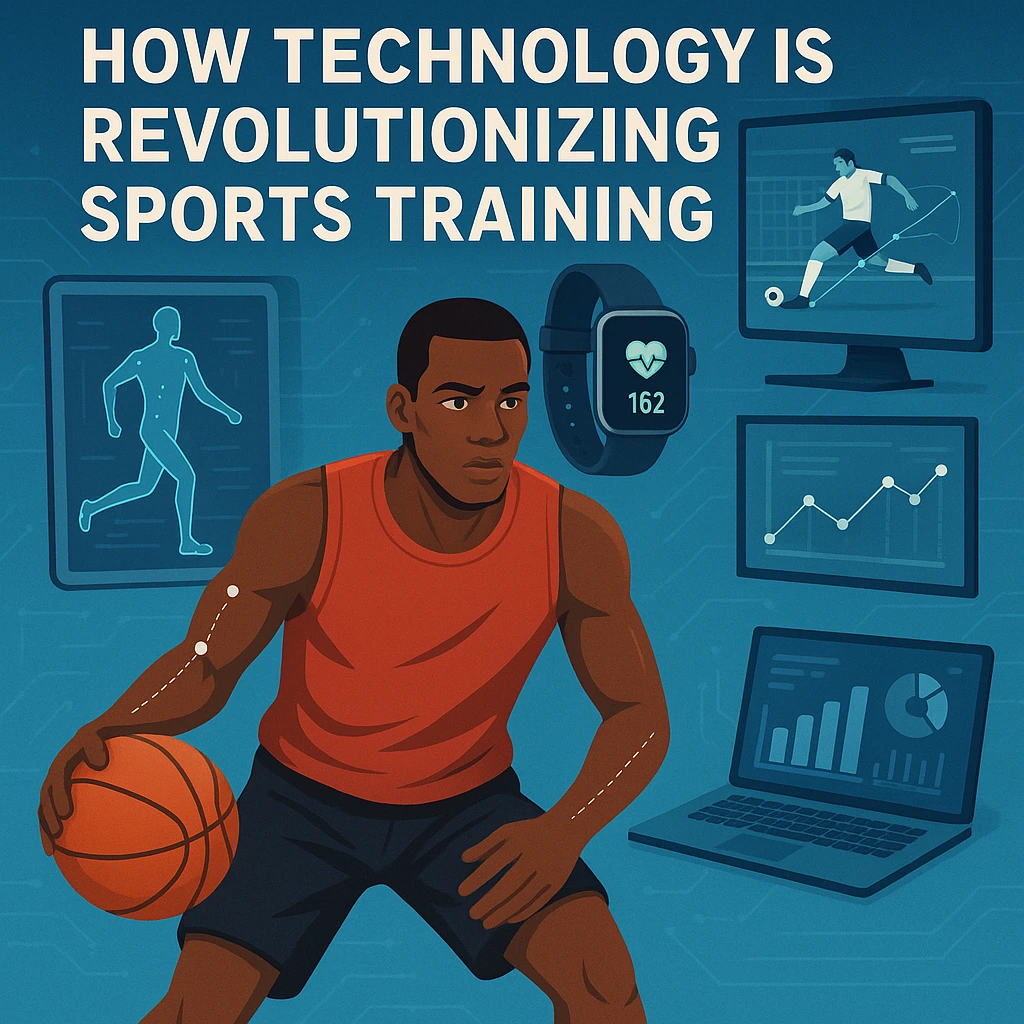
How Technology Is Revolutionizing Sports Training
Pushing human limits—running faster, jumping higher, playing more intelligently, and performing better under duress—has long been the goal of sports. However, the quest for athletic greatness has entered a whole new phase in recent years. Technology is now at the core of sports training, revolutionizing the way athletes train, recuperate, and compete. AI-powered analytics, wearable sensors, virtual reality simulations, and biomechanical evaluations are just a few examples of how technology is enabling training environments that were previously only seen in science fiction.
Athletes nowadays don't just rely on gut feeling or conventional coaching techniques. They now train using sophisticated tools, data-driven insights, and digital systems that maximize every facet of their performance. Athletes may train smarter, not just harder, thanks to technology. For example, a sprinter can analyze stride patterns, a football player can practice plays in virtual reality, or a tennis player can evaluate biomechanics in real time.
In this article, we discuss how technology is transforming sports training, why it is important, and what lies ahead for coaches and athletes around the globe.
The Evolution of Training: From Manual to Digital
The majority of sports training relied on observation until recently. Coaches used their instincts and expertise to make decisions while watching athletes compete. Although this conventional method was effective, it had drawbacks. Performance can be significantly impacted by subtle patterns, irregularities, or mechanical inefficiencies that are missed by human inspection.
Everything was altered by technology. The change started with basic video analysis and developed into an extremely complex system of digital instruments that could record minute aspects of sports performance. The training environment of today combines data, science, and athletic ability into a cohesive approach.
Technology provides accurate measurements, forecasts, and insights rather than speculating about an athlete's performance. It aids coaches in comprehending not just what athletes do, but also why they do it and what has to be improved.
Wearable Technology: Making Every Movement Measurable
One of the most significant technological advancements in contemporary sports training is wearable technology. Nowadays, athletes wear sensors on their bodies, clothes, or equipment, which enables trainers to track movements incredibly precisely.
These devices can measure metrics such as:
-
Heart rate
-
Acceleration
-
Muscle activation
-
Motion patterns
-
Sleep cycles
-
Hydration levels
-
Fatigue rates
Athletes can use this data to determine the ideal intensity level, when they need to recover, and how their bodies react to training stress. Additionally, wearables assist athletes avoid long-term harm by alerting them to early indicators of strain or injury.
Wearable technology is used by professional football, basketball, cricket, and athletic teams to keep players healthy during the season. GPS trackers, for instance, give coaches insight into a player's running speed, distance traveled throughout a game, and frequency of sprints. This information aids coaches in creating individualized training regimens based on the distinct physical characteristics of each athlete.
Artificial Intelligence: Smarter Training Decisions
Sports analytics are being advanced by artificial intelligence (AI). AI systems find patterns and trends that improve training methods by analyzing vast amounts of data more quickly than humans can.
AI can:
-
Predict risk of injury based on workload
-
Suggest personalized training routines
-
Identify weak points in form or technique
-
Evaluate competition strategies
-
Simulate game scenarios based on past performance
AI-powered video analytics analyze technique in real time in sports like cricket and tennis, providing immediate feedback on timing, posture, and motion. This enables athletes to develop their skills more quickly than is possible using conventional techniques.
By examining opponents' strategies, AI assists coaches in team sports in developing more intelligent game plans. It can accurately identify strategic vulnerabilities, defensive flaws, and recurring play patterns.
AI is evolving from a tool to a digital assistant that helps teams and athletes make data-driven decisions.
Virtual Reality: Training in a Digital World
Virtual reality (VR) technology has revolutionized sports training, particularly for athletes who need to improve their decision-making abilities.
Athletes can train in virtual worlds that replicate actual game conditions thanks to virtual reality. Without being on the field, they may enhance their response time, practice plays, and anticipate movements.
American football quarterbacks practice reading defenses in virtual reality. VR is used by boxers to mimic the fighting tactics of their opponents. To get ready for race courses, even Formula 1 drivers spend hours in virtual reality simulators.
Without the physical strain on their bodies, virtual reality provides athletes with the mental repetition they need to succeed under pressure.
It is particularly useful for:
-
Injury recovery
-
Tactical training
-
Improving reaction time
-
Building confidence
-
Learning complex strategies
Training is no longer constrained by location, weather, or physical constraints thanks to VR. Anytime, anywhere, athletes can train.
Biomechanics: Understanding the Science of Movement
Biomechanical analysis is one of the most exciting fields of modern sports technology. High-speed cameras, force plates, and motion capture devices help athletes comprehend how their bodies move during performance.
Biomechanics breaks down movement into scientific components:
-
Angles
-
Velocity
-
Force production
-
Joint rotation
-
Balance
-
Technique efficiency
This degree of precision enables athletes to fix even the tiniest motion errors. Particularly in sports like running, swimming, gymnastics, and weightlifting, a small change in arm angle, foot placement, or posture can greatly improve performance.
Additionally, biomechanics assists athletes in selecting equipment that best fits their body mechanics, such as the perfect tennis racket, running shoes, or bicycle design.
Smart Equipment: The Rise of Connected Gear
Sports equipment is no longer passive. It’s “smart.”
Smart basketballs monitor shooting trends. Spin and impact are measured by smart tennis rackets. Smart golf clubs evaluate the trajectory and speed of swings.
Athletes can make real-time movement adjustments with the help of this equipment, which provides them with instantaneous data on technique and power. For amateur athletes who might not have access to expert coaching, smart equipment is very helpful.
With connected gear, anyone can train like a pro.
Advanced Recovery Technology: The Key to Longevity
Recuperation is just as crucial as training. These days, technology is crucial to maintaining athletes' health and cutting down on downtime.
Tools like:
-
Cryotherapy
-
Compression boots
-
Hyperbaric oxygen chambers
-
Electric muscle stimulation
-
LED therapy
-
Recovery analytics apps
assist athletes in maintaining long-term performance, reducing inflammation, and healing more quickly. Athletes can continue training without worrying about overuse problems thanks to these technologies.
Many teams have specialized recovery labs where athletes go after training sessions to revitalize their bodies because recovery technology is becoming so sophisticated.
Data Analytics: Turning Information Into Performance
Data analytics is currently used in almost all contemporary training facilities to monitor performance over time. Coaches and players can better comprehend progress, setbacks, and future potential thanks to the ecosystem of information created by data analytics.
Performance data helps answer questions like:
-
Is the athlete training too much or too little?
-
Which skills are improving fastest?
-
What factors impact performance declines?
-
How does the athlete compare with competitors?
-
What training schedule produces the best results?
Guesswork is eliminated by data analytics. Every training choice is grounded in evidence.
The Psychological Revolution: Mental Training Goes Digital
Mental toughness is equally as vital as physical prowess. Athletes can now master psychology with the aid of technology thanks to mental training aids like:
-
Neurofeedback headsets
-
Meditation apps
-
Cognitive training games
-
Focus-enhancing VR simulations
-
Stress monitoring wearables
These resources aid athletes in maintaining composure under duress, enhancing focus, and developing mental toughness.
Sports psychologists who use digital tools to monitor mental health and improve mental performance are now employed by professional teams.
What the Future Looks Like
Sports training will become even more individualized, scientific, and immersive in the future. Soon, training could consist of:
-
AI-driven personal coaching available 24/7
-
Augmented reality overlays showing ideal biomechanics
-
Genetic profiling to create personalized training
-
Brain-controlled training systems
-
Full-body digital twins for performance simulation
Instead of taking the place of coaches, technology is providing them with tools that enhance their skills.
Future athletes will be quicker, stronger, and more intelligent than any previous generation because they will grow up in a society where technology is an integral component of training.
Conclusion
Sports training is now a very sophisticated, data-driven, and intelligent procedure thanks to technology. It improves accuracy, increases performance, lowers the chance of injury, and raises the whole sporting experience.
Every facet of sports performance is changing, from wearables and AI analytics to virtual reality, biomechanics, and recuperation technology. Adopting these technologies gives athletes a huge competitive advantage, and coaches learn more about how to develop champions.
In addition to skill and diligence, the future of sports will be determined by how well athletes use technology to reach their greatest potential.