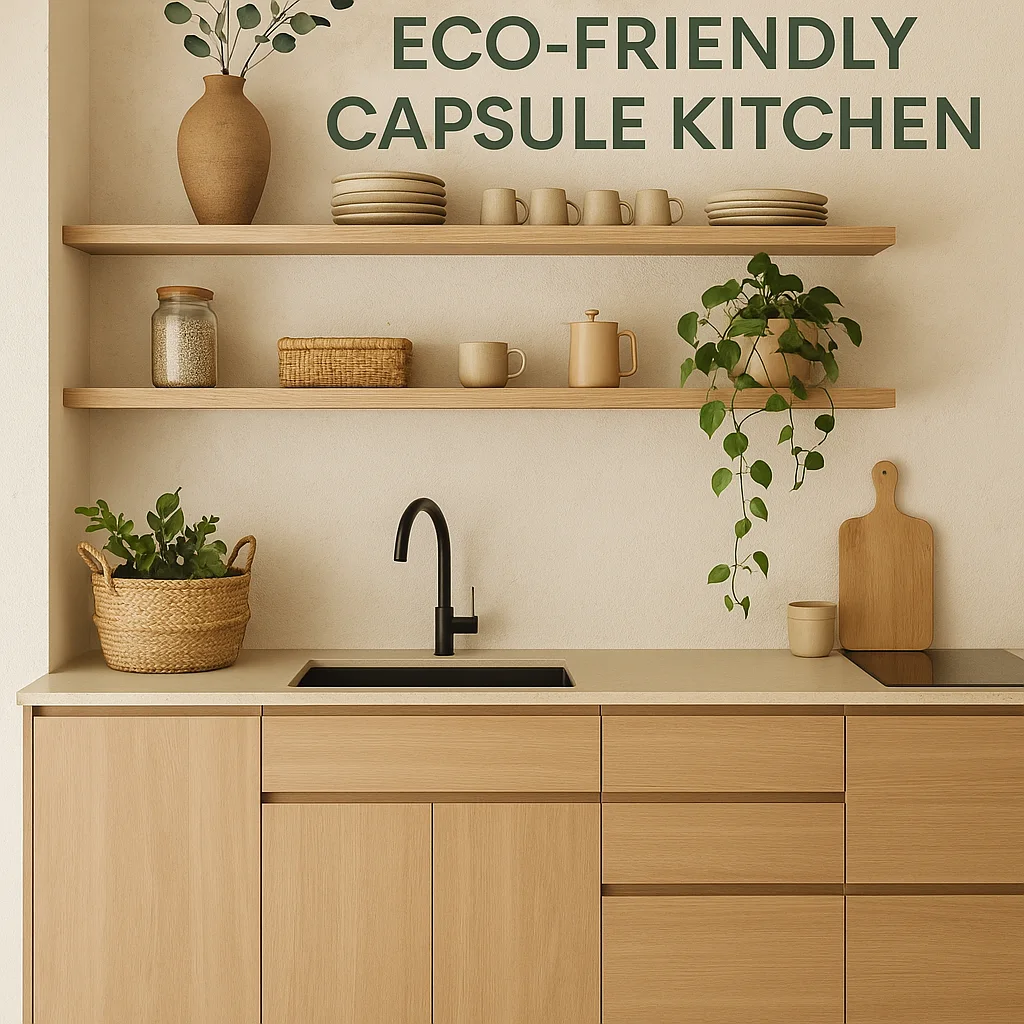
More people have been adopting sustainable practices in their homes in recent years, and a great place to start is in the kitchen. Kitchens are frequently the largest source of household environmental impact, from plastic packaging to food waste. The eco-friendly capsule kitchen is a deliberate, minimalist approach to cooking and kitchen design that promotes healthier living, lowers waste, and uses less energy.
Whether you're an experienced environmentalist or you're just starting out, building a capsule kitchen is a useful and fulfilling first step. The fundamentals of creating an eco-friendly, minimalist, and efficient kitchen will be covered in this guide.
What Is a Capsule Kitchen?
The "capsule wardrobe" idea served as the inspiration for a capsule kitchen, which only contains the necessary equipment, supplies, and tools that you actually use on a daily basis. It's about simplifying your cooking, clearing out clutter, and choosing sustainable options without sacrificing usefulness or originality.
Going one step further, an eco-friendly capsule kitchen prioritizes sustainability in all areas, including food sourcing, cooking practices, energy use, storage, and cleaning.
Benefits of an Eco-Friendly Capsule Kitchen
-
✅ Less Waste – Fewer single-use products and less expired or spoiled food.
-
✅ Lower Carbon Footprint – Using energy-efficient appliances and plant-based ingredients.
-
✅ Time-Saving – A tidy and efficient kitchen makes meal prep faster.
-
✅ Cost-Efficient – You spend less on unnecessary gadgets or wasted food.
-
✅ Healthier Eating – A focus on fresh, whole foods over processed ones.
Step 1: Assess What You Really Use
Start by decluttering your kitchen. Go through every drawer, shelf, and cabinet and ask:
-
When was the last time I used this?
-
Does it serve more than one purpose?
-
Is this item reusable or sustainable?
You'll be shocked at how many extra spatulas, unused tools, or out-of-date spices you own. Just the necessities should be kept.
Core items might include:
-
1–2 quality knives
-
A wooden cutting board
-
A medium and large saucepan
-
A cast iron skillet
-
Mixing bowls
-
A blender (if you use it weekly)
-
Measuring cups & spoons
Remember, the goal is functionality over quantity.
Step 2: Choose Sustainable Cookware and Utensils
Use safer, longer-lasting cookware instead of non-stick or plastic.
Recommended Materials:
-
Cast iron – Durable, non-toxic, retains heat well.
-
Stainless steel – Great for saucepans and mixing bowls.
-
Bamboo or wooden utensils – Compostable and non-scratching.
-
Glass storage containers – Reusable, safe for food storage and microwaving.
Avoid Teflon-coated pans or cheap plastic tools that break easily and end up in landfills.
Step 3: Stock Your Pantry Mindfully
Versatile, shelf-stable ingredients that serve as the foundation for many meals should be included in a capsule kitchen pantry. Bonus points for being plant-based, organic, and purchased in large quantities to cut down on packaging.
Pantry Staples:
-
Grains: brown rice, quinoa, oats, whole wheat pasta
-
Legumes: lentils, chickpeas, black beans
-
Nuts & seeds: almonds, chia seeds, sunflower seeds
-
Healthy oils: olive oil, coconut oil
-
Seasonings: sea salt, black pepper, cumin, turmeric, garlic powder
-
Natural sweeteners: maple syrup, raw honey
-
Shelf-stable plant-based milk
Use your own containers to purchase from bulk bins whenever you can. This allows you to purchase only what you need and minimizes packaging waste.
Step 4: Prioritize Local and Seasonal Produce
Purchasing seasonal and local produce helps your community and lessens your carbon footprint. Local produce frequently tastes better, is fresher, and uses less energy to transport.
Tips:
-
Join a CSA (Community Supported Agriculture)
-
Shop at farmers markets
-
Learn what’s in season in your region
-
Grow herbs or veggies at home—even a small windowsill herb garden makes a difference
Step 5: Go Plastic-Free Wherever Possible
Among the worst pollutants are plastics. Whenever possible, steer clear of them in your capsule kitchen.
Simple Swaps:
-
Beeswax wraps instead of plastic wrap
-
Glass jars instead of plastic containers
-
Reusable silicone zip bags instead of single-use ones
-
Cloth napkins instead of paper towels
-
Mesh produce bags instead of plastic grocery bags
Over time, these small changes add up significantly.
Step 6: Cook with Energy Efficiency in Mind
Cooking technique is also important. When cooking, the typical household wastes a lot of energy. Here's how to cook more efficiently:
-
Use a lid to reduce heat loss and speed up cooking.
-
Cook in batches and freeze leftovers.
-
Use pressure cookers or induction cooktops which consume less energy.
-
Unplug appliances when not in use.
-
Don’t preheat the oven unnecessarily.
Also, consider switching to energy-efficient appliances when you upgrade.
Step 7: Plan Meals to Minimize Waste
Uneaten food is one of the main causes of kitchen waste. Meal planning guarantees that everything is used and helps cut down on impulsive purchases.
Meal Planning Tips:
-
Write a weekly menu before shopping.
-
Stick to your list.
-
Use leftovers creatively (e.g., last night’s veggies can go in today’s soup).
-
Rotate ingredients—buy items that can be used across multiple meals.
Additionally, you can turn inevitable waste into garden treasure by using tools like compost bins.
Step 8: Clean Sustainably
Get rid of your paper towel and chemical-heavy cleaning habits. Choose natural and biodegradable products.
Eco-Friendly Cleaning Supplies:
-
White vinegar and baking soda (a powerful, cheap cleaner)
-
Castile soap
-
Reusable cloth towels
-
Compostable sponges
-
Lemon for natural deodorizing
To verify eco credentials, look for third-party certifications such as EPA Safer Choice, ECOLOGO, or Green Seal.
Bonus: Adopt a Zero-Waste Mindset
The capsule kitchen promotes intentional living rather than merely minimalism. Change your perspective to emphasize reusing, reducing, and repurposing.
-
Save veggie scraps for broth.
-
Reuse glass jars for spices or dry goods.
-
Turn stale bread into croutons.
-
Freeze overripe fruit for smoothies.
Every small act of mindfulness makes your kitchen more sustainable and your lifestyle more aligned with the planet.
Final Thoughts
Making an eco-friendly capsule kitchen is a process rather than a quick fix. It's about simplifying your cooking area and progressively lessening the environmental impact of your kitchen.
In addition to benefiting the environment, you're also making your kitchen more functional and tranquil by organizing your tools, selecting eco-friendly materials, cooking with awareness, and reducing waste.
Your capsule kitchen doesn’t need to be trendy or Instagram-perfect—it just needs to work for you and the planet.