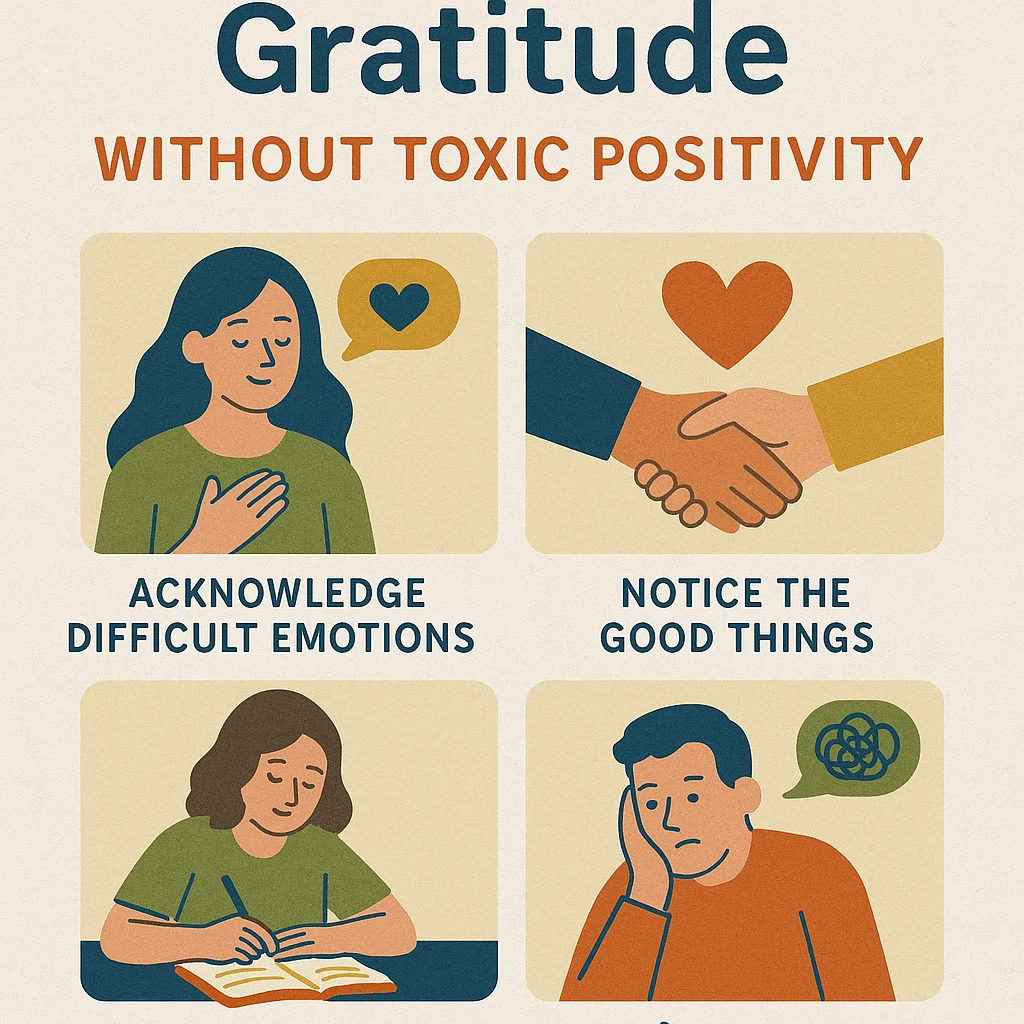
When regularly practiced, the powerful emotion of gratitude can greatly enhance relationships, mental health, and general life satisfaction. However, toxic positivity, a troubling trend, has eclipsed the practice of gratitude in recent years. Instead of fostering genuine appreciation, this type of forced optimism can invalidate genuine emotions and lead to emotional suppression.
So, how can one develop thankfulness in a genuine, significant, and psychologically sound way? Let's examine how to cultivate thankfulness without succumbing to toxic positivity.
What Is Gratitude?
Recognizing the positive aspects of our lives is the foundation of gratitude. It's the process of appreciating opportunities, people, and experiences, no matter how small. We don't have to ignore suffering or pain in order to be grateful. Instead, it enables us to see the whole picture, including the positive aspects of the negative.
When practiced intentionally, gratitude can:
-
Increase happiness
-
Reduce stress and anxiety
-
Improve relationships
-
Enhance resilience
-
Improve sleep quality
But if misunderstood, gratitude can easily morph into unrealistic expectations of perpetual positivity.
Understanding Toxic Positivity
The idea of toxic positivity holds that people should remain optimistic despite how bad or challenging things are. This method can:
-
Dismiss valid emotions
-
Discourage emotional honesty
-
Create guilt for feeling sad or angry
-
Prevent healing
Examples of toxic positivity include:
-
“At least it’s not worse.”
-
“Just be happy.”
-
“You shouldn’t feel that way.”
These statements can come from others—or ourselves. And they often do more harm than good.
Gratitude ≠ Denial
It's critical to understand that gratitude is not denial in order to distinguish healthy thankfulness from toxic positivity. You can still be upset about losing your job and be thankful for your encouraging friend. You can still mourn the loss of a loved one and enjoy a sunny day.
All emotions can coexist in the healthiest kind of gratitude. It simply helps you avoid letting your pain consume you; it doesn't require you to erase it.
Why It’s Important to Avoid Toxic Positivity in Gratitude Practices
1. It Undermines Emotional Intelligence
Telling yourself to "just be grateful" in times of crisis is a way to avoid facing genuine feelings that require recognition. Ignoring grief, rage, or frustration only pushes them underground; it doesn't make them go away.
2. It Can Be Invalidating
"Just be thankful for what you have" is a response that minimizes the suffering of those who share their struggles. It suggests that they don't appreciate being human.
3. It Encourages Shame
You may feel ashamed of your emotional state if you're depressed but keep telling yourself that you should be grateful or joyful. Being grateful should make you feel better, not worse.
How to Practice Authentic Gratitude
1. Start with Honesty
Recognize your true feelings before moving on to gratitude. Write down your actual thoughts. Write that if you're tired. Admit it if you're depressed. Gratitude works best when it is layered over reality rather than fiction.
Tip: Consider writing two columns: one for your struggles and another for your blessings. Emotional balance is produced in this way.
2. Use “And” Instead of “But”
Use the phrase "I lost my job, and I'm grateful I have my health" instead of "I lost my job, but I should be grateful I have my health."
That small change allows both realities to be true. You don’t have to invalidate your pain to recognize your blessings.
3. Be Specific
Generic gratitude like “I’m thankful for everything” is less impactful than focused gratitude. Instead, say:
-
“I’m grateful for the warm coffee I had this morning.”
-
“I’m thankful my friend checked in on me today.”
Being specific helps you genuinely feel the gratitude rather than just saying it.
4. Don’t Force It
Don't pretend to be thankful if you're not. Gratitude that is forced is meaningless. On difficult days, it's acceptable to skip writing in your gratitude journal. Consistency is not as important as authenticity.
Instead, try thinking about the things that are keeping you going that day, even if they don't seem like much, like a good cry or a warm blanket.
5. Balance Gratitude with Validation
Gratitude shouldn’t be used to escape emotions—it should be used to balance them. For example:
-
“I’m overwhelmed with work. It’s really tough right now. I’m also thankful I have a job that supports my family.”
Validation comes first; gratitude follows.
6. Gratitude for Self, Not Just Others
We frequently thank other people, things, and material comforts for our existence. However, you can also express gratitude for your own fortitude, perseverance, or advancement.
Try statements like:
-
“I’m proud of how I handled that conversation.”
-
“I’m grateful I took time to rest today.”
7. Create a Ritual That Works for You
Gratitude doesn’t have to be a daily journal. It could be:
-
Saying one thing you’re thankful for during dinner
-
A monthly “gratitude walk”
-
A photo album of things you appreciate
Pick a method that feels natural—not obligatory.
8. Practice Compassion
Surviving is the best you can do on certain days. Being grateful doesn't have to be flawless. It doesn't have to be deep. All it has to be is true. Treat yourself with the same decency that you would a friend.
The Benefits of Emotionally Balanced Gratitude
When gratitude is practiced authentically, without suppressing other emotions, it offers genuine benefits:
-
Emotional resilience: You’re more capable of navigating ups and downs.
-
Improved relationships: You can communicate your needs and appreciation more clearly.
-
Mental clarity: You’re better able to see what’s working in your life alongside what isn’t.
-
Greater self-awareness: You understand your emotional landscape more fully.
Final Thoughts
Being grateful shouldn't be a weapon against your humanity or a panacea. Life is a mess. Emotions are complex. You don't have to cover up your suffering with optimism.
Rather, make thankfulness one of your many emotional tools. Not one that pulls you down, but one that helps you get up. Sincere gratitude provides context for your struggles rather than silencing them. It serves as a reminder that there can be light even in the darkest places.
Therefore, take a moment the next time you feel the urge to tell yourself to "just be thankful." What am I truly feeling, you ask? Find one genuine thing to be grateful for, even if it's just your breath, when you're ready.