Life happens. People drift. Time passes.
Be it distance, new obligations, or plain inattention, friendships that once seemed to be the center of your world can quietly fade into the background. However, most of us harbor a secret desire to get in touch with an old friend, to rekindle that old bond.
The good news? It’s never too late to reach out—authentically.
This blog will walk you through:
-
Why we lose touch
-
The benefits of reconnecting
-
How to make the first move (without being weird)
-
Tips for having meaningful conversations
-
What to do if it doesn’t go as planned
Why We Lose Touch with Old Friends
Understanding why we lose touch in the first place is helpful before discussing how to get back in touch. It's not always the result of animosity or conflict. The most frequent causes are actually rather commonplace:
1. Life Transitions
It's possible to establish new routines and part ways with old friends when you graduate, change jobs, move cities, get married, or have children.
2. Lack of Time
Between work, family, and self-care, reaching out can fall to the bottom of the priority list.
3. Assumed Distance
Sometimes we assume others are too busy or not interested in talking anymore, so we don’t try.
4. Social Media Illusion
Even if you haven't spoken in person for years, it can feel like you're still "in touch" when you see each other's updates on Facebook or Instagram.
Understanding that drifting apart is normal helps remove guilt or awkwardness when you decide to reach out.
The Benefits of Reconnecting with Old Friends
Reconnecting with old friends can be deeply rewarding. Here’s why:
1. Shared History
Old friends are aware of your origins. They have witnessed your development and might bring to mind previously forgotten aspects of you.
2. Comfort and Trust
You don’t need to start from scratch. There’s already a foundation, even if it’s dusty.
3. Mental Health Boost
Longer life expectancy, reduced stress, and decreased depression are all associated with social connections. It can be genuinely joyful to reconnect.
4. New Perspectives
New experiences come from time apart. Reframing your story or introducing new viewpoints are two benefits of catching up with someone.
Step-by-Step: How to Reconnect Authentically
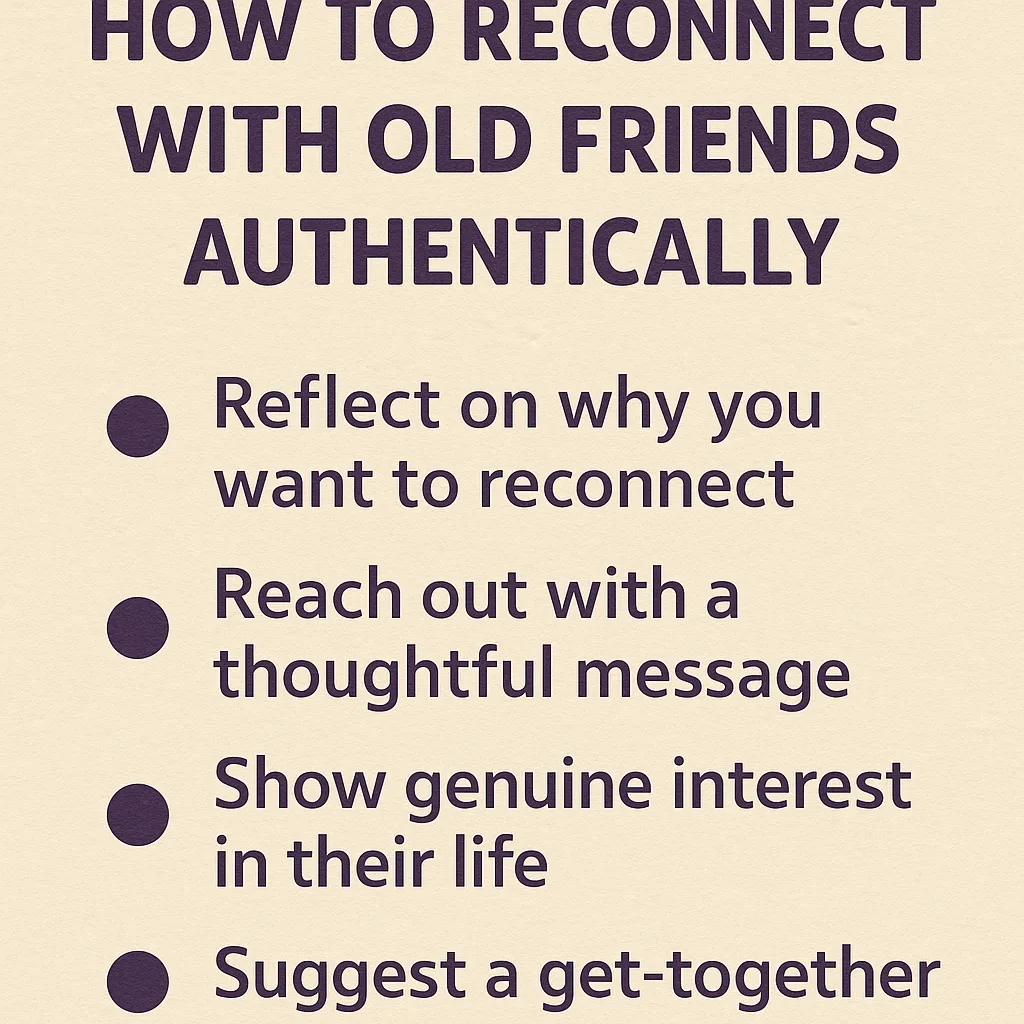
Step 1: Start with Intention
Before reaching out, ask yourself:
-
Why do I want to reconnect?
-
Am I looking for closure, reconnection, or just curious?
-
Is it okay for me to reach out and not expect anything in return?
Having clarity keeps your approach honest, respectful, and emotionally mature.
Step 2: Choose the Right Medium
A handwritten letter, email, social media post, or even a text message can be effective. Select according to:
-
Your comfort level
-
Their personality
-
How you used to communicate
An email or message might be preferable to a public comment if the recipient is more private or conventional.
Example Message:
“Hey [Name], I was thinking about you the other day and remembering that road trip we took. It’s been way too long. I’d love to catch up sometime—no pressure, just felt like reaching out.”
Keep it simple, light, and low-pressure.
Step 3: Acknowledge the Gap
Although a lengthy explanation or a dramatic apology are not necessary, it is beneficial to acknowledge the time that has passed.
“I know it’s been a while—I’ve missed our chats.”
This shows self-awareness and reduces awkwardness.
Step 4: Offer a Conversation, Not an Obligation
Give them room to react freely rather than diving right into a detailed reunion strategy.
“If you’re up for a call or coffee sometime, I’d love to hear how you’ve been.”
This allows them to engage without pressure or guilt.
Making the Conversation Meaningful
Once they respond and you reconnect (in person or online), keep these tips in mind:
1. Be Present
Avoid multitasking while having a conversation. Give it your all.
2. Focus on Listening
Listen to what they have to say about their lives without interjecting or directing the conversation back to yourself.
3. Share Honestly
Avoid over-polishing your life. People connect through vulnerability, not perfection.
4. Revisit Good Memories
Discuss common experiences, but avoid focusing solely on the past. Allow the discussion to progress into the present.
5. Avoid Gossip or Comparison
Avoid turning the catch-up into a judgment-fest. Authenticity thrives in positivity and non-judgment.
What If They Don’t Respond?
Not every attempt will lead to a rekindled friendship. And that’s okay.
1. Don’t Take It Personally
They may be going through something, may not be ready, or may have moved on—and that’s their right.
2. Let It Be
You’ve made a kind gesture. That alone is meaningful. You don’t need to chase closure or explanation.
3. Celebrate the Courage
Reaching out takes vulnerability. Regardless of the outcome, it’s a win for your personal growth.
Maintaining the Connection Going Forward
Rekindling a friendship is just the beginning. To keep the relationship alive:
1. Stay Consistent, Not Overwhelming
A birthday note, a brief message every few weeks, or the odd meme can sustain the relationship organically.
2. Make Time
Make time in your schedule, even if it's only for fifteen minutes, if the friendship is important.
3. Create Shared Moments
Invite them to a class, event, or virtual meetup. Shared activities strengthen bonds.
4. Be Okay with Change
The dynamic may not be what it used to be—and that’s fine. Let it evolve into something new.
Final Thoughts
Meeting old friends where you are now, with openness, kindness, and respect, is more important than continuing where you left off.
Conflict isn't always the reason why friendships end. Life just happens sometimes. However, you can rekindle meaningful connections that still have potential for growth if you have a little guts and are sincere.
So if someone’s been on your mind lately, don’t wait for “the right time.” Send that message. Make that call. Reopen that door.
Because sometimes, the most beautiful friendships are the ones we choose to revive.