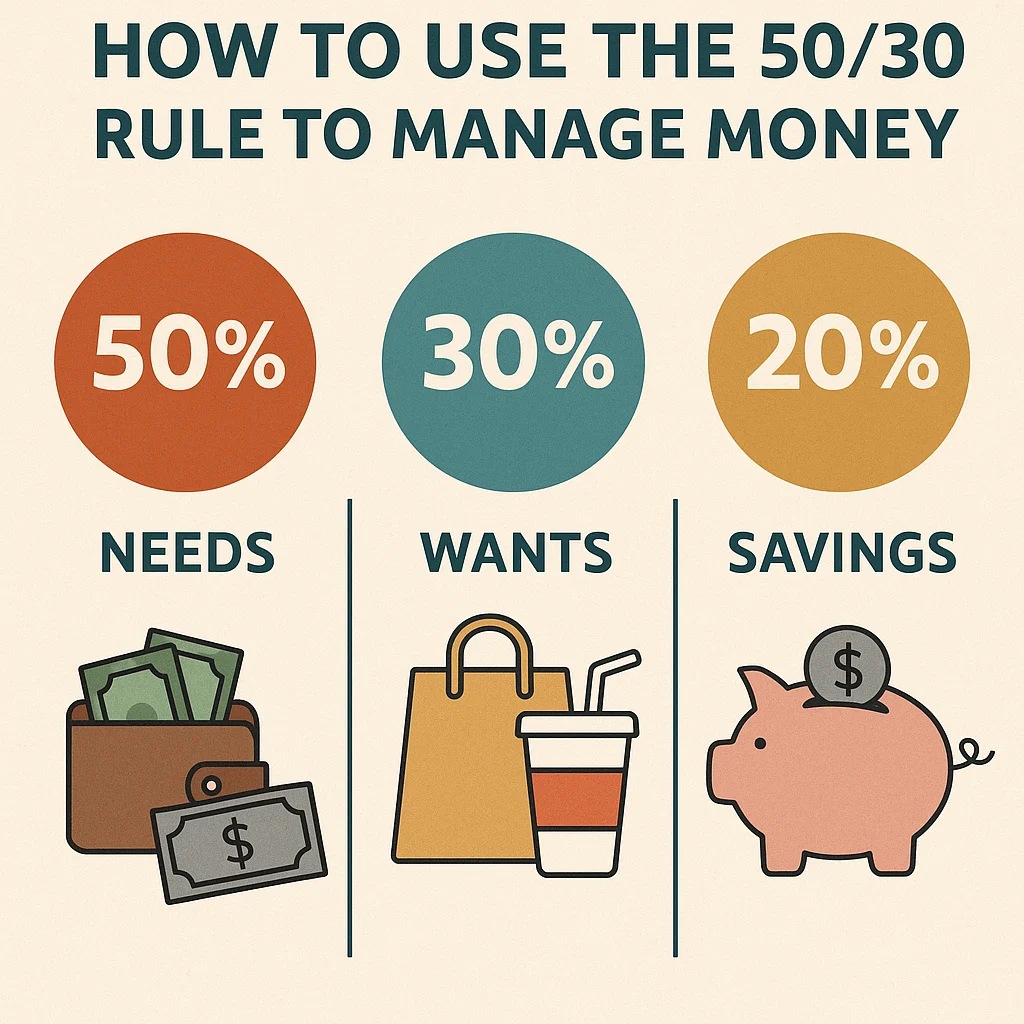
It can be very difficult to manage your finances, particularly when you're attempting to balance emergencies, savings, bills, and social obligations. The good news? It doesn't need to be difficult. The 50/30/20 rule is among the easiest and best ways to take charge of your money.
This budgeting framework provides a clear, doable plan for prudent spending and saving, and it was popularized by U.S. Senator Elizabeth Warren in her book All Your Worth. Whether you're a working professional, a college student, or a new parent, this rule makes it easier to create a sustainable, balanced budget.
What Is the 50/30/20 Rule?
A money management strategy known as the 50/30/20 rule splits your post-tax income into three groups:
-
50% for Needs
-
30% for Wants
-
20% for Savings and Debt Repayment
Without requiring a sophisticated spreadsheet or a financial degree, it's a flexible yet methodical approach to make sure your basic costs are met, you can still enjoy life, and you get ready for the future.
Step 1: Calculate Your After-Tax Income
You must ascertain your net income—what you truly take home after taxes and deductions—before you can apply the rule.
Example:
If you earn ₹60,000/month or $3,000/month after taxes:
-
50% (Needs): ₹30,000 or $1,500
-
30% (Wants): ₹18,000 or $900
-
20% (Savings/Debt): ₹12,000 or $600
Set these as your financial goals. Although actual spending may differ slightly, these ratios offer a sound starting point.
Step 2: Understand What Falls into Each Category
🔵 50% – Needs
These are essential expenses—the things you can’t live without.
Examples include:
-
Rent or mortgage
-
Groceries
-
Utility bills (electricity, water, gas)
-
Transportation (fuel, public transit)
-
Health insurance
-
Minimum loan payments
Tip: You might need to reduce non-essential purchases or think about changing your lifestyle (such as relocating to a less expensive area or using public transportation) if your "needs" surpass 50%.
🟡 30% – Wants
This category is where most people overspend. Wants are non-essential but enjoyable.
Examples include:
-
Dining out or ordering food
-
Streaming subscriptions (Netflix, Spotify)
-
Shopping for clothes or gadgets
-
Gym memberships (unless medically necessary)
-
Travel, vacations, entertainment
-
Upgraded phone plans or car models
Although wants are necessary for a high quality of life, they shouldn't come at the expense of your savings or essentials.
🟢 20% – Savings & Debt Repayment
This portion goes toward improving your financial future.
Use this 20% for:
-
Building an emergency fund
-
Retirement savings (401k, PPF, EPF, SIPs)
-
Investments (stocks, mutual funds)
-
Paying off credit card debt
-
Student loans or other high-interest loans
If you have a six-month emergency fund and no debt, you can use this category to invest more quickly and build wealth.
Why the 50/30/20 Rule Works
This rule is effective because it’s:
✅ Simple
No complicated calculations or keeping track of hundreds of different expense categories. Only three pails.
✅ Flexible
Rather than being inflexible, the percentages provide guidance. Depending on your circumstances, you can make minor adjustments.
✅ Balanced
It prioritizes future stability and promotes spending on important things.
Customizing the Rule to Fit Your Lifestyle
Although 50/30/20 is a fantastic place to start, you may need to adjust it depending on your location and personal objectives.
Examples:
-
High cost of living? You might do 60/20/20 (more for needs).
-
Aggressive savings goal? Try 40/20/40 (double down on savings).
-
Debt-heavy? Allocate more than 20% to repayment.
The key is to stay intentional with your money—not let it drift away each month.
How to Implement the 50/30/20 Rule Step by Step
1. Track Your Spending
Prior to establishing boundaries, you must ascertain where your money is currently going. Make use of resources such as
-
Excel or Google Sheets
-
Expense tracking apps (Mint, YNAB, Walnut, Goodbudget)
Review at least 3 months of spending to get an accurate picture.
2. Categorize Each Expense
Label all expenses as:
-
Need
-
Want
-
Savings/Debt
The number of "wants" that are passed off as "needs" (like pricey coffee runs or upgraded mobile plans) may surprise you.
3. Build a Monthly Budget Based on the 50/30/20 Rule
Use your net income and assign each portion to the correct category.
For example, if your take-home is ₹1,00,000:
-
₹50,000 → Needs
-
₹30,000 → Wants
-
₹20,000 → Savings/Debt
4. Set Up Automations
Automate transfers:
-
Auto-debit savings right after salary hits
-
Use different bank accounts for savings and spending
-
Pay EMIs automatically to avoid late fees
Automation helps remove emotion and ensures consistency.
5. Monitor & Adjust Monthly
Life happens. Prices fluctuate. You might overspend some months.
Regularly review and adjust:
-
Did your “wants” creep into the “needs” bucket?
-
Can you increase savings by 1–2% next month?
Stay mindful without being obsessive.
Common Mistakes to Avoid
❌ Confusing Wants with Needs
You must have a basic smartphone. A new iPhone is desired.
❌ Skipping the Savings Category
Saving money is essential, even if your income is limited. Begin modestly.
❌ Rigid Budgeting
Don't worry about the precise figures each month. Don't use the rule as a punishment; use it as a guide.
Who Should Use the 50/30/20 Rule?
It works best for:
-
Beginners just starting to budget
-
Young professionals learning to manage income
-
Freelancers looking for income balance
-
Anyone overwhelmed by complex budgeting systems
Even high-income earners can benefit—it creates financial awareness and discipline.
Alternatives to the 50/30/20 Rule
While it’s a solid rule, it’s not the only budgeting system out there. You might also explore:
-
Zero-based budgeting: Every rupee/dollar is assigned a job
-
80/20 rule (Pareto): Save 20%, spend the rest
-
Envelope system: Cash-based, useful for overspenders
Choose the one that matches your personality and goals.
Final Thoughts
The 50/30/20 rule provides a strong framework for managing your money without being complicated or requiring constant attention to detail. It guarantees your needs are satisfied, your way of life is pleasurable, and your future is safe.
This rule gives you the clarity and control you need to succeed, whether your goal is to reduce your debt, save money, or simply feel less stressed about money.
Start today. Track your income, apply the 50/30/20 split, and watch how quickly your financial stress starts to fade.