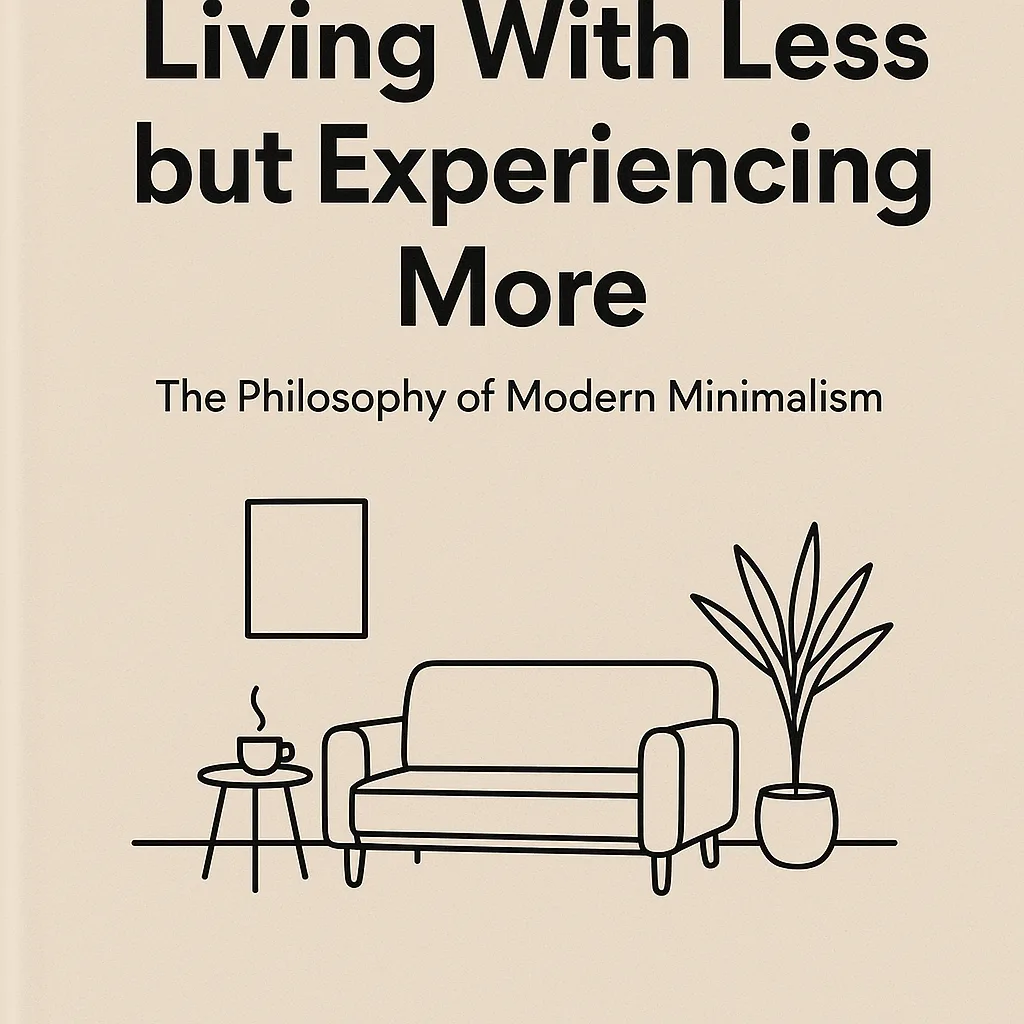
Living with less but experiencing more is the philosophy of minimalism, which subtly offers a countercultural path in a world that constantly celebrates abundance, consumerism, and "more." At its core, minimalism is a way of thinking, even though it's sometimes confused with a design style that features clean, white spaces, sleek furniture, and neat shelves. It is about choosing meaning over material excess, depth over distraction, and purposeful living over chaotic accumulation.
Living in an empty apartment or giving up all of your belongings are not requirements of modern minimalism. It encourages you to reorient your attention from material possessions to experiences, connections, and meaning. You acquire the time, energy, and mental clarity you need to live your life as you see fit when you do this.
The philosophy behind modern minimalism is examined in this blog, along with why it's more important than ever and how you can start living with less while still experiencing a lot more.
The Philosophy of Modern Minimalism
Nothing new about minimalism. Zen monks in Japan and Stoic thinkers in ancient Greece are just two examples of the cultures that have long valued simplicity. Modern minimalism is distinctive because it is still relevant in a time of consumerism, digital noise, and limitless options.
Liberation is the goal of minimalism, not deprivation. You make room for clarity and purpose when you live with fewer material belongings and distractions. You take back your life from the advertising machine that tells you that you can purchase happiness.
At its core, minimalism is about asking:
-
What truly adds value to my life?
-
What am I holding onto out of habit, fear, or social pressure?
-
What could I let go of to create more room for joy, creativity, and freedom?
Why Minimalism Matters Today
We live in a world of overconsumption:
-
Closets bursting with clothes yet the feeling of having “nothing to wear.”
-
Digital devices overflowing with apps, files, and notifications.
-
Homes filled with possessions that require constant cleaning and organizing.
This excess frequently leads to stress, decision fatigue, and discontent rather than happiness. According to studies, clutter weakens our focus and raises the stress hormone cortisol. In the meantime, a cycle of fleeting satisfaction followed by emptiness is produced by the marketing-driven search for "the next big thing."
Minimalism offers an alternative. You can focus on what really matters, such as fulfilling work, nurturing relationships, creativity, travel, and personal development, by purposefully owning and doing less.
Living With Less: What Does It Really Mean?
It's not necessary to give up everything in order to "live with less." Rather, it entails eliminating the unnecessary. When a sculptor works on marble, the objective is to expose the hidden masterpiece rather than to reduce the stone to nothing.
Living with less could look like:
-
A wardrobe of versatile clothing you genuinely enjoy wearing.
-
A digital workspace with only the essential tools, free of constant pings.
-
A home filled only with items that serve a purpose or bring joy.
-
A calendar cleared of obligations that drain rather than uplift you.
By stripping away what doesn’t matter, you discover what does.
Experiencing More: The Minimalist Payoff
The unexpected benefit of minimalism is that it leads to more life rather than less. Richer experiences can be had when you have fewer belongings, commitments, and diversions.
Here’s what you gain:
-
More Time – Less stuff means less upkeep, organizing, and cleaning. That time can be used for rest, pursuing passions, or spending time with loved ones.
-
More Clarity –You can concentrate better and think more creatively in a minimalist setting because it clears up mental clutter.
-
More Financial Freedom – Spending less on material possessions frees up funds for long-term investments, travel, or education.
-
More Connection – You put relationships, memories, and shared adventures first when you value experiences over material possessions.
-
More Peace – Stress is lessened by simplicity. A minimalist room feels lighter, more serene, and better for health.
Minimalism, then, isn’t about what you lose—it’s about what you gain.
Practical Steps to Start Living With Less
If minimalism feels overwhelming, remember that it’s not an overnight transformation but a gradual practice of letting go. Here’s how to begin:
1. Start With One Space
Declutter one drawer, closet, or shelf rather than your entire house. Do I use this, you ask? Does it make me happy? Otherwise, let it go.
2. Embrace the One-In-One-Out Rule
Give up one old item for each new one you purchase. This prevents clutter from returning.
3. Audit Your Digital Life
Not only is minimalism physical, but it is also digital. Limit notifications, remove unused apps, and unsubscribe from newsletters. A clear mind results from a clear digital environment.
4. Simplify Your Schedule
Examine your calendar. What obligations wear you down? Can you assign tasks or say no more frequently? Time minimization is a component of true minimalism.
5. Prioritize Quality Over Quantity
Focus on fewer but better things, whether it's clothes, friendships, or pastimes. Make long-lasting investments in experiences, relationships, and things.
6. Practice Gratitude
Being minimalist is about valuing what you already have, not just about letting go. You can feel abundant even with less when you practice gratitude every day.
Minimalism and the Modern World
Although minimalism may appear to be a luxury only the wealthy can afford, anyone can adopt this way of thinking. What matters is how you choose to live, not what you can afford.
In fact, minimalism has deep environmental and social implications:
-
Sustainability: Reduced consumption results in less pollution, waste, and resource extraction.
-
Equity: Rejecting excess challenges a culture of comparison and inequality.
-
Resilience: Owning less prepares you to adapt to life’s changes more easily.
Far from being an indulgence, minimalism can be a conscious act of responsibility—to yourself, others, and the planet.
The Deeper Philosophy: A Shift in Values
Ultimately, minimalism isn’t about stuff—it’s about values. When you choose less, you are declaring:
-
Presence over distraction
-
Experiences over possessions
-
Quality over quantity
-
Meaning over materialism
This change enables you to create a life that is consistent with your core values. You start following your own inner compass instead of pursuing what society says you should want.
Conclusion: The Joy of Enough
We are reminded by modern minimalism that having enough is a powerful state. To live fully, you need clarity, presence, and purpose—not an endless supply of things.
Living on less doesn't make your life smaller; rather, it makes it bigger. It allows you to freely create, connect, explore, and enjoy. Minimalism offers the radical possibility of peaceful joy in a world full of noise.
What could I give up today in order to have more experiences tomorrow? You may be surprised by the answer, which will lead to a more purposeful, liberated, and wealthy life.