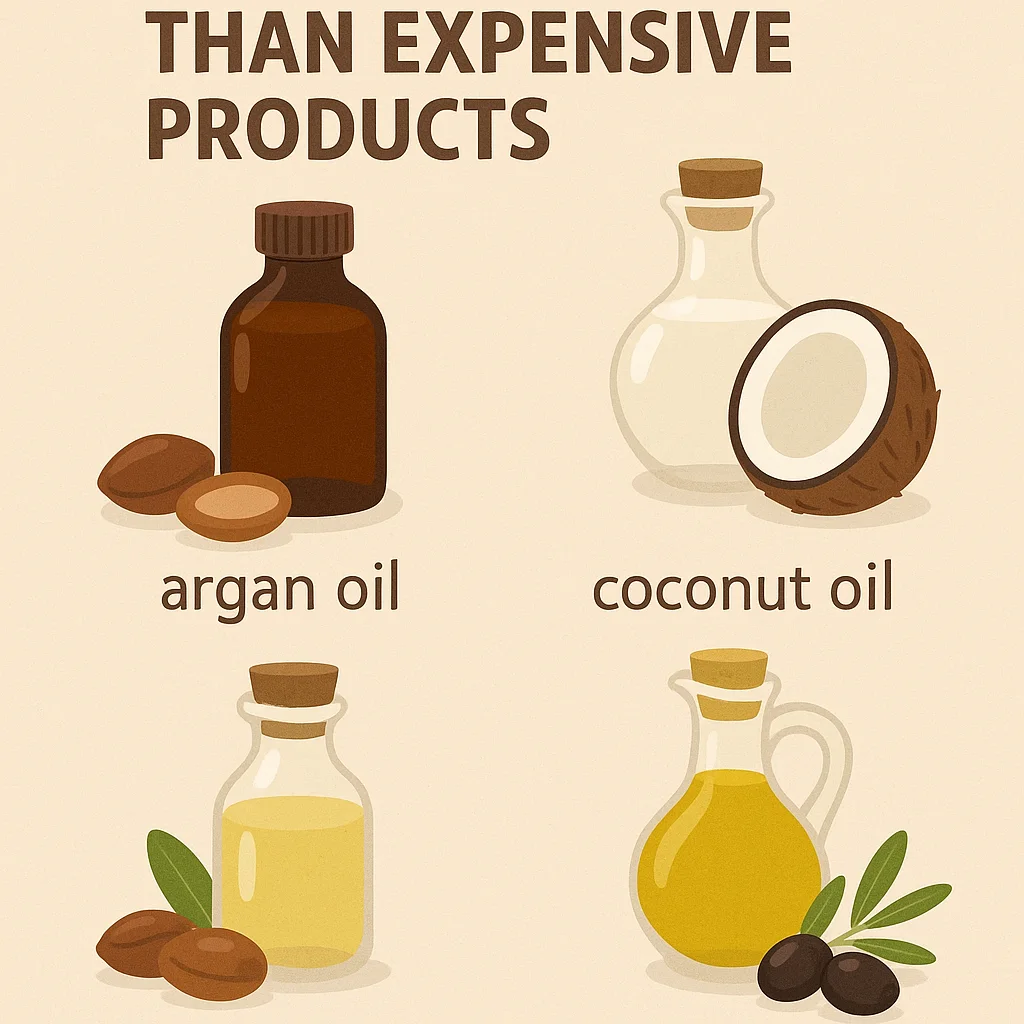
With so many expensive serums, creams, and treatments lining the beauty aisles, it's simple to believe that the more expensive something is, the better the outcome. But what if the secret to strong nails, healthy hair, and radiant skin has always been in your local grocery store or kitchen? Natural oils, which are sometimes disregarded in favor of high-end skincare products, can provide remarkable advantages that are on par with or even better than those of the priciest products available.
These natural ingredients, which range from jojoba to coconut oil, provide rich nourishment without the use of artificial chemicals, fragrances, or marketing markups. Let's explore the best natural oils that work better than pricey ones, how to apply them, and why your body will appreciate it.
1. Coconut Oil: The All-in-One Miracle
Best for: Skin hydration, hair conditioning, makeup removal, and antibacterial care
Why it works:
Coconut oil is a potent moisturizer and antimicrobial because it is high in fatty acids like lauric acid. It softens rough skin areas, deeply penetrates hair strands, and even works as a mild yet efficient makeup remover.
How it outperforms:
Fillers, fragrances, and artificial preservatives are common ingredients in high-end moisturizers. When used sparingly, coconut oil's purity, versatility, and rapid absorption help to seal in moisture without clogging pores.
How to use:
-
Apply to damp skin after a shower for lasting hydration.
-
Use as a deep conditioning hair mask for 30 minutes before shampooing.
-
Gently massage onto your face to remove makeup, then wipe off with a warm cloth.
Bonus tip: Opt for cold-pressed, unrefined (virgin) coconut oil for best results.
2. Argan Oil: Liquid Gold for Hair and Skin
Best for: Frizz control, anti-aging skincare, dry cuticles, and stretch marks
Why it works:
Argan oil, sometimes referred to as "liquid gold," is high in omega fatty acids, vitamin E, and antioxidants. It hydrates skin without leaving a greasy residue, smoothes hair, and helps reduce inflammation.
How it outperforms:
A common ingredient in high-end hair serums and face oils is argan oil. Pure argan oil, on the other hand, is much less expensive and doesn't include any extraneous ingredients. It is more effective than expensive anti-aging creams at reducing wrinkles and restoring skin elasticity when used regularly.
How to use:
-
Rub a few drops into your hair ends to reduce split ends and add shine.
-
Apply to the face at night for anti-aging benefits.
-
Massage into nails and cuticles to strengthen and moisturize.
3. Jojoba Oil: The Skin’s Best Friend
Best for: Oily, acne-prone, or sensitive skin
Why it works:
Jojoba oil helps balance oil production because it closely resembles the natural sebum produced by your skin. Because it is non-comedogenic, it is ideal for skin types that are sensitive or prone to acne. Additionally, it has anti-inflammatory qualities that help reduce redness and irritation.
How it outperforms:
A lot of expensive moisturizers for oily skin contain drying agents or alcohols that cause the skin to become stripped. Conversely, jojoba oil naturally balances moisture without causing breakouts.
How to use:
-
Use as a lightweight moisturizer after cleansing.
-
Mix with a drop of tea tree oil for a natural acne treatment.
-
Apply to your scalp to reduce dandruff and dryness.
4. Rosehip Seed Oil: Nature’s Retinol
Best for: Anti-aging, scars, hyperpigmentation, and dull skin
Why it works:
Vitamins A and C, which are abundant in rosehip seed oil, encourage collagen synthesis and cell turnover. Because it lessens the visibility of scars, dark spots, and fine lines, it's a great natural substitute for synthetic retinol.
How it outperforms:
Although high-end anti-aging products frequently contain vitamin A derivatives, they can also irritate and cause redness. Rosehip oil is less expensive and has fewer negative effects while providing comparable advantages.
How to use:
-
Apply a few drops to clean skin before bed.
-
Use it under sunscreen in the morning to enhance glow.
-
Mix with your favorite moisturizer for an extra boost.
5. Castor Oil: The Secret to Thick Lashes and Brows
Best for: Hair growth, eyelash thickening, dry skin patches, and joint pain
Why it works:
Ricinoleic acid, found in castor oil, stimulates blood flow and feeds hair follicles. For generations, it has been used to naturally increase brow and lash growth. Additionally, it has antibacterial and anti-inflammatory qualities that help calm irritated skin.
How it outperforms:
Castor oil provides a safe and efficient substitute for expensive lash growth serums that contain chemicals (and possible negative effects); it frequently produces noticeable results in a matter of weeks.
How to use:
-
Apply with a clean mascara wand to lashes and brows before bed.
-
Massage into the scalp to stimulate hair growth.
-
Dab onto dry elbows or heels for deep moisturization.
6. Tea Tree Oil: The Natural Acne Fighter
Best for: Acne treatment, dandruff control, and fungal infections
Why it works:
Strong antifungal and antibacterial properties can be found in tea tree oil. It clears pores, lessens acne, and even combats seborrheic dermatitis and dandruff on the scalp.
How it outperforms:
Benzoyl peroxide is one of the harsh ingredients found in many acne treatments that can irritate and dry out skin. A kinder, more efficient substitute is tea tree oil.
How to use:
-
Mix 1 drop with 10 drops of jojoba or coconut oil for spot treatment.
-
Add to shampoo to combat dandruff.
-
Use in a foot soak to treat fungal infections.
Note: Never apply tea tree oil undiluted directly to skin—always dilute with a carrier oil.
7. Sweet Almond Oil: Gentle Enough for Babies, Strong Enough for You
Best for: Sensitive skin, under-eye care, eczema, and baby skin
Why it works:
Rich in vitamins E and K, sweet almond oil helps to lessen puffiness and dark circles under the eyes. Because of its extreme gentleness, it is perfect for those with dry, sensitive skin, dermatitis, or eczema.
How it outperforms:
Preservatives and artificial fragrances are frequently found in baby lotions and under-eye creams. A simpler, safer substitute that produces noticeable effects is almond oil.
How to use:
-
Dab a few drops under eyes before bed.
-
Use as a baby massage oil or moisturizer.
-
Add to bath water for soft, supple skin.
8. Olive Oil: More Than a Kitchen Staple
Best for: Deep conditioning, anti-aging, and skin barrier protection
Why it works:
Squalene, a naturally occurring antioxidant that imitates the skin's own hydrating oils, is abundant in olive oil. It protects against environmental stress, delays the onset of premature aging, and strengthens the skin barrier.
How it outperforms:
Olive oil is frequently used as a secondary ingredient in high-end night creams. Without all the additional chemicals, pure olive oil works just as well and is far less expensive.
How to use:
-
Use as a weekly hair mask to restore shine.
-
Mix with sugar for a DIY exfoliating scrub.
-
Apply to nails and hands for overnight repair.
9. Grapeseed Oil: Lightweight and Powerful
Best for: Acne-prone skin, oily skin, and scar healing
Why it works:
Light and quickly absorbed, grapeseed oil contains a lot of linoleic acid, which can help lower inflammation and clogged pores. It also reduces scarring and tightens the skin.
How it outperforms:
Although a lot of oil-free products promise to improve oily or acne-prone skin, they frequently remove excessive amounts of moisture. Without exacerbating the oil issue, grapeseed oil provides nourishment.
How to use:
-
Apply after toner as a lightweight moisturizer.
-
Use in oil cleansing to remove impurities.
-
Mix with essential oils for DIY serums.
Final Thoughts: Go Natural, Save Money
Not only are natural oils less expensive, but they are frequently superior. Luxury beauty brands may use ostentatious packaging to promise miraculous results, but many of their products are based on oils you can find in your kitchen cabinet or health store.
Always choose cold-pressed, organic, and unrefined oils when making your selections. Before using a new oil, perform a patch test to make sure you won't experience an allergic reaction.
Key Takeaways:
-
Natural oils provide deep nourishment, anti-aging benefits, and skin barrier protection.
-
They are often more effective, less irritating, and significantly cheaper than luxury products.
-
Use them wisely—a little goes a long way.
So the next time you're tempted by a $100 face cream, remember: nature may have already given you a better option—for a lot less.