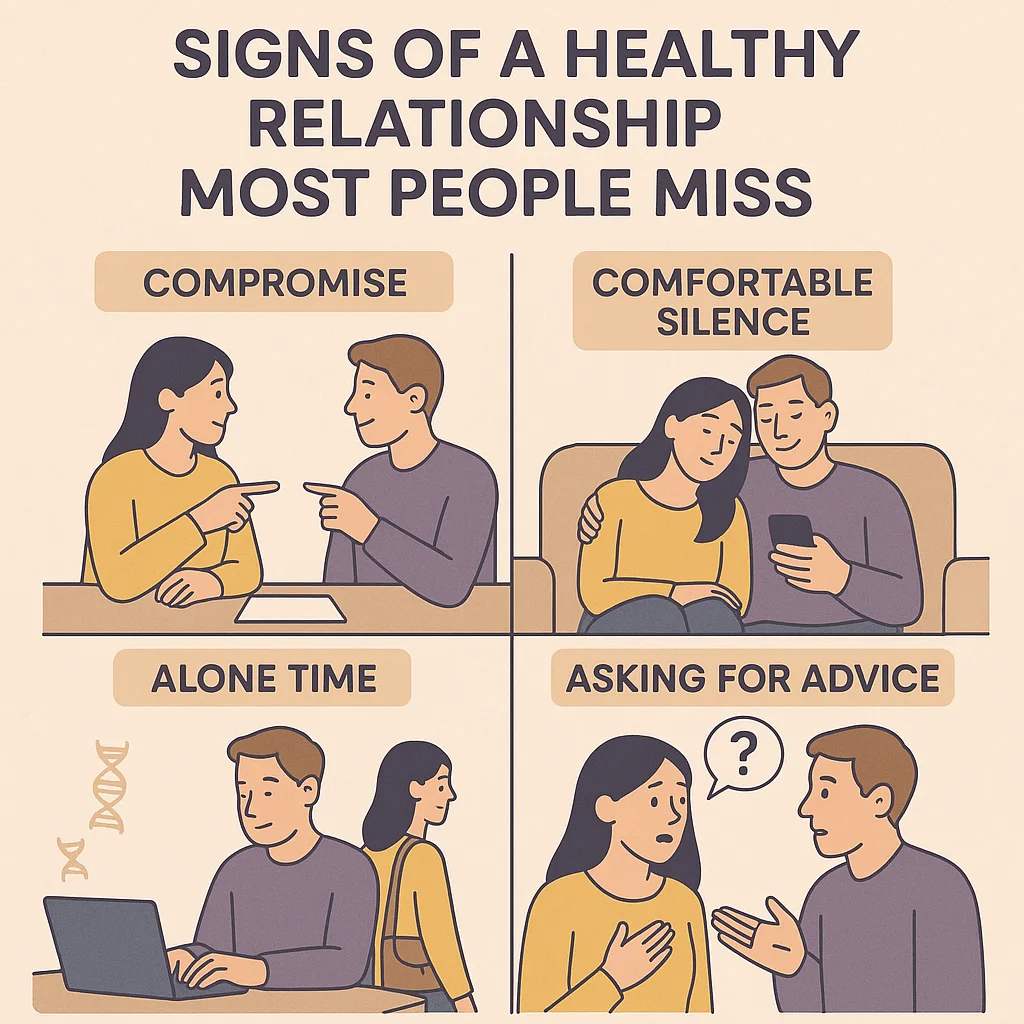
When we think of healthy relationships, we often imagine grand gestures, romantic surprises, or the absence of conflict. But while those things can play a role, they don’t paint the full picture. In fact, many of the signs of a strong, supportive relationship are subtle and easily overlooked. They’re less about dramatic declarations of love and more about the day-to-day dynamics that foster emotional safety, mutual growth, and lasting connection.
Understanding what truly makes a relationship work is beneficial, regardless of whether you're in a romantic relationship, a close friendship, or a close family bond.
The less evident indicators of a healthy relationship—the ones that most people overlook but that are actually very important—will be discussed in this blog.
1. You Can Be Bored Together—and It’s Still Comfortable
Assuming that a healthy relationship should always be "fun" or stimulating, most people seek out continuous excitement. However, the ability to run errands, sit in silence, or engage in ordinary activities without feeling uncomfortable together is a strong sign of emotional safety and comfort.
Why it matters:
Shared silence shows you're emotionally attuned, and not relying on constant stimulation to stay connected.
2. You Apologize Without Being Asked
Both partners accept responsibility for their actions in a healthy relationship—without feeling compelled to. Whether it's for being late, saying something hurtful, or forgetting something crucial, a genuine, unasked apology shows responsibility.
Why it matters:
It shows maturity and a desire to preserve trust over protecting ego.
3. You Don’t Keep Score
In toxic dynamics, people often keep mental tallies:
-
“I cooked twice last week, now it’s your turn.”
-
“I said sorry first last time, you owe me this time.”
Giving and receiving are fluid rather than transactional in a healthy relationship. You help one another out of concern rather than duty.
Why it matters:Keeping score leads to animosity. Giving it up promotes mutual respect and generosity.
4. Conflict Doesn’t Scare You
The way you handle conflict is more concerning than the conflict itself. Disagreements in healthy relationships don't escalate into arguments or emotional disengagement. Rather, you listen to them, approach them with interest, and try to understand them.
Why it matters:
Constructive conflict strengthens communication and reveals trust. You're safe being honest, even when it’s hard.
5. You Grow at Different Rates—and That’s Okay
One person may begin therapy, take up a new hobby, or change careers while the other stays the same. This leads to jealousy or feelings of insecurity in unhealthy relationships. In a healthy relationship, both partners encourage personal development, even if it doesn't happen at the same time.
Why it matters:
You celebrate each other’s evolution without feeling left behind.
6. You Don’t Feel the Need to “Perform”
Masks are not necessary for healthy relationships. You don't have to worry about being judged if you appear worn out, disorganized, uncomfortable, or emotional. Even when you're not at your best, you're accepted just the way you are.
Why it matters:
Authenticity is the foundation of real connection. Pretending to be someone else is exhausting and unsustainable.
7. There’s Mutual Respect for Alone Time
Time apart is not interpreted as rejection in a healthy relationship. You both recognize the value of privacy, taking care of oneself, and preserving one's identity.
Why it matters:
Time apart strengthens autonomy. It shows you trust the relationship enough to let it breathe.
8. You Can Talk About Boundaries—And They’re Respected
A healthy relationship respects boundaries, whether that means saying "no" to intimacy, establishing limits with family, or needing space. More significantly, boundaries are encouraged rather than merely accepted.
Why it matters:Control and guilt are not the goals of healthy love. It's about giving each other a sense of respect and emotional safety.
9. Small Acts Matter More Than Big Gestures
Proposals on mountaintops or expensive gifts are examples of dramatic declarations that Hollywood exalts. However, the small, dependable moments are what sustain relationships:
-
Making coffee in the morning
-
Checking in after a stressful day
-
Remembering how they take their tea
Why it matters:
Small, daily acts of care show you’re emotionally attuned and present.
10. You Can Laugh at Yourself Together
Many times, playfulness is underestimated. Joking about your peculiarities or accidents helps to relieve stress and serves as a reminder to not take life too seriously. Laughter is a healing balm, not a weapon, in healthy relationships.
Why it matters:
Humor lightens emotional weight and deepens connection.
11. You Don’t Feel Like You’re Walking on Eggshells
Fearlessness is an unmistakable indicator of emotional well-being. You're not always considering what you say or concerned that a minor argument will turn into a full-blown tantrum.
Why it matters:
You feel emotionally safe, not emotionally hostage.
12. You Can Disagree on Core Issues—And Still Respect Each Other
Loving someone who agrees with you is simple. The true test is being able to treat each other with dignity even when you disagree with them on issues like parenting, politics, religion, or money.
Why it matters:
Respecting difference shows maturity and emotional intelligence.
13. You Celebrate Each Other’s Wins Without Jealousy
The other person feels truly happy—not insecure or competitive—when one of them receives a promotion, new opportunity, or recognition. Both individuals shine and support one another in a healthy relationship.
Why it matters:
There’s no power struggle—only partnership.
14. You're Comfortable Talking About the “Uncomfortable”
You can talk about:
-
Sex
-
Finances
-
Mental health
-
Mistakes
-
Doubts
…without fear of judgment.
Why it matters:
Open communication is what turns love from fragile to resilient.
15. You Feel Better After Talking to Them, Not Drained
You feel lighter, not heavier, after spending time with each other. Encouraged, not condemned. An important sign of the health of a relationship is the feeling that follows a conversation.
Why it matters:
It shows you’re emotionally nourished—not just tolerated.
16. You Plan for the Future Without Pressure
You can talk about the future openly—whether that’s travel, shared finances, children, or where to live—without feeling forced or anxious.
Why it matters:
It reflects shared values and emotional alignment.
17. You Don’t Fear That One Conflict Will End Everything
One argument can feel like the end of a fragile relationship. Conflict is not the end of the road, but rather a necessary part of the journey in healthy ones.One argument can feel like the end of a fragile relationship. Conflict is not the end of the road, but rather a necessary part of the journey in healthy ones.
Why it matters:
Trust creates emotional stability, not panic at every disagreement.
Conclusion: Healthy Love Is Often Quiet
The majority of us are taught to gauge love by its intensity, drama, or passion. In actuality, however, the best relationships frequently resemble quiet strength, mutual understanding, and constant support.
So if your relationship feels steady, respectful, and easy most days—it’s not boring. It’s likely very healthy.