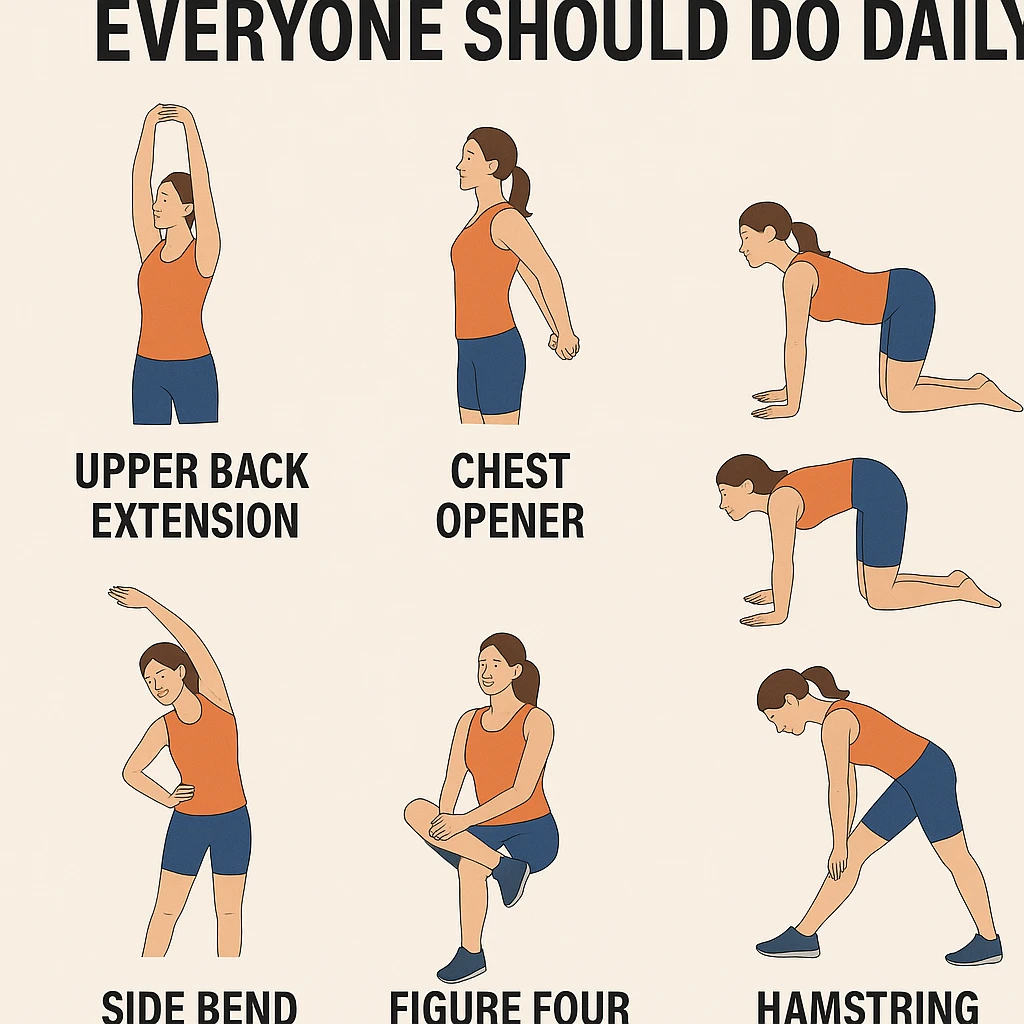
Stretching should be a vital component of your daily routine, regardless of your level of experience as an athlete, desk worker, or just someone looking to enhance their general well-being. But it's frequently disregarded. Stretching is a powerful tool that can increase flexibility, lower stress, prevent injuries, and improve your general quality of life. It's not just for warming up before a workout.
We'll discuss the various kinds of stretches, their advantages, and a daily schedule that you can stick to regardless of your level of fitness in this blog.
Why Stretching Matters
There are many mental and physical advantages to stretching every day. The following are some of the main justifications for incorporating it into your daily schedule:
1. Improves Flexibility
Your joints will have greater range of motion if you are more flexible. This lowers your risk of injury and makes it easier for you to carry out daily tasks.
2. Enhances Posture
Poor posture can result from tense muscles pulling certain body parts out of alignment. Frequent stretching can help realign your body and release tense muscles.
3. Reduces Muscle Tension and Stress
Stretching eases tense muscles and promotes mental clarity. It's an easy way to unwind and rejuvenate, particularly after a demanding day.
4. Boosts Circulation
Stretching improves oxygen delivery and waste product removal by increasing blood flow to your muscles. Better performance and a quicker recovery are encouraged by this.
5. Prevents Injuries
Joints and muscles that are flexible are less prone to rip, strain, or sustain injuries. One proactive strategy to prevent injuries is to stretch every day.
Types of Stretching
Before we jump into routines, it's important to understand the two main types of stretching:
✅ Static Stretching
This entails maintaining a stretch for 15–60 seconds in a single position. It is best performed as part of your cool-down or after working out.
✅ Dynamic Stretching
Dynamic stretches are perfect for a warm-up because they require movement. These consist of torso twists, arm circles, and leg swings.
Daily Stretching Routine (10–15 Minutes)
This easy, efficient daily routine works the main muscle groups and is appropriate for people of all fitness levels.
🧘 Morning Stretch Routine (5–10 minutes)
Ideal for reviving your day and relaxing after a long night's sleep.
1. Neck Stretch (30 seconds each side)
-
Sit or stand tall.
-
Gently tilt your head toward one shoulder.
-
Hold and switch sides.
2. Shoulder Rolls (30 seconds)
-
Roll your shoulders forward for 15 seconds, then backward for 15 seconds.
3. Cat-Cow Stretch (60 seconds)
-
Start on hands and knees.
-
Arch your back (cat), then dip your belly (cow).
-
Repeat slowly for 1 minute.
4. Standing Forward Fold (60 seconds)
-
Stand with feet hip-width apart.
-
Hinge at the hips and reach toward your toes.
-
Let your head hang and relax your neck.
5. Hip Flexor Stretch (30 seconds each side)
-
Kneel on one knee, the other foot in front (lunge position).
-
Push hips forward slightly to feel a stretch.
-
Switch sides.
🏃♀️ Midday or Pre-Workout Dynamic Stretches (5 minutes)
Use these to get your muscles moving or get ready for exercise.
1. Arm Circles (30 seconds)
-
Stretch your arms out and move them in small to large circles.
2. Leg Swings (30 seconds each leg)
-
Hold onto a wall or chair.
-
Swing one leg forward and backward.
-
Switch legs.
3. Torso Twists (30 seconds)
-
Stand with feet shoulder-width apart.
-
Rotate your upper body side to side with control.
4. High Knees or Marching in Place (30 seconds)
-
Light cardio to elevate your heart rate and warm muscles.
🌙 Evening Stretch Routine (10 minutes)
Wind down with these relaxing static stretches before bed.
1. Child’s Pose (60 seconds)
-
Place your forehead on the mat while kneeling on the floor and extending your arms forward.
2. Seated Forward Bend (60 seconds)
-
Sit with legs extended, reach forward toward your toes.
3. Butterfly Stretch (60 seconds)
-
Sit with your knees out and your foot soles together.
-
Press knees gently toward the floor.
4. Figure-Four Stretch (30 seconds each side)
-
Lie on your back, cross one ankle over the opposite knee.
-
Pull the uncrossed leg toward you for a glute stretch.
5. Reclined Spinal Twist (30 seconds each side)
-
Lie on your back, pull one knee across your body toward the floor.
-
Extend the opposite arm for a gentle spinal rotation.
Tips for an Effective Stretching Practice
-
Breathe Deeply: Refrain from holding your breath. Breathing deeply promotes muscle relaxation.
-
Be Consistent: A short session once a week is preferable to a few minutes each day.
-
Stretch Both Sides: Always give each side of your body an equal amount of stretching.
-
Don’t Bounce: Hold the position while slowly stretching. It is possible to get hurt when you bounce.
-
Listen to Your Body: It should be tension rather than pain. Take it easy if it hurts.
Stretching at Work: Quick Desk Stretches
Try these if you spend hours glued to a desk:
-
Neck rolls and shoulder shrugs
-
Wrist and finger stretches
-
Standing backbends or chest openers
-
Seated spinal twists
Do these every hour to break up long periods of sitting.
Common Myths About Stretching
❌ Myth 1: You should stretch only before exercise.
Fact: Static stretching is preferable after exercise, even though warming up is crucial. Stretches before a workout should be dynamic.
❌ Myth 2: Stretching is only for flexible people.
Fact: Over time, stretching increases flexibility—everyone starts somewhere.
❌ Myth 3: If it hurts, it’s working.
Fact: Pain serves as a warning. Stretching shouldn't hurt; it should feel good.
Conclusion
One of the easiest yet most effective habits you can develop for improved posture, stress reduction, and lifetime mobility is stretching every day. It offers significant rewards, takes little time, and doesn't require any specialized equipment.
Stretch whenever you can, whether it's before bed, before a workout, during work breaks, or in the morning. Your mind and body will appreciate it.