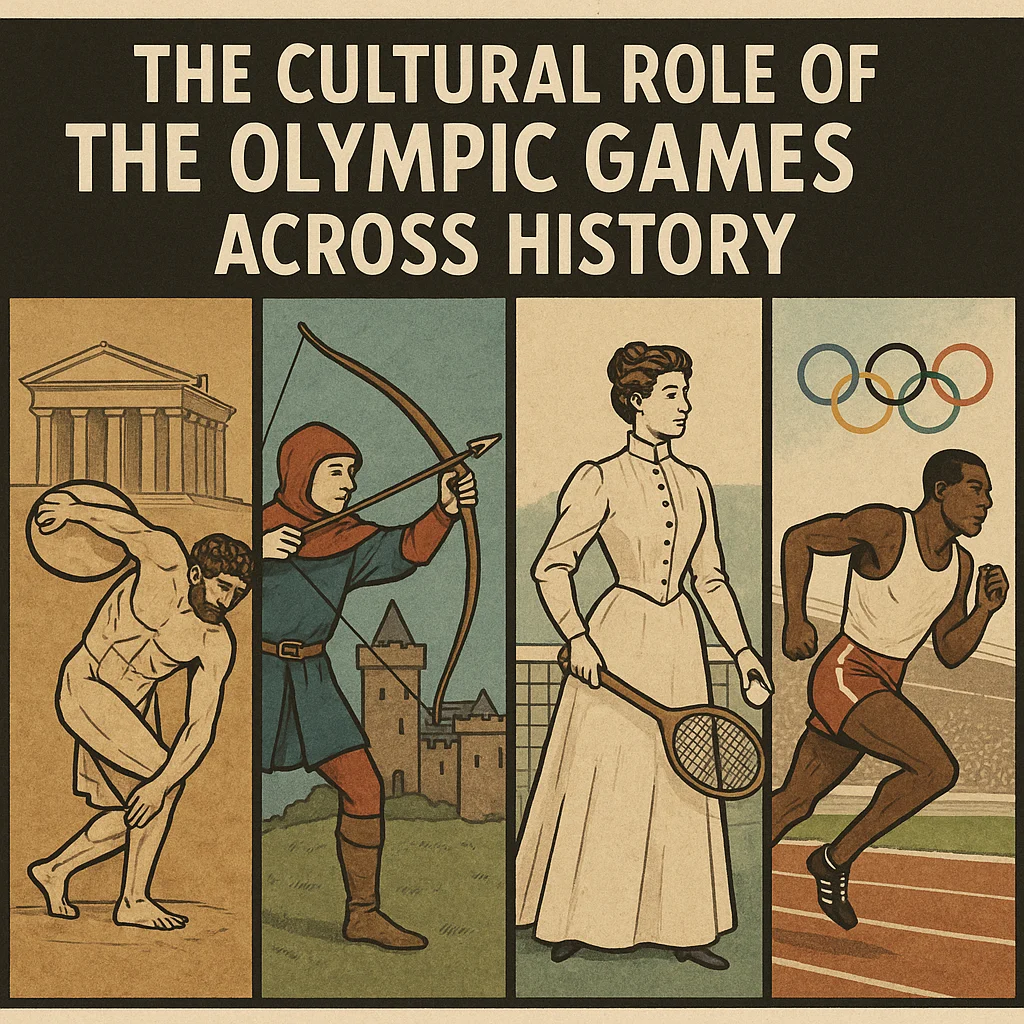
The Olympic Games, one of humanity's most unifying spectacles, bring the world together every four years. We now see the Olympics as a platform for countries to display their athletic prowess, honor their cultural heritage, and foster international harmony. However, this worldwide custom is about more than just sports; it's about culture, identity, and the continuous human narrative. The Olympics have functioned as cultural mirrors reflecting politics, religion, values, and global change since their inception in ancient Greece and continue to do so today.
This article examines the Olympic Games' cultural significance throughout history, demonstrating how they have changed while staying true to their fundamental goal of bringing people together via the common language of sport.
The Ancient Greek Olympics: A Sacred Celebration
In 776 BCE, the Olympics were first held in Olympia, Greece, as a religious celebration dedicated to Zeus. These occasions were not merely games; rather, they were holy rites that were intricately interwoven with Greek civic life and spirituality.
-
Religious Foundations – Victories were regarded as divine favors, and athletes competed in the gods' honor. Winning at Olympia was a spiritual and personal accomplishment.
-
City-State Rivalries – Greece was frequently politically divided, but the Olympics offered a neutral arena where city-states could put aside their disputes and engage in peaceful competition. Athletes and spectators traveled safely thanks to the Olympic truce, or ekecheiria.
-
Cultural Expression – The Games honored human potential, artistic expression, and physical prowess. Sport and art were combined when poets composed odes to winners and sculptors turned them into statues.
In essence, the ancient Games embodied the Greek belief in arete — the pursuit of excellence in body, mind, and spirit.
The Fall and Absence of the Games
The Games gradually lost their spiritual essence as the Roman Empire grew, turning into entertainment spectacles rather than holy occasions. As part of his effort to impose Christianity, Emperor Theodosius I finally outlawed them in 393 CE, declaring them to be pagan rites.
The Olympic Games were absent from the world for more than a thousand years. However, their legacy endured in memory, art, and mythology, signifying people's eternal preoccupation with rivalry and grandeur.
The Birth of the Modern Olympics
French aristocrat Pierre de Coubertin brought back the modern Olympic Games in 1896 because he believed that they could be used to further global peace and education via athletics.
-
A Global Vision – The modern Olympics welcomed nations from all over the world, in contrast to the city-state model of ancient Greece.
-
Cultural Diplomacy – Coubertin was a strong believer in the ability of sport to promote international understanding. The Games were always meant to be more than just sporting competitions; they were to be emblems of cross-cultural interaction.
-
Education and Character – In addition to promoting athletic ability, the modern Olympics sought to foster moral character, discipline, and respect.
The revival was not merely an imitation of the past; it was a reinvention for a new world order.
The Olympics as a Mirror of Society
The Olympics evolved into a platform for social, political, and cultural changes during the 20th and 21st centuries. Every game represented the current state of world affairs:
-
National Identity and Pride – Countries have long used hosting the Olympics as a platform to highlight their advancements and cultures. Beijing 2008 predicted China's rise to prominence in the world, while Tokyo 1964 represented Japan's post-World War II rebirth.
-
Political Protests – Political conflicts have frequently intersected with the Games. The 1936 Berlin Olympics were used as a vehicle for Nazi propaganda, but racial ideologies were dispelled by Jesse Owens' triumphs. The 1968 Mexico City Games Black Power salute is still regarded as one of the most potent protest images in history.
-
Gender Equality – In the modern Olympics, women who were not allowed to compete in the ancient Games gradually began to gain recognition. The Olympics have evolved from a few events in 1900 to full inclusion, serving as a forum for the advancement of gender equality.
-
Globalization – The Olympics now reach billions of people through digital and television media, disseminating not only sports but also cultural customs, rituals, and inspirational tales of perseverance.
Through these moments, the Olympics have transcended sports to become markers of cultural evolution.
The Ceremonies: Cultural Showcases
More than just pageantry, the Olympic opening and closing ceremonies are some of the most watched events in the world. They are chances for countries to share their narratives.
-
Symbolism – The Olympic torch relay represents continuity between the past and present and was inspired by ancient customs.
-
Cultural Performance – From London's homage to Shakespeare and the Beatles to Barcelona's flamenco performances, hosts use ceremonies to showcase their country's history, music, art, and innovation.
-
Global Unity – The athletes' procession under the flags of their countries represents diversity and solidarity, reaffirming that the Games are about our common humanity rather than dominance.
These rituals are cultural performances on a world stage, merging tradition with modern identity.
The Olympics and the Human Spirit
The Olympics represent something universal: the celebration of human potential, which transcends politics and spectacle. Stories of tenacity, fortitude, and success have a universal appeal.
-
Defying Odds – The ability of people to overcome hardship is exemplified by athletes like Wilma Rudolph, who survived polio to win an Olympic medal.
-
Breaking Barriers – From the first female competitors to openly LGBTQ+ athletes, athletes who defy social norms use the Olympics to promote inclusivity.
-
Shared Emotions – Olympic moments, such as a sprinter's last push, a gymnast's flawless routine, or a swimmer's comeback, arouse feelings that cut across national boundaries and linguistic barriers.
This is why billions tune in — the Games remind us of what connects us more than what divides us.
The Challenges of the Modern Olympics
Despite their cultural significance, the Games face challenges.
-
Commercialization – The Olympics, according to critics, have grown too commercialized and put money before pure sport.
-
Costs for Host Cities – Demands for infrastructure frequently result in national debt, which raises concerns about sustainability.
-
Scandals and Corruption – The Games' integrity has occasionally been jeopardized by doping scandals and bribery scandals.
-
Inclusivity and Access – Despite being worldwide, the Games continue to draw attention to the differences in resources between developed and developing countries.
Yet even with these flaws, the Olympics retain their symbolic power as a global cultural event.
Why the Olympics Still Matter
The Olympic Games continue to be one of the few genuinely international customs, despite the criticism. They inspire generations, provide nations with a peaceful platform to display their culture, and bring people together in a common experience.
The Olympics serve as a crucial reminder of our common humanity in a world that is increasingly divided. Every throw, dive, and sprint is more than just a sport; it's a culture, a legacy, and a story in motion.
Conclusion: The Olympics as Cultural Heritage
The Olympic Games have always involved more than just athletic competitions, from ancient Greece to the present. They are celebrations of human accomplishment, political battlegrounds, cultural rites, and displays of patriotism.
The Games continue to exist because they appeal to universal themes such as the pursuit of greatness, the need for community, and the delight of witnessing the limits of human potential. The Olympics have demonstrated throughout their lengthy history that, despite national competition, the human spirit always comes together.