Introduction: Why This Distinction Matters
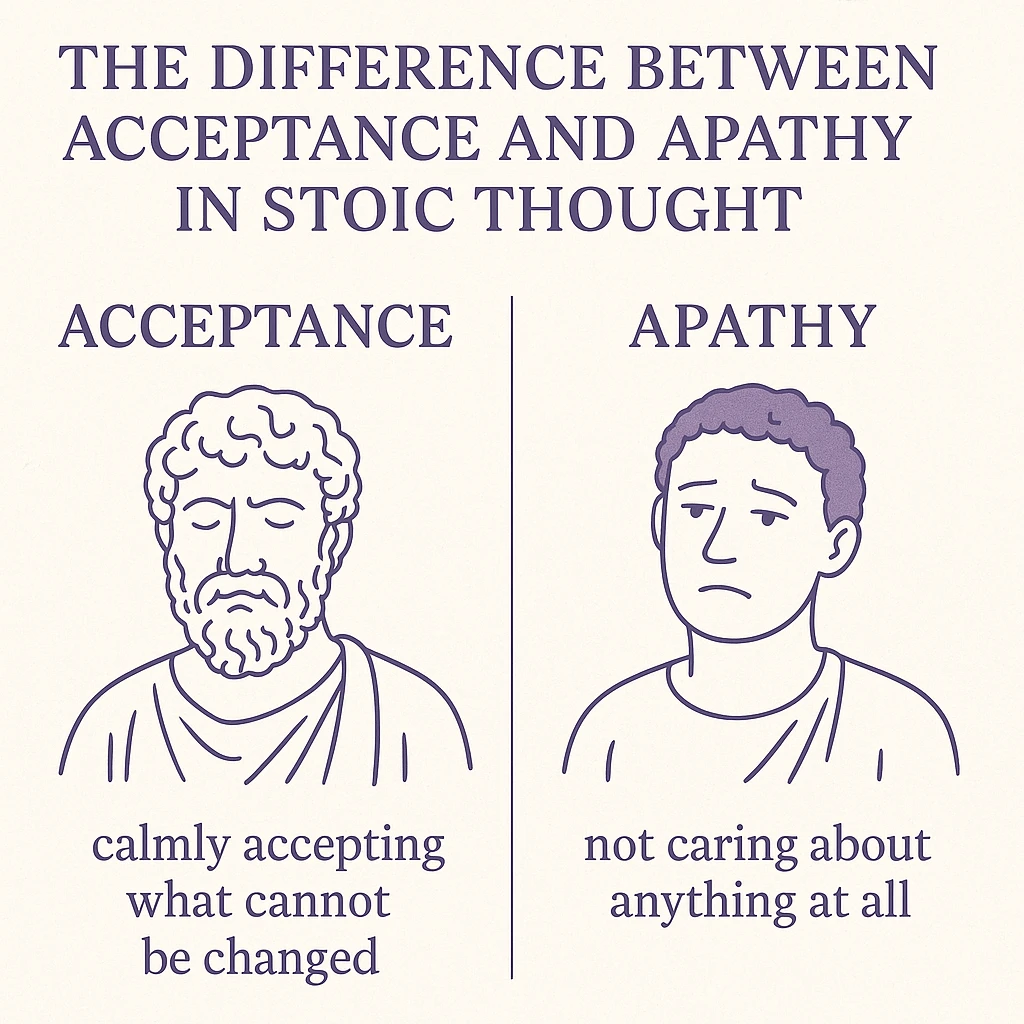
Nowadays, "acceptance" and "apathy" are frequently used interchangeably. Letting go of things you cannot control is interpreted as detachment by some, but as indifference by others. This distinction greatly troubled the Stoics, including Seneca, Epictetus, and Marcus Aurelius. They realized that apathy (in the unhealthy sense) can undermine moral character and purpose, and that true acceptance does not entail giving up.
Knowing the difference between acceptance and apathy can mean the difference between living a peaceful life and slipping into disengagement in a world where we are constantly faced with challenges such as volatile markets, personal conflicts, and health scares.
1. Stoic Acceptance: Active Engagement with Reality
Acceptance is not passive to the Stoics. It involves taking intentional action where you have influence along with an active recognition of reality. In his book Meditations, Marcus Aurelius wrote:
“You have power over your mind—not outside events. Realize this, and you will find strength.”
Acceptance, in Stoic thought, is about clarity:
-
Recognizing what is within your control.
-
Acting decisively on what you can change.
-
Releasing mental tension over what you can’t.
Let's say you lose your job. Acceptance entails acknowledging that you cannot change the fact that you lost your job. But instead of descending into despair, you immediately concentrate on the things that you can control, like updating your resume, networking, and applying for new opportunities.
Because acceptance is grounded in reality rather than wishful thinking, it fosters resilience. It helps you act more effectively by clearing your mind of clutter.
2. Apathy: The Hollow Cousin of Acceptance
Apathy, on the other hand, is a lack of interest in life. It is a misinterpretation of the Stoic ideal rather than the actual one. "It doesn't matter, so why bother?" is how apathy is expressed in daily life.
Where acceptance encourages engaged action, apathy avoids action entirely.
-
Acceptance says: “I can’t change the weather, but I’ll dress accordingly.”
-
Apathy says: “The weather’s bad, so I won’t leave the house at all.”
Emotional discipline, not emotional absence, is the hallmark of true stoicism. Love, justice, and accountability were important to the ancient Stoics. Ignoring these principles results in a life that is apathetic, which causes disengagement and stagnation.
3. The Ancient Stoic Warning Against Misreading Detachment
Epictetus took care to caution students that disregard for the outside world should not be mistaken for a lack of responsibility. He made a distinction between indifference itself and "indifferent things."
For instance, according to stoic ethics, fame and fortune are "indifferent" and do not determine one's value. However, the Stoic approach is to act rather than to shrug and leave if the chance to use wealth or influence for good presents itself.
In this context, apathy is the rejection of moral obligation. However, acceptance does not waste energy fighting unalterable facts; instead, it places responsibility at the forefront.
4. Emotional Control vs. Emotional Numbness
The idea that stoicism encourages emotional numbness is one of the most common misconceptions about it. It's not that way. Stoicism encourages emotional regulation rather than repression.
-
Acceptance means feeling emotions but not being ruled by them.
-
Apathy means muting emotions entirely, often to avoid discomfort.
When a friend moves away, a person who practices acceptance may be saddened, but they may also wish them well and value their friendship. When someone is in a state of apathy, they may completely stop caring and tell themselves, "It doesn't matter if we talk again."
Over time, emotional numbness weakens relationships, empathy, and meaning—all of which the Stoics believed were necessary for a fulfilling life (eudaimonia).
5. How to Practice True Acceptance
If you want to ensure you’re practicing Stoic acceptance rather than sliding into apathy, focus on three habits:
a) Daily Reflection
Every night, Marcus Aurelius reviewed the day and clarified his reactions to events in his journal. This technique aids in distinguishing between what can be controlled and what cannot.
Example Prompt:
-
“What challenged me today, and how did I respond?”
-
“Was I avoiding action where I could have taken it?”
b) Purpose-Oriented Action
"What is the right thing to do here?" ask yourself. not "Is the trouble worth it?" No matter how challenging the action is, it is worthwhile if it is consistent with your values and obligations.
c) Reframing Loss and Change
Acceptance reframes life's unexpected turns as a natural part of the order. Epictetus reminded us that things aren't always bad; our perceptions of them are.
6. Common Modern Traps Leading to Apathy
It's simple to get numb in this day and age of never-ending news cycles, algorithm-driven feeds, and an abundance of information. The following are indicators that you've fallen into apathy:
-
Avoiding all challenges instead of choosing meaningful ones.
-
Withdrawing from relationships to avoid emotional risk.
-
Saying “it’s all pointless” as a way to excuse inaction.
-
Over-relying on distractions—like binge-watching or endless scrolling—to avoid reality.
Acceptance requires the opposite: facing reality directly and engaging with it where it matters most.
7. Real-Life Example: Acceptance vs. Apathy in Action
Imagine that while working on a project at work, a decision made by upper management that you strongly disagree with is made.
-
Acceptance Response: Even though you accept the decision as it is, you continue to give your best effort, modify your approach, and offer helpful criticism when you can.
-
Apathy Response: You give up on the project, decide it's no longer worth the effort, and allow the caliber of your work to suffer.
The first preserves dignity and professionalism. The second erodes both personal satisfaction and reputation.
8. The Freedom Found in True Acceptance
Ironically, apathy is much less liberating than acceptance. Apathy causes you to disengage from the very things that give life purpose, which ties you to inaction and discontent. Acceptance allows you to act sensibly without being constrained by resistance or resentment.
Marcus Aurelius put it best:
“A blazing fire makes flame and brightness out of everything thrown into it.”
Acceptance is that fire—it transforms adversity into fuel. Apathy is the cold ash that remains when the fire is gone.
Conclusion: Living with Clarity and Purpose
According to Stoic philosophy, apathy is the silent deterioration of disengagement, whereas acceptance is an active state of clarity and responsibility. Whether you choose to put your energy where it counts or steer clear of the challenge entirely makes a difference.
By aligning yourself with reality, you can live a more purposeful, resilient, and peaceful life. When you practice true acceptance, you're not giving up.
So the next time you face an unchangeable situation, ask yourself:
-
Am I stepping back because I’m wisely accepting reality?
-
Or am I stepping back because I no longer care?
The answer will tell you whether you’re living like a Stoic—or simply standing still.