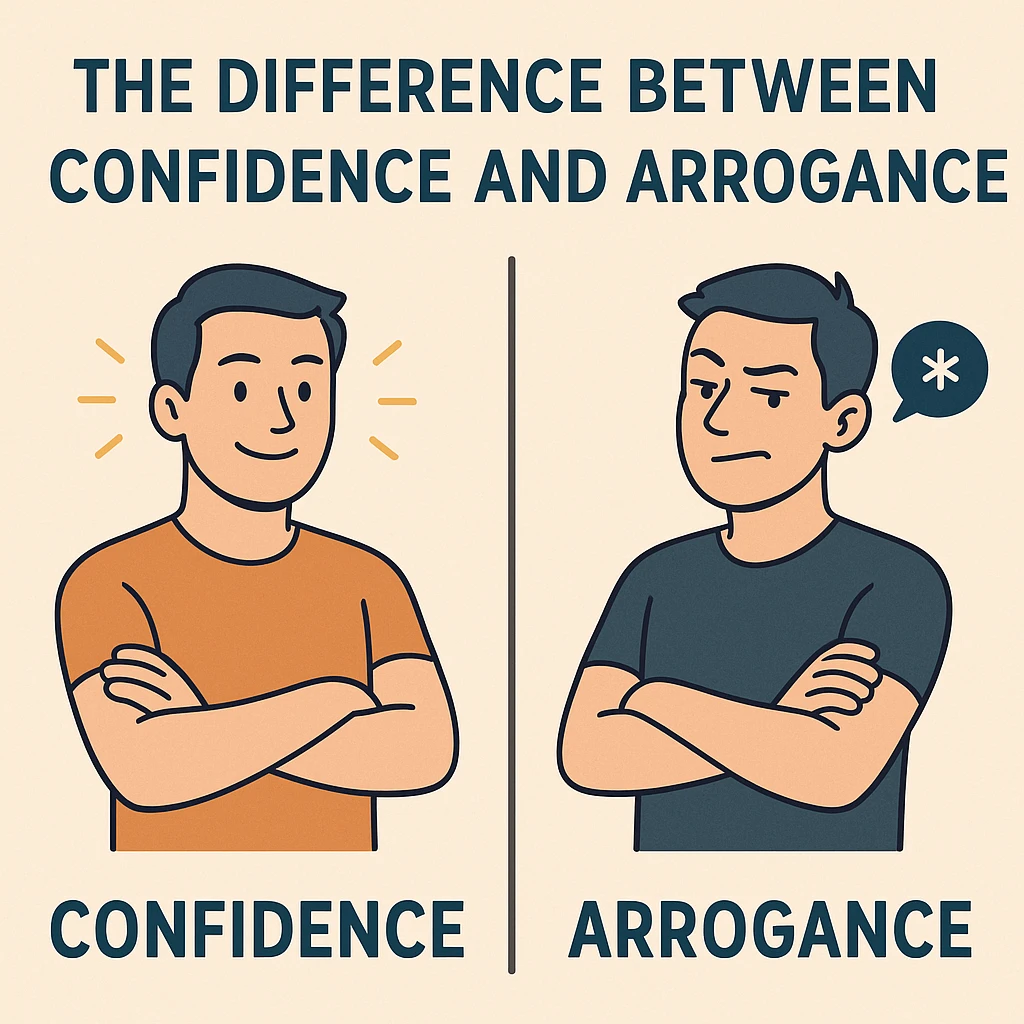
Despite their outward similarities—both being bold, assertive, and self-assured—confidence and arrogance are completely different on the inside. While the other repels and divides, the first fosters trust and draws others.
It's important to know the difference between arrogance and confidence in both your personal and professional life. How you come across is important whether you're networking, managing a team, or establishing connections. People are drawn to confident people by nature, but they tend to avoid haughty people.
What, then, is the boundary between arrogance and confidence? Furthermore, how can the former be developed without slipping into the latter's trap?
The main distinctions will be discussed in this blog, along with how to identify each in both yourself and other people and how to develop sincere confidence that empowers rather than alienates.
What Is Confidence?
Confidence is a quiet strength that stems from self-awareness and earned competence. It's believing in your ability to handle situations without needing external validation. Confident people are grounded, open to feedback, and respectful of others.
Traits of a Confident Person:
-
Acknowledges strengths and weaknesses
-
Listens more than talks
-
Admits when they’re wrong
-
Lifts others up
-
Takes action despite fear
-
Seeks growth and feedback
Confidence is calm. It doesn’t shout. It doesn't need to prove anything because it already knows its worth.
What Is Arrogance?
Arrogance, on the other hand, is an inflated sense of self-worth. It often masks insecurity and thrives on comparison. Arrogant people often exaggerate achievements, dominate conversations, and belittle others to feel superior.
Traits of an Arrogant Person:
-
Constantly talks about themselves
-
Dismisses criticism or feedback
-
Brags or exaggerates accomplishments
-
Interrupts or overpowers conversations
-
Seeks validation or control
-
Believes they’re better than others
Often, arrogance comes across as disrespectful or contemptuous. It stems from the desire to seem better rather than from a true sense of self-worth.
Why People Confuse the Two
In the modern world, confidence and arrogance are frequently confused, particularly in competitive work settings or on social media.
-
A confident person expressing pride in their achievements may be seen as arrogant.
-
An arrogant person masking insecurity with bravado may seem confident at first glance.
The difference lies in intention and attitude. Confidence uplifts; arrogance deflates others to elevate oneself.
The Role of Insecurity
Ironically, arrogance is often born out of deep insecurity.
Projecting an image of superiority is one way that people who don't feel good enough may overcompensate. When this false confidence is used to cover up vulnerability rather than confront it, it turns into arrogance.
Conversely, genuine confidence frequently develops from vulnerability. It doesn't hide behind arrogance and admits its shortcomings.
How to Tell If You're Being Confident or Arrogant
Here are some reflection questions:
-
Do I feel the need to prove I’m better than others?
-
Can I admit when I’m wrong without shame?
-
Do I listen more than I speak?
-
Do I celebrate others’ success or feel threatened by it?
-
Do people feel comfortable giving me honest feedback?
If your answers lean toward the need to be seen as superior, you might be slipping into arrogance.
How to Develop Genuine Confidence (Without Becoming Arrogant)
1. Know Your Strengths (But Stay Humble)
Acknowledge your strengths, but don't think you're the greatest. Remain receptive to growth and learning.
2. Practice Self-Awareness
Consider your words, thoughts, and actions on a regular basis. Get frank opinions from friends you can trust.
3. Embrace Failure and Mistakes
Being confident entails accepting that you don't know everything. Confidence owns flaws, while arrogance tries to conceal them.
4. Use “I” Statements Thoughtfully
Talk about your own experiences without coming across as arrogant or preaching. Sharing and boasting are two different things.
5. Listen Actively
Self-assured individuals pay close attention. They don't take over discussions. They give others a sense of visibility and help them learn.
6. Celebrate Others
Give credit. Give people compliments. People who are confident feel safe enough to encourage others around them.
7. Detach From Validation
Self-assured people don't depend on praise, but arrogant people do. Even when no one is looking, they are aware of their value.
Confidence in Leadership
One of the most critical places to distinguish confidence from arrogance is in leadership.
A confident leader inspires, listens, and empowers others. They know they don’t have all the answers, and they surround themselves with people who challenge and complement them.
An arrogant leader, however, micromanages, ignores feedback, and demands respect instead of earning it.
The best leaders exude confidence without ego. They foster loyalty, not fear.
Examples in Real Life
Example 1: The Confident Speaker
At a conference, Alex gives a presentation. He acknowledges his ongoing learning, gives credit to his team, and shares insights in an understandable manner. He is respected and relatable by the audience.
Example 2: The Arrogant Speaker
Jordan's speech is full of self-congratulations. He overstates his influence and rejects opposing views. Although the audience applauds, not many leave feeling impressed.
It’s the same platform, but different energy. One draws people in; the other pushes them away.
When Confidence Turns Into Arrogance
The slope is slick. Success can sometimes cause people to lose their humility. They become overconfident, disregard criticism, and think they are unbeatable. At that point, confidence turns into conceit.
To avoid that, keep these anchors:
-
Stay curious
-
Stay humble
-
Keep learning
-
Keep listening
Final Thoughts
Confidence and arrogance differ not only in what you say but also in how you say it, why you say it, and how other people perceive you.
-
Confidence is quiet, calm, and rooted in truth.
-
Arrogance is loud, defensive, and rooted in fear.
You don’t need to dim your light to avoid being seen as arrogant—but make sure your light shines to guide, not to blind.
Be proud of who you are. But stay humble about how far you’ve come—and how much you still have to learn.