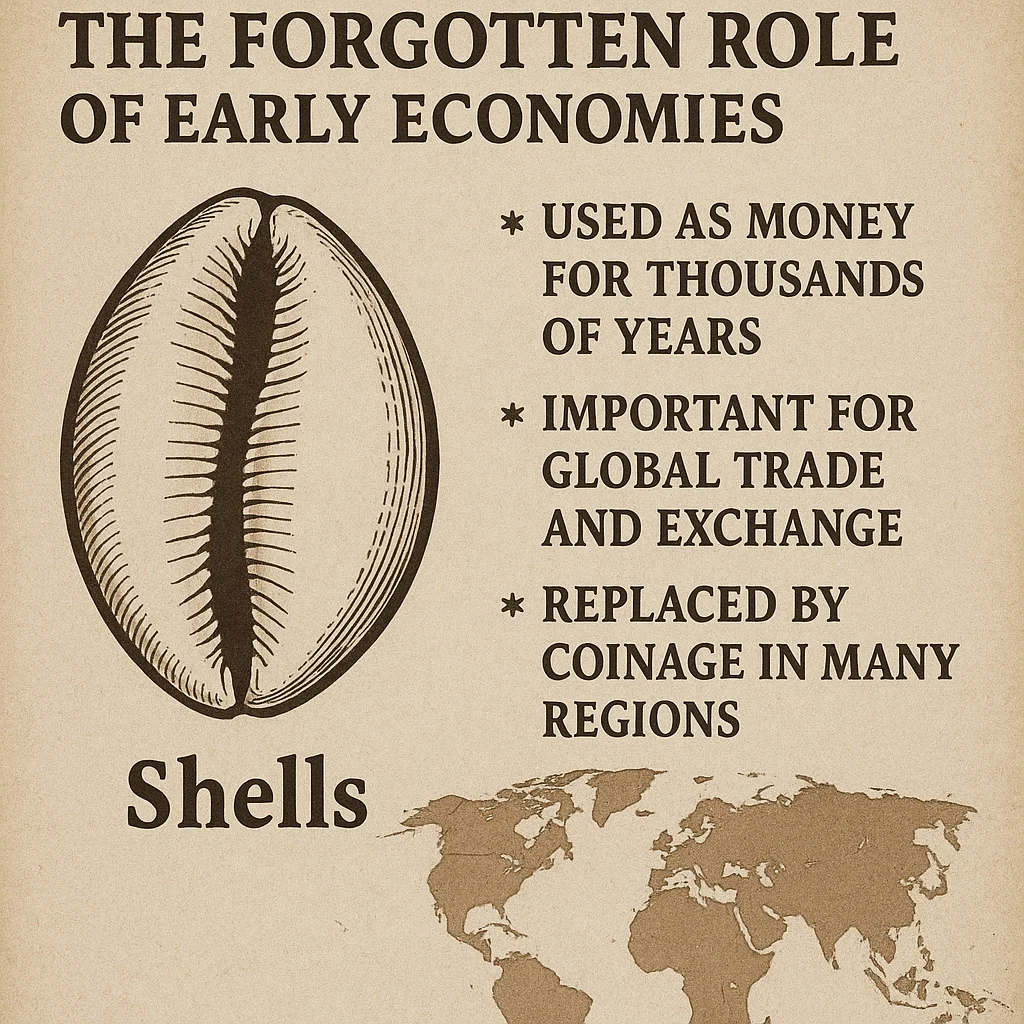
These days, most people think of shells as decorative items or beach souvenirs. However, shells, particularly cowrie shells, were more than just decorations for a large portion of human history. They served as currency, status symbols, and trading tools that propelled whole economies. Shells had the ability to influence economies, societies, and even entire empires long before paper money and electronic commerce.
The tale of shells being used as money serves as a reminder that "money" is anything that a community believes has value. In the era of credit cards and cryptocurrencies, we might forget that shells were once at the core of human economic activity.
Why Shells?
Shells might not seem like an obvious choice for currency, in contrast to metals like gold or silver. However, cowrie shells in particular had special qualities that made them perfect for trading:
-
Durability: Shells were durable, hard, and impervious to deterioration. They didn't go bad like food or other organic products.
-
Portability: Shells were small, light, and portable, making them ideal for easy trade.
-
Uniformity: Cowries, in particular, had a consistent shape and size, making them naturally standardized.
-
Beauty: They were more desirable because of their glossy, polished surface, which added aesthetic value.
-
Limited Availability: Shells were uncommon inland but common in some coastal areas, which led to scarcity and increased value.
It was these combined features—durability, beauty, portability, and scarcity—that made shells a perfect form of primitive currency.
Cowrie Shells: The First Global Currency
Cowries, which come from the Pacific and Indian oceans, have been used as currency more than any other shell in history. They have been used for over 3,000 years. Cowries have been discovered by archaeologists in Viking hoards, ancient Chinese tombs, and African trade sites.
-
China: Cowrie shells were used as currency in China as early as 1200 BCE. The foundation for one of the earliest metal coin systems was eventually laid by the casting of cowrie-like designs in bronze.
-
Africa: In West Africa, cowrie shells were the most common form of money for centuries. They were first brought in by trade with Arab and then European traders, and their importance in trade led to the creation of whole economies based on cowrie imports from the Maldives.
-
South Asia: Cowrie shells were used for both symbolic offerings and regular transactions in India. Additionally, they were closely associated with religious ceremonies and weddings, among other social rituals.
Cowries were so widespread that some historians call them the first truly global currency—centuries before the rise of modern international banking.
Shells as a Store of Wealth and Power
Shells served as symbols of political power and wealth in addition to being used for routine transactions. Similar to how governments later regulated coinage and paper money, chiefs, rulers, and religious leaders frequently controlled access to shells.
Cowries were kept in treasuries, paid to armies, and even demanded as tribute in many African societies. Large cowrie hoards have been found in Chinese tombs, indicating that they were valued enough to go with the deceased into the afterlife.
Political power was frequently determined by shell control. The economy was controlled by whoever held the supply, a lesson that was later repeated with salt, gold, and oil.
Shells in Social and Cultural Life
The economic role of shells extended into culture and ritual:
-
Marriage and Dowry: Cowries were traded as dowries or bride prices in many South Asian and African societies, solidifying their place in social and familial structures.
-
Religious Significance: Shells represented wealth, fertility, and divine favor. Cowries were offered to gods in Hinduism and used in divination ceremonies in some African traditions.
-
Adornment: In addition to their monetary value, shells were worn as jewelry to denote prestige and wealth. Their dual function as ornament and currency made it difficult to distinguish between beauty and utility.
This cultural embedding ensured that shells were not merely money, but also part of the very fabric of social identity.
The Shell Trade and Global Connections
Shell-based economies were not isolated—they were connected to global trade networks.
-
With their massive exports to Asia and Africa, the Maldives rose to become the world's largest supplier of cowries.
-
Shells were shipped across the Sahara and along the Indian Ocean trade routes by Arab and European traders.
-
The trans-Saharan gold trade and, sadly, the Atlantic slave trade in West Africa were closely linked to cowries.
In order to buy slaves, European nations such as the Portuguese and Dutch were bringing tons of cowrie shells to Africa by the 16th century. Shells thus turned into an instrument of exploitation, connecting regional economies to international power and violence structures.
The Decline of Shell Money
The fall of shells as currency followed a familiar historical pattern: inflation and technological change.
-
Inflation through Over-Supply: The value of cowries fell when European traders started bringing them into Africa in such large quantities. Their function as money was undermined as what had been scarce turned into abundant.
-
Colonialism and Modern Currency: Coins and banknotes were used by European colonial powers to replace shell-based economies, incorporating regional markets into international monetary systems.
-
Industrialization: Shells were no longer able to keep up with the rate of economic expansion as societies became more industrialized. Physical tokens of exchange were superseded by paper money and then electronic systems.
By the 19th century, shells had largely lost their role as currency, reduced to ornaments and ritual objects.
Lessons from the Age of Shell Money
The history of shells as money reveals some important truths about human economies:
-
Value is Social, Not Natural: There was no intrinsic "monetary" value to cowries. It was consensus that made them valuable. Today's paper money and even cryptocurrencies are based on the same idea.
-
Scarcity Creates Power: Where shells were rare, they were most important. They were common along the coast and valuable inland. This is similar to how the value of resources like rare earth metals, salt, and oil increases.
-
Money Is Cultural: Shells served as both cultural and economic emblems, demonstrating that money is more than just a means of exchange; it also represents ritual, identity, and significance.
Shells in Today’s World
Shells still have symbolic value even though they are no longer essential to economies. They serve as metaphors for the fragility and beauty of nature, as well as in jewelry and spiritual rituals. Cowries are still used for divination in some African traditions.
Interestingly, the story of shells is reflected in the rise of cryptocurrencies. Similar to cowries, the value of digital coins is derived from their durability, scarcity, and shared belief rather than their inherent value. Although Bitcoin is frequently referred to as "digital gold," it is actually the "digital cowrie" in many respects.
Conclusion: Remembering the Currency of Shells
In the past, shells fueled trade networks, influenced economies, and represented wealth on many continents. They demonstrate that money has always involved more than just figures and tangible assets. It has to do with shared cultural meaning, scarcity, and trust.
We can better understand our own financial systems by recalling the overlooked function of shells in early economies. Despite their seeming modernity and sophistication, today's dollars, euros, and bitcoins are based on the same fundamental idea as ancient cowries: the straightforward human recognition that anything has value, whether it be a shell, paper, or code.
Therefore, every shell serves as a reminder that money is ephemeral. It is cultural, human, and dynamic.