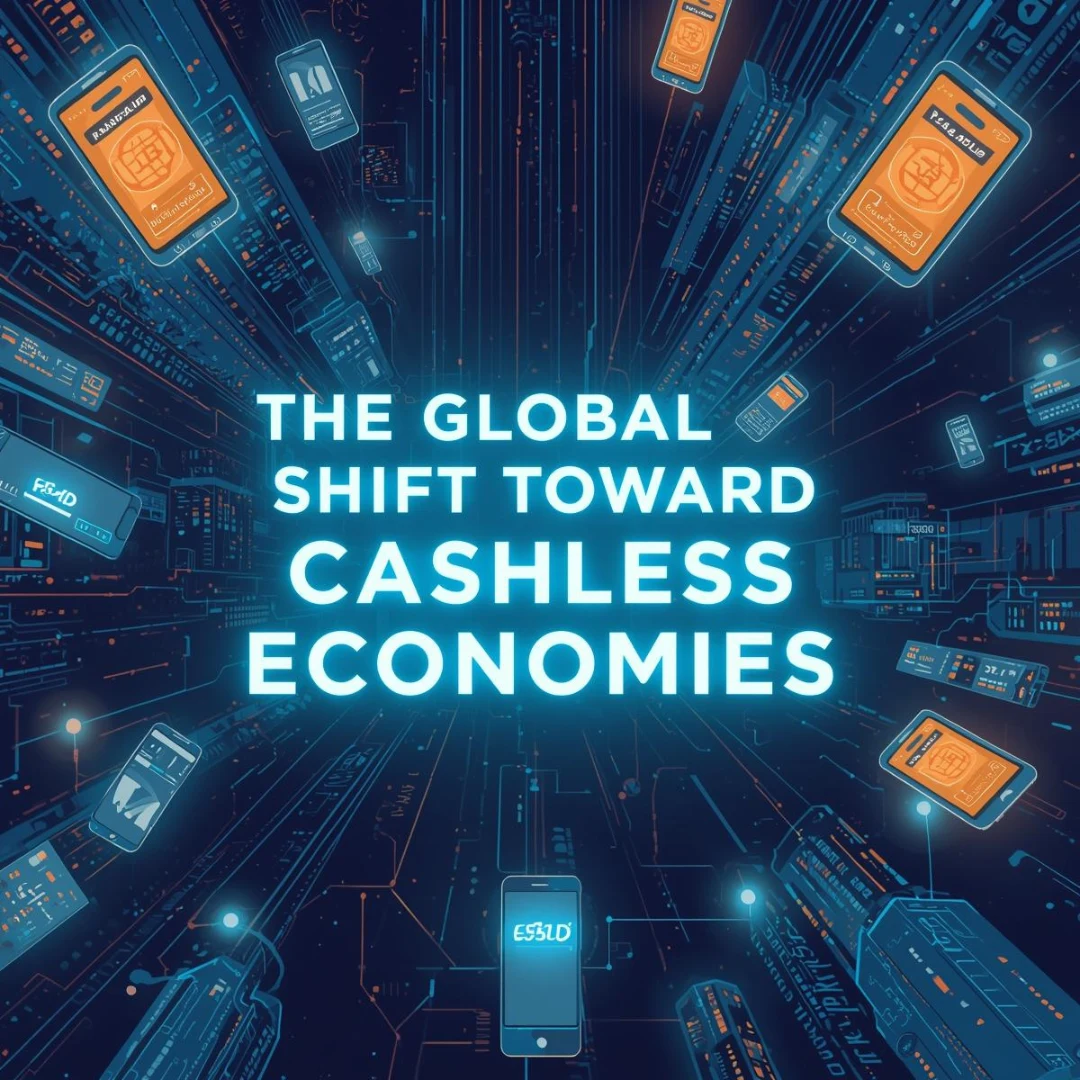
The way consumers pay for goods and services is changing quickly all across the world. Digital transactions are progressively replacing physical banknotes and coins, which were formerly essential to everyday business. Societies are rapidly transitioning to cashless economies through the use of contactless cards, mobile wallets, and QR codes.
Global economic dynamics, consumer behavior, government policy, and technical advancements are the main forces behind this change. While some nations are excitedly adopting cashless systems, others are moving more cautiously. In addition to convenience, fundamental structural shifts in the way economies operate are reflected in the trend toward digital payments.
Understanding the global shift toward cashless economies requires examining its technological foundations, economic implications, social impact, and long-term consequences.
The Technology Behind the Transformation
Reducing reliance on cash has been greatly aided by developments in financial technology. Digital transactions are now faster and safer than ever thanks to smartphones, secure payment gateways, biometric authentication, and real-time banking systems.
As digital payment platforms take over daily transactions, cash usage has drastically decreased in nations like Sweden. Similar to this, QR-code-based mobile payments via services like WeChat and Alipay have grown rapidly in China.
These platforms integrate payments seamlessly into daily life, allowing users to pay bills, transfer money, shop online, and even donate to street performers digitally.
The systems of financial institutions have also been updated. Digital currencies are being investigated by central banks as a potential replacement or supplement to real cash. For instance, some nations are doing research and pilot programs for Central Bank Digital Currencies (CBDCs).
Technology has made cashless transactions not only possible but practical and scalable.
Government Policies and Regulation
For reasons other than convenience, governments frequently back cashless transitions. Digital payments improve transaction transparency, which facilitates the fight against money laundering, corruption, and tax evasion.
When transactions leave digital records, authorities are better able to monitor economic activities. As a result, some governments are promoting or rewarding the use of digital payments.
For instance, following the demonetization program in 2016, India expedited its transition to digital payments. The Unified Payments Interface (UPI) revolutionized the payment industry by establishing a low-cost, real-time digital transaction ecosystem.
To maintain monetary sovereignty in the digital age, organizations like the European Central Bank are investigating the possibility of a digital euro.
Regulation plays a balancing role. Governments must protect consumer privacy, prevent cybercrime, and ensure fair competition while encouraging innovation.
Economic Benefits of Going Cashless
The shift toward cashless economies offers several economic advantages.
The expenses of printing, shipping, and safeguarding real currency are decreased by digital transactions. Faster payment processing, more accurate bookkeeping, and a lower chance of theft are all advantageous to businesses.
Financial inclusion is also made possible via cashless systems. People in rural locations can obtain financial services with mobile banking without the need for conventional bank branches.
Digital marketplaces and larger client bases are made available to small firms. Microtransactions become possible, promoting digital trade and entrepreneurship.
Additionally, real-time data from digital payments provides policymakers with better economic insights, improving decision-making and fiscal planning.
Financial Inclusion and Digital Divide
Digital payments raise worries about exclusion even if they can increase financial access. Not everyone has equal access to digital literacy, reliable internet connections, or cellphones.
Low-income people, rural areas, and the elderly may find it difficult to quickly move away from cash. Cash is still necessary for everyday transactions in many areas.
Governments and financial institutions must ensure that digital infrastructure development does not leave vulnerable populations behind.
Efforts to bridge the digital divide include affordable smartphone programs, financial literacy initiatives, and secure low-cost digital wallets.
Inclusion must remain central to the cashless transition.
Privacy and Surveillance Concerns
One of the most debated aspects of cashless economies is privacy. Cash transactions are anonymous, while digital payments create data trails.
Personal behaviors, locations, and interests can be discovered using financial data. Although this data aids companies in enhancing their offerings, it also prompts worries about monitoring and abuse.
Balancing convenience with privacy protection is a critical challenge.
To increase public trust, robust cybersecurity and data protection regulations are required. Customers must have faith in the security of their financial data.
Without trust, the transition to digital payments may face resistance.
Cybersecurity Risks
As economies digitize payments, cyber threats increase. Hackers target financial institutions, payment processors, and individual users.
Cyberattacks have the potential to cause economic instability by interfering with national payment systems. Therefore, strong cybersecurity frameworks are crucial parts of cashless systems.
Banks and fintech companies invest heavily in encryption, multi-factor authentication, and fraud detection technologies.
Governments also collaborate internationally to combat financial cybercrime.
Security will remain a defining factor in the sustainability of cashless economies.
The Role of Big Tech and Fintech Companies
Technology firms are now major participants in the financial system. Digital wallets that work flawlessly with smartphones are offered by companies like Apple and Google.
Fintech startups challenge traditional banks by offering innovative, user-friendly financial services.
Concerns regarding market competitiveness and concentration are raised by this change. Regulators must ensure fair procedures and avoid monopolistic power as digital firms gain control over payment infrastructure.
The convergence of finance and technology is reshaping economic power dynamics.
Cultural Shifts and Consumer Behavior
The shift to cashless society is a reflection of shifting consumer preferences. Younger generations prefer online transactions and contactless payments since they are used to digital convenience.
The COVID-19 pandemic accelerated this shift, as contactless payments were perceived as safer and more hygienic.
The development of habits is important. Customers find it less enticing to switch back to cash after they see how quick and easy digital payments are.
Cultural acceptance reinforces technological adoption.
Potential Risks of Fully Cashless Societies
Despite advantages, fully cashless economies carry potential risks.
Digital payment systems may become unavailable in the event of power outages, system malfunctions, or cyberattacks. In an emergency, cash offers resilience.
Additionally, marginalized groups who rely on informal cash-based economies could face exclusion.
Some experts advocate for maintaining a hybrid system where cash remains available as a backup and inclusive option.
The future may not be entirely cashless but rather cash-light.
The Future Outlook
It is doubtful that the world's transition to cashless economies will stop. Due to customer demand, regulatory backing, and innovation, digital payments are still growing.
By fusing digital efficiency with the stability of government-backed currency, Central Bank Digital Currencies have the potential to further revolutionize payment systems.
However, the success of cashless transitions depends on balancing innovation with equity, security, and privacy.
Countries that manage this balance effectively may enjoy economic efficiency and financial inclusion benefits while minimizing risks.
Conclusion
The shift to cashless economies signifies a significant change in how societies manage their economies. Consumers value convenience, governments see financial and regulatory benefits, and technology has made it possible for smooth digital transactions.
Yet the transition also raises important questions about privacy, inclusion, and resilience. For cashless systems to succeed sustainably, policymakers and industry leaders must address these concerns thoughtfully.
The world economy is moving toward digital money, but responsible governance and cautious planning are necessary for the future. The future of money is about changing trust, access, and economic involvement in a connected world, not merely about substituting pixels for paper.