Introduction
In the past, work and rest were the natural divisions of the day. Phone calls ceased after dinner, offices closed at 5 p.m., and evenings were set aside for personal or family time. Those limits no longer exist today. Because of smartphones, Wi-Fi, and worldwide connectivity, we live in a world where we are constantly accessible, connected, and "on."
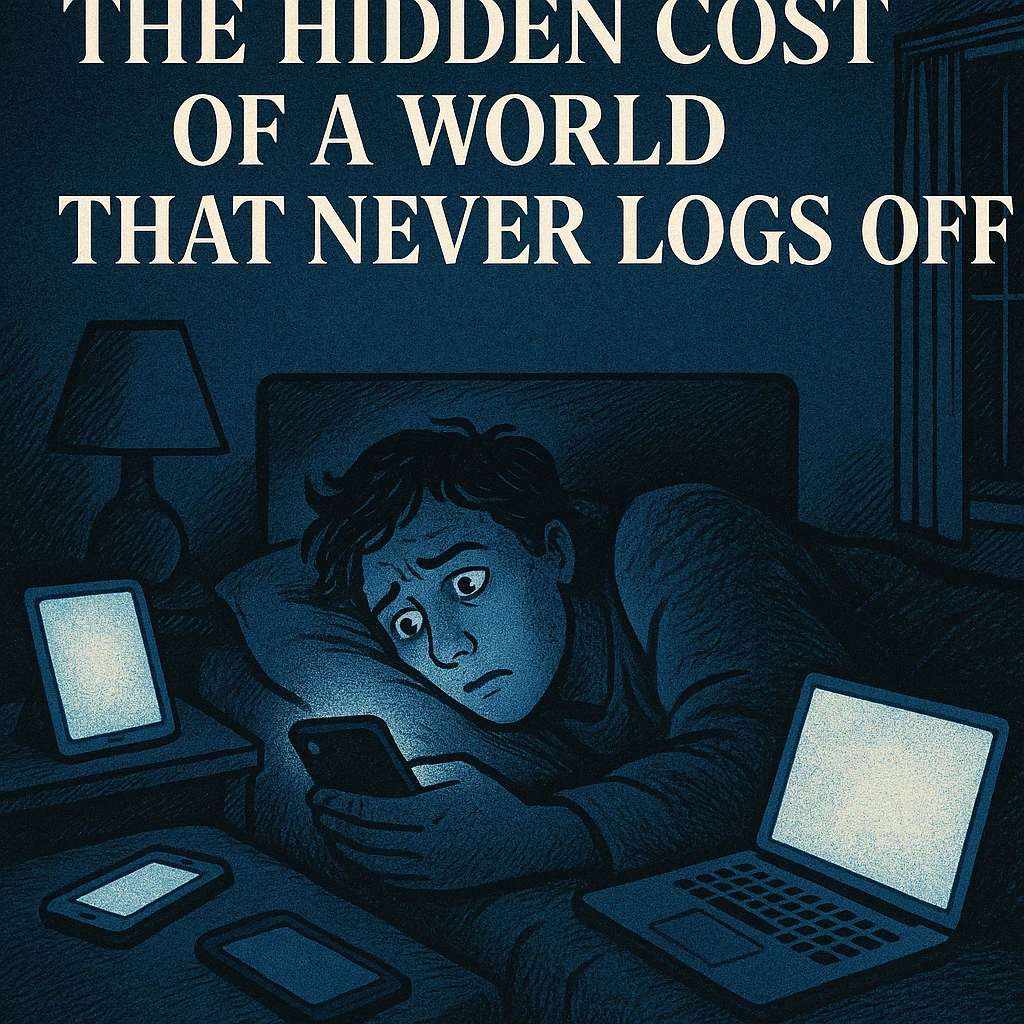
This hyperconnected lifestyle has unseen costs even though it promises convenience, productivity, and limitless opportunities. Continuous connectivity shortens attention spans, damages relationships, undermines mental health, and reinterprets what it means to lead a balanced life. In summary, we frequently underestimate the cost of never shutting down.
In a world that demands our attention all the time, this blog examines the hidden cost of our "always online" culture, why it matters, and how we can start reclaiming healthier boundaries.
1. The Disappearance of Boundaries
Boundaries were enforced by physical spaces prior to the digital age. Home was for rest; the office was for work. But the office is always with us thanks to Slack, email, and messaging apps on our phones.
-
Blurred work-life balance: Nowadays, workers are under pressure to reply to work emails at midnight or while on vacation.
-
Global time zones: There is always someone working in a connected world. This indicates that local time is rarely respected in meetings, phone conversations, or messages.
-
Psychological burden: Knowing that work could interrupt at any time causes persistent stress, even if you don't reply.
This lack of separation drains people slowly, replacing rest with “anticipatory stress.”
2. The Illusion of Productivity
The idea that being constantly connected increases productivity is one of the biggest fallacies. In actuality, the opposite frequently occurs.
-
Context switching: While working on a project, checking emails disrupts concentration and lowers deep work capacity.
-
Notifications trap: Every alert, buzz, or ping diverts focus and slows down the brain's recuperation.
-
Extended hours, same output: Longer hours rarely result in increased productivity; instead, they cause mistakes and burnout, according to research.
Always being online doesn't necessarily mean we're doing better; in fact, it frequently indicates that we're doing worse.
3. Mental Health: The Silent Price
Constant connectivity has profound effects on mental health, even if they’re not always obvious at first.
-
Anxiety and hyper-vigilance: Constantly checking gadgets simulates fight-or-flight mode, keeping the brain alert.
-
Sleep disruption: Late-night scrolling and exposure to blue light disrupt melatonin, which delays sleep cycles.
-
FOMO (Fear of Missing Out): Social media makes us feel excluded or "behind," which exacerbates anxiety.
-
Burnout epidemic: The inability to unplug speeds up fatigue, which results in cynicism, weariness, and a lack of drive.
Because so many people accept fatigue and anxiety as normal aspects of modern life, this cost is "hidden."
4. Relationships Under Strain
Being “always on” doesn’t just affect the individual—it reshapes relationships.
-
Divided attention: Children and partners frequently vie for attention on screens, which erodes emotional ties.
-
Work intrusions: Anger and disconnection are caused when urgent emails interrupt family dinners or vacations.
-
Surface-level interactions: There is less time and energy available for in-depth, meaningful conversations when there is constant online chatter.
Over time, the inability to log off undermines intimacy and trust by substituting distraction for presence.
5. The Physical Toll of Being Always Connected
Constant connectivity has physical repercussions in addition to mental and emotional stress.
-
Sedentary lifestyle: Unrelenting screen time keeps us seated for extended periods of time, which is associated with diabetes, obesity, and heart disease.
-
Digital eye strain: Fatigue, headaches, and blurred vision are caused by blue light, glare, and extended screen time.
-
Posture problems: Hours spent bent over electronics can cause "tech neck" and back pain.
-
Stress hormones: Constant stress causes high cortisol levels, which impair immunity and hasten aging.
Logging off serves as both a mental and physical health precaution.
6. Cultural Shifts: When Hustle Becomes Identity
The notion that success is the result of constant activity has been accepted by our culture. The "hustle" mentality exalts working long hours, sending emails late at night, and being online all the time.
-
Status symbol: Being busy has come to be seen as a sign of importance, as if being worn out is a sign of worth.
-
Fear of irrelevance: Experts fear that disconnecting will cause them to lag behind rivals.
-
Social reinforcement: Constant interaction is rewarded by apps with likes, streaks, and never-ending notifications.
However, this culture cannot be sustained. A generation of professionals who confuse burnout with success is the hidden cost.
7. The Cost to Creativity and Innovation
Constant connectivity also erodes one of our most valuable human capacities: creativity.
-
No downtime for incubation: In a world that never stops, great ideas frequently occur when you're bored or sleeping.
-
Reactive mindset: Being always connected entails responding to the needs of others rather than coming up with original ideas.
-
Creativity killers: Overstimulation and multitasking hinder the brain's capacity to produce new ideas.
Turning off your computer is not a sign of laziness; rather, it is necessary for the kind of innovative discoveries that influence science, culture, and advancement.
8. The Generational Divide
The cost of never logging off is particularly stark when viewed across generations.
-
Younger generations: Due to their online upbringing, Gen Z and Millennials frequently struggle with identity, mental health, and excessive digital exposure.
-
Older generations: Many Gen Xers and boomers find it difficult to keep up, feeling pressured to adapt and experiencing digital fatigue.
-
Children: The culture of constant engagement is being absorbed by even young children, whose attention spans are getting shorter before they reach their full potential.
The struggle to establish boundaries in a world that erases them is what binds these groups together.
9. The Economic Angle: Profit from Attention
The world never logs off, but why? because someone makes money from it.
-
Attention economy: Sites like YouTube, Facebook, and TikTok make money by allowing users to scroll indefinitely.
-
Workplace exploitation: Employee availability around-the-clock benefits businesses by normalizing unpaid overtime.
-
Consumerism: People see more advertisements and purchase more goods the more time they spend online.
The hidden cost of our time, focus, and well-being translates directly into financial gain for corporations.
10. Reclaiming Control: Learning to Log Off
Although there is a lot of pressure to stay connected, people and societies can take back control.
-
Set boundaries: Establish tech-free areas in your house, such as no phones in bedrooms or during dinner.
-
Digital sabbaths: Set aside a few hours each day or one day per week to fully disconnect.
-
Mindful work culture: Promote businesses that uphold work-life balance by supporting "right to disconnect" policies.
-
Relearn boredom: Accept peaceful, gadget-free times as chances for relaxation and creativity.
-
Invest in analog life: Engage in mental-nourishing offline hobbies, go for walks, or read real books.
Logging off is not retreat—it’s resistance. It’s a conscious act of reclaiming attention, health, and humanity.
Conclusion
A world that never logs off has an enormous hidden cost. It stifles creativity, damages relationships, commodifies human attention, and erodes mental health. We are now more connected than ever thanks to technology, but we are also bound by a never-ending cycle of demands, alerts, and digital noise.
We must learn the value of disconnection if we are to live fully. These days, privacy, solitude, rest, and presence are choices rather than defaults. It is radical to decide to log off in a society that values busyness. It's the choice to prioritize humanity over incessant digital noise, depth over distraction, and health over hustle.
Therefore, shutting down is more than just a luxury. It's about surviving in a world that depends on us being "always on."