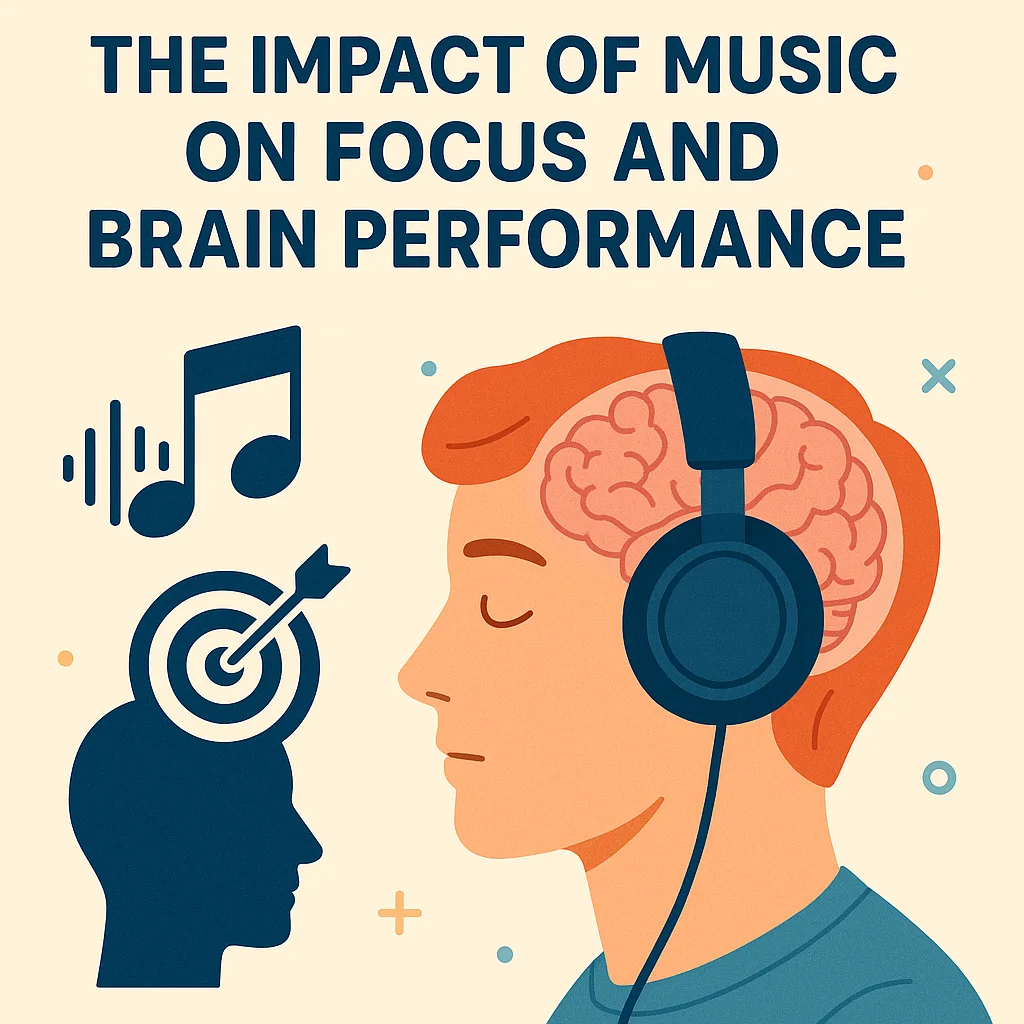
Introduction: The Soundtrack of Productivity
For thousands of years, music has been an essential component of human existence. From traditional tribal drums to contemporary electronic beats and classical symphonies, music is more than just entertainment; it may affect behavior, emotion, and even brain function.
While working, studying, or exercising, many people unconsciously play music. Some people swear by classical compositions, while others love rhythmic beats and instrumental music. Beyond personal taste, however, research is showing that music has a direct impact on cognitive function, memory, and attention.
This blog examines the practical, psychological, and biological aspects of how music affects concentration and brain function, providing information for professionals, students, and everyone else trying to maximize mental output.
The Neuroscience Behind Music and the Brain
Several brain regions are simultaneously activated when listening to music. The prefrontal cortex manages attention and executive function, the limbic system reacts to emotions, the motor cortex frequently activates even when you're just tapping along, and the auditory cortex interprets sound.
This multi-region activation helps the brain regulate its activity to enhance performance, which explains why music can be both calming and exciting. Researchers have discovered that music affects the release of neurotransmitters such as serotonin, which controls mood and stress levels, and dopamine, which increases motivation and pleasure.
Brain waves can be influenced by music's rhythm, melody, and pace, which can induce a state of concentration. For instance, while faster rhythms can boost alertness and vitality, slower, steady beats may promote a calm, contemplative mindset.
Music and Focus: How It Works
The prefrontal cortex of the brain actively filters distractions and sustains focus on goal-oriented activities when we are working on a task. Depending on its type and the nature of the work, music can either aid or impede this process.
Positive Effects on Focus
Certain types of music have been shown to enhance concentration:
1 Instrumental music
Because the brain is less likely to be distracted by words when there are no lyrics, classical or ambient music is perfect for study or analytical tasks.
2 Repetitive rhythms
Brain waves and steady beats can synchronize to create a rhythm that enhances prolonged attention.
3 Familiar music
Because the brain doesn't have to absorb new information when listening to well-known music, there is less cognitive load and more energy available for the main activity.
By preventing outside distractions and enabling the brain to sustain a state of flow—a mental state where creativity and productivity are at their highest—music can serve as a cognitive anchor.
The Mozart Effect and Cognitive Performance
In the 1990s, the idea of the "Mozart Effect" gained popularity. According to research, listening to Mozart may momentarily enhance one's capacity for spatial reasoning and problem-solving. The fundamental idea is that music can improve certain sorts of brain performance, especially activities requiring pattern recognition, memory recall, and analytical reasoning, even though subsequent research has questioned the extent of the benefit.
According to studies, listening to music at a moderate pace (60–80 beats per minute) can improve cognitive function. This collection includes ambient electronic music, classical music, and baroque music, all of which promote a peaceful yet alert state of mind.
Music and Memory Enhancement
Emotion and attention are intimately related to memory. The limbic system, which is in charge of processing emotions, is activated by music. Information can become more recalled when chores are combined with music because of the emotional connection. Professionals and students who need to save a lot of data will find this especially helpful.
Some researchers have found that:
✓ Background music with low volume can enhance memory recall
✓ Songs associated with positive emotions can strengthen long-term memory connections
✓ Rhythmic and melodic repetition can improve retention of complex sequences
However, verbal memory tests can be hampered by music with complicated lyrics or abrupt changes, underscoring the significance of choosing music that enhances the cognitive demands of the task.
Mood Regulation and Productivity
Cognition and mood are closely related. The brain is less able to concentrate, solve problems, and think creatively when it is under stress, anxiety, or boredom. Depending on pace, key, and familiarity, music can either induce calm or excitement and affect neurotransmitter levels, acting as an emotional regulator.
While slower, instrumental music can ease tension and lessen mental tiredness, upbeat music can inspire and motivate. This dual effect explains why music is used by office workers, writers, and athletes to create the perfect work environment.
Genres and Their Effects on the Brain
Not all music has the same effect on concentration. Studies reveal variations based on genre and structure:
-
Classical music: Often promotes relaxation, improved attention, and spatial reasoning.
-
Ambient and electronic: Creates a flow state, ideal for coding, writing, or repetitive tasks.
-
Jazz or complex instrumental: Stimulates creativity and divergent thinking but may distract during analytical tasks.
-
Pop or lyrical songs: Can motivate and energize but may reduce focus when tasks involve reading or verbal processing.
Because subjective satisfaction also contributes to cognitive enhancement, the music selection should be in line with both the task type and personal preferences.
Practical Applications: Music in the Workplace and Study Environments
Real-world productivity can be increased by comprehending how music affects brain function. The following tactics are backed by research:
✓ For intense focus: Choose instrumental or ambient music at moderate tempo, avoiding lyrics that can compete with verbal tasks.
✓ For creative work: Jazz, classical, or music with variable rhythm can stimulate creative thinking.
✓ For relaxation and stress reduction: Slow tempo music, soft piano, or natural soundtracks can lower cortisol and improve concentration.
✓ For repetitive tasks: Familiar, rhythmic tracks can maintain energy and prevent boredom without distracting.
The advantages of regulated music environments are becoming more widely acknowledged by employers and educational institutions, who frequently permit headphones or carefully chosen playlists to improve overall performance.
Limitations and Individual Differences
Although it can improve concentration and performance, music is not always helpful. Among the variables affecting efficacy are:
-
Task complexity: Highly cognitive or language-based tasks can be disrupted by lyrical music.
-
Personality: Introverts and extroverts respond differently; some find background music distracting.
-
Volume: While too-soft music may not capture attention, too-loud music can overwhelm cognitive functions.
-
Habit: Frequent exposure can teach the brain to react favorably, but sudden adjustments could lessen the advantages.
Personalization is crucial; the genre, pace, and loudness of the music should be tailored to the work at hand as well as the needs of the individual.
Conclusion: Harmonizing Productivity and Music
The brain's attention, memory, and affective systems are all significantly impacted by music, making it much more than just background noise. People can use sound to boost performance, improve learning, and lower stress by comprehending the connection between music, focus, and cognition.
Music has the ability to influence brain function, whether it be a classical symphony that aids in memory retention, a rhythmic ambient tune that promotes flow, or a gentle piano that creates a peaceful study space.
The science is clear: listening to the appropriate music at the appropriate moment can boost productivity. Finding the ideal soundtrack for concentration requires self-awareness and experimentation.
Anyone can improve their productivity experience by mixing the correct music with efficient work techniques. This will enhance the brain's innate capacity to function at its peak and turn distractions into harmony.