Many people spend most of their time indoors in the fast-paced, digital world of today, working in artificial lighting, staring at screens, and traveling by car or public transportation. Unquestionably, technology has made life more convenient, but it has also caused people to become more disconnected from nature. However, there is one thing that both new research and centuries of personal experience agree on: outdoor time is essential for mental health.
Nature provides psychological benefits that are hard to duplicate indoors, whether you're sitting in your backyard, strolling through a forest, or watching a sunset on the beach. The benefits of spending time outdoors for mental health, the science underlying these benefits, and ways to add more nature to your daily routine will all be covered in this blog.
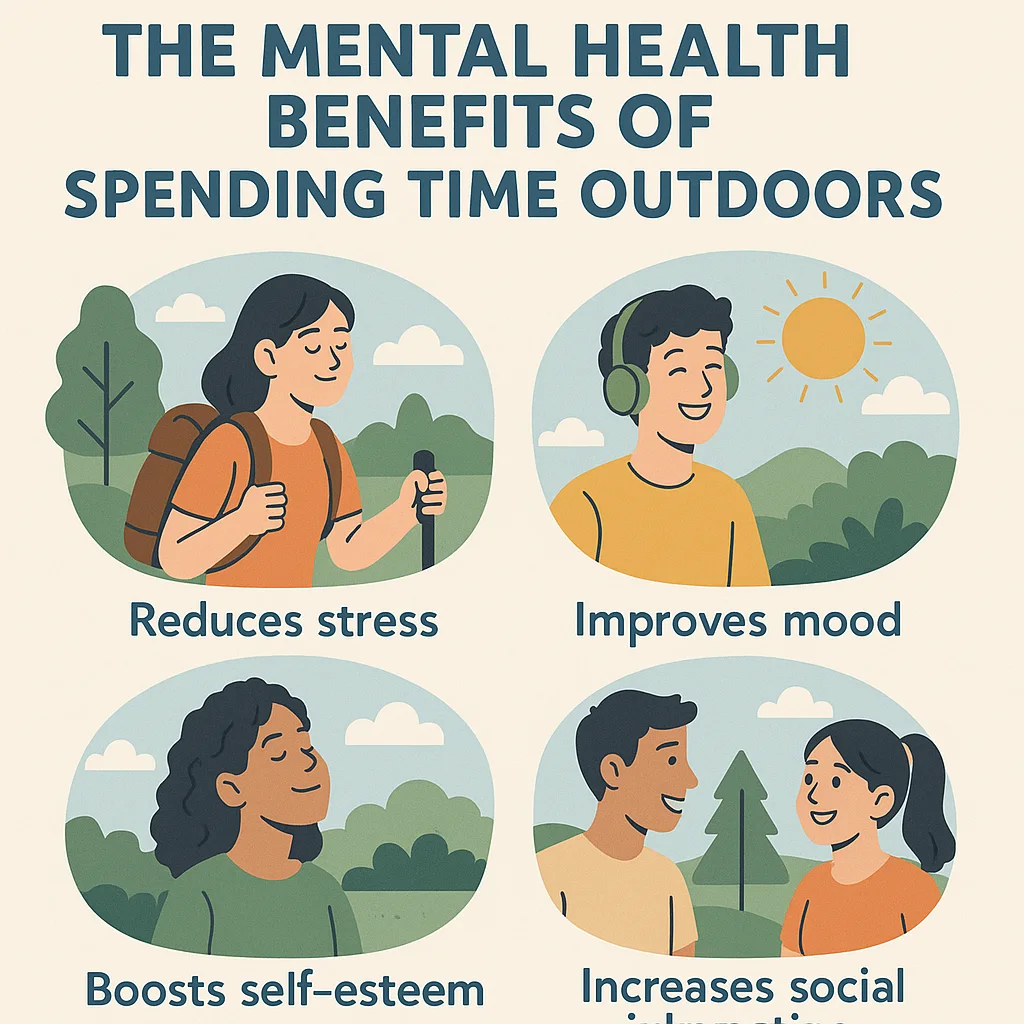
1. Nature Reduces Stress
Stress reduction is one of the most well-established advantages of outdoor recreation for mental health. Natural settings are naturally soothing. A calming atmosphere that calms the mind is produced by the sound of birds chirping, leaves rustling, or waves crashing.
The Science:
Research indicates that spending time in nature lowers levels of the stress hormone cortisol. According to a 2019 study that was published in Frontiers in Psychology, participants' cortisol levels were significantly reduced after just 20 minutes in nature. It has even been demonstrated that looking at pictures or natural scenes through a window can reduce stress.
2. Improved Mood and Reduced Anxiety
If you’ve ever taken a walk outside when feeling down, you probably noticed a lift in your mood. Nature has a significant effect on mental well-being, particularly in terms of lowering anxiety and depressive symptoms.
The Science:
Spending time in green areas has been associated with decreased rates of mood disorders, anxiety, and depression. Indeed, a 2015 study that was published in PNAS discovered that people who took a 90-minute walk in a natural environment reported less activity in the prefrontal cortex, a part of the brain associated with negative thought patterns and rumination.
In essence, being in nature allows your brain to reset from the stress of daily life.
3. Boost in Attention and Focus
Additionally, spending time outside can enhance cognitive abilities, especially focus and attention. In a time when multitasking and continual digital stimulation are the norm, this is extremely beneficial.
The Science:
Nature offers "soft fascination"—a kind of gentle engagement that helps the brain recover from mental exhaustion—according to Attention Restoration Theory (ART). According to a 2008 University of Michigan study, people who walked in parks fared considerably better on tests of memory and attention than people who walked in cities.
For those with ADHD, this advantage is especially noteworthy. According to certain research, kids with attention problems can focus better after spending time in green areas.
4. Better Sleep Quality
Good sleep is essential for mental well-being, and spending time outside can help you manage your sleep-wake cycle. A healthy circadian rhythm is maintained by exposure to natural light, which encourages deeper sleep at night and increased alertness during the day.
The Science:
Daytime exposure to sunlight boosts the production of serotonin, a mood-regulating hormone that at night transforms into melatonin, the hormone that induces sleep. Your biological clock can be reset by spending time outside, particularly in the morning, which will make it simpler to fall and stay asleep.
5. Increased Social Interaction and Reduced Loneliness
Another key component of mental health is social interaction, which is frequently promoted by outdoor activities. Saying hello to a neighbor at the park, going for a walk with a friend, or joining a hiking group can all help reduce feelings of loneliness.
The Science:
One established risk factor for anxiety and depression is social isolation. Outdoor yoga and community gardening are two examples of nature-based group activities that foster a sense of community and social bonding. Emotional resilience and life satisfaction are higher among those who engage in group outdoor activities.
6. Boost in Self-Esteem and Confidence
Physical challenges are common in outdoor activities, such as running a race, hiking a challenging trail, or even learning to recognize native plants. Reaching these goals can boost your self-esteem and give you a great sense of accomplishment.
The Science:
According to a Mind study conducted in the UK, 90% of participants said that taking part in outdoor nature walks increased their sense of self-worth. Being in nature helps people feel more capable and in control of their lives, which can help them feel less inadequate or helpless in other aspects of life.
7. Mindfulness and Presence
The grounding influence of nature promotes mindfulness, which is the art of being totally present in the here and now. The outdoors provides innumerable chances for mindful attention, from noticing the texture of a tree's bark to hearing a stream's ripple.
The Science:
Emotional reactivity, depression, and anxiety have all been found to decrease with mindfulness. By providing constantly shifting, non-threatening stimuli that subtly hold your attention, nature naturally encourages this practice.
8. Creativity and Problem-Solving
Struggling with mental blocks or creative ruts? A walk in nature might be just what you need.
The Science:
Participants in a 2012 study that was published in PLOS ONE reported a 50% increase in creative problem-solving after spending four days in nature without the use of electronics. Different brain regions are stimulated by nature, which also frees up cognitive resources that would otherwise be used for digital distractions.
9. Alleviation of Seasonal Affective Disorder (SAD)
Seasonal Affective Disorder (SAD) is a mood-depressing condition that many people experience during the winter months. Frequent exposure to daylight can lessen these symptoms.
The Science:
Outdoor light, particularly in the morning, can be just as effective in promoting serotonin production and balancing circadian rhythms as light therapy, which is a popular treatment for SAD.
How to Spend More Time Outdoors (Even If You’re Busy)
A busy schedule may prevent you from spending as much time in nature as you would like if you're like most people. The good news is that you can enjoy the mental health benefits of nature without having to hike through a national park.
Here are a few easy ways to integrate outdoor time into your routine:
-
Morning sunlight: Drink your coffee on the porch or balcony.
-
Nature walks: Take a 10–30 minute walk in a nearby park during your lunch break.
-
Green commute: If possible, bike or walk part of your commute.
-
Outdoor meetings: Suggest walking meetings or phone calls while outside.
-
Weekend getaways: Visit botanical gardens, trails, or local farms.
-
Desk break: Step outside during work breaks instead of scrolling your phone.
Final Thoughts
Spending time outside is a powerful, scientifically supported method of enhancing your mental health, not just a feel-good recommendation. Nature serves as a natural remedy for many of the psychological stresses of contemporary life, from lowering stress and anxiety to improving mood, focus, and sleep.
Therefore, know that you're doing something incredibly beneficial for your mental health whether you're sitting on your porch watching the clouds pass or hiking through the woods. Nature continues to be one of the most accessible and useful resources for mental health in a world full of manufactured solutions.