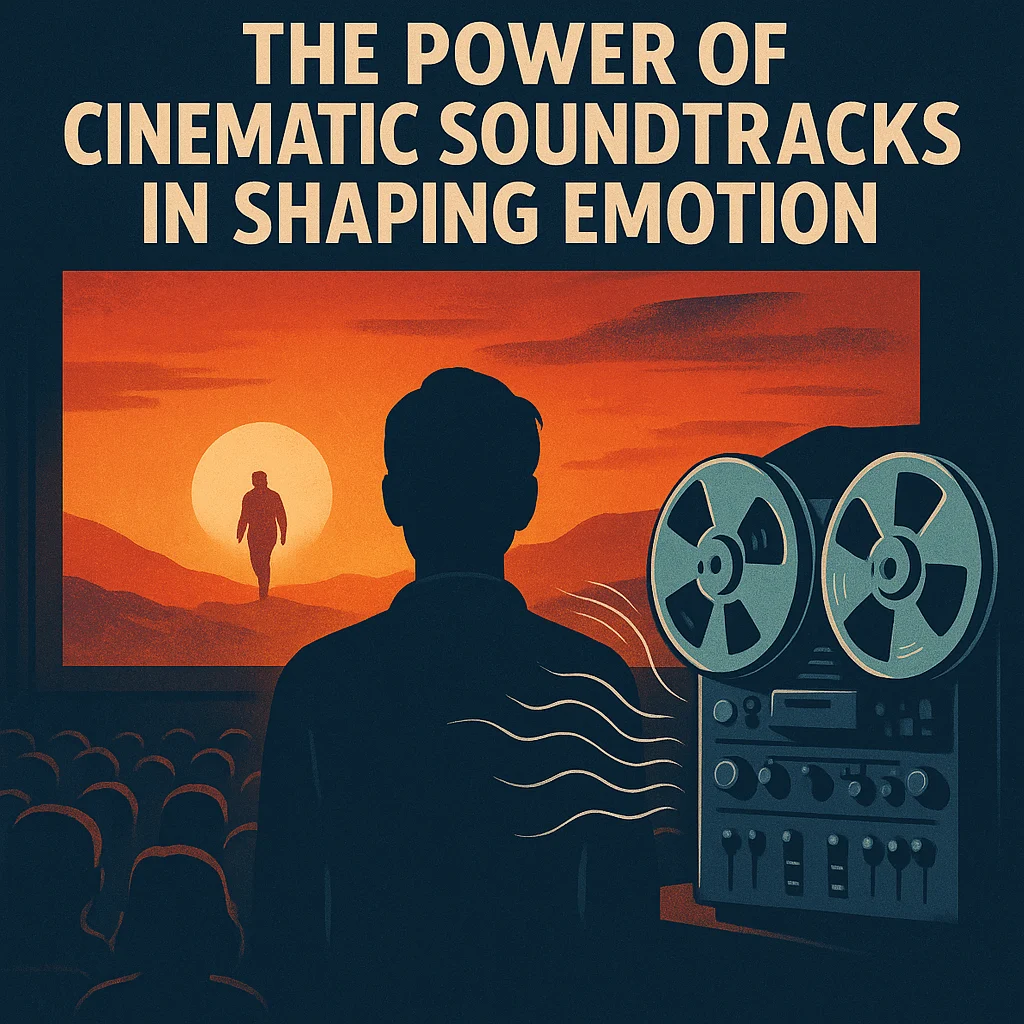
People frequently bring up famous scenes, catchy quotes, or breathtaking images when discussing their favorite films. But consider this: would the soundtrack still have the same effect on those moments? Imagine Titanic without the eerie "My Heart Will Go On," Star Wars without John Williams' soaring score, or Jaws without its tense two-note theme. In actuality, soundtracks are the emotional foundation of movies; they are not just background noise.
Music is one of the most effective storytelling mediums because it can bypass reason and appeal directly to our emotions. Soundtracks in movies influence our feelings, heighten the tension, and stick in our minds long after the credits have rolled. This blog examines the significance of cinematic soundtracks, their ability to evoke strong feelings, and their continued importance in our viewing experiences.
1. Music as the Emotional Language of Film
Although film is a visual medium, the depth of human emotion is frequently not fully conveyed by images alone. The story may be told by a shot of two characters cuddling, but the emotion is conveyed by the swelled soundtrack. Music is an emotional language that speaks directly to the subconscious, avoiding the logical mind.
This explains why romantic dramas rely on soft melodies to evoke tenderness and horror films use eerie, discordant strings to evoke dread. Soundtracks create a visceral human experience by bridging the gap between what we see and what we feel in moving images.
2. The Psychological Science of Music and Emotion
According to neuroscience research, music stimulates brain regions linked to emotion, memory, and even survival instincts. Our bodies react with increased alertness when a soundtrack employs rising tempo and pitch. We unwind or experience nostalgia when the music changes to slow, melodic tones.
Soundtracks use these emotional reactions to direct listeners. For instance, Hans Zimmer's score for Inception reinforces the film's themes of time and urgency with slow, pulsing rhythms that resemble a ticking clock. Not only does music enhance the narrative, it also shapes our perception of it.
3. The Iconic Themes That Define Stories
Some films and their soundtracks are inseparable. Consider the eerie piano notes in The Godfather or John Williams' triumphant score from Star Wars' opening crawl. Hearing these themes instantly conjures up entire worlds and characters because they are so iconic.
Why is this the case? because associative memory is produced by music. A melody turns into a trigger once we associate it with an emotional experience. The Harry Potter theme can instantly take viewers back to the enchantment of Hogwarts, even after decades have passed.
Through their soundtracks, heroes, villains, and even entire universes are given a sense of identity. In this sense, music not only enhances storytelling but also becomes a part of it.
4. Shaping Pacing and Atmosphere
Pacing is also regulated by cinematic soundtracks. Rapid percussion gives a chase scene a sense of urgency, but the same images without any music could come across as flat. Silence is frequently used purposefully in thriller soundtracks; a sudden silence can have the same effect as a loud orchestra, making viewers uneasy.
Composers and directors work together to match narrative rhythm with music. Take Quentin Tarantino's films, where the use of well-chosen music heightens the irony and tension. During violent scenes in Pulp Fiction, lively surf rock music plays, producing an unexpected yet memorable effect. Not only does the soundtrack influence our emotions, but it also influences their speed.
5. The Emotional Undercurrent of Character Arcs
Leitmotifs, or personal musical motifs, are frequently carried by characters. These are recurrent musical themes associated with particular individuals, locations, or concepts. Darth Vader's "Imperial March," for example, immediately conveys his presence, power, and threat. Elsa's "Let It Go" in Frozen, on the other hand, conveys emancipation and change.
Leitmotifs let the music change as the character does. Heroes may develop more complex, grandiose, or resolved musical themes as they mature. As villains get closer to their demise, their dissonant motifs may become more intense. Through music, we are able to hear a character's journey in addition to witnessing it.
6. Music as Cultural Storytelling
Cultural identity is frequently reflected in soundtracks. Traditional instruments and melodies are used in films that are set in particular locations or historical periods to help viewers feel rooted in the past.
Slumdog Millionaire, for instance, immersed viewers in the spirit of India by fusing Western music with Bollywood rhythms. Similarly, Black Panther created a strong sense of cultural authenticity by using African chants and percussion. Beyond just evoking feelings, these soundtracks educate, transport, and introduce listeners to other worlds.
7. Soundtracks and the Art of Memory
The ability of movie soundtracks to stick in your memory is one of their most enduring features. The music lasts long after the storyline fades. When "Schindler's List" is performed live, people cry, whistle the Hunger Games theme, or hum the Jurassic Park theme.
This is due to the special connection that music has with memory. It can, frequently more vividly than pictures, take us back to particular periods of our lives. Listening to a soundtrack can instantly bring back memories of our first movie-going experience, including who we were with and how we felt.
8. Beyond the Screen: Soundtracks as Independent Art
Great soundtracks become ingrained in popular culture and are not limited to movies. While orchestral scores are played in concert halls all over the world, albums like Saturday Night Fever and The Bodyguard dominated the charts.
Film soundtracks are now made available on streaming services as standalone experiences, allowing viewers to relive feelings outside of the theater. This blending of genres demonstrates that cinematic music is not just instrumental but also an art form that can coexist with popular songs and symphonies.
9. Silence: The Unsung Partner of Soundtracks
It's interesting to note that silence is one of the soundtrack's most effective elements. Audiences lean closer when the music stops suddenly. Silence can emphasize intimacy in romance or heighten fear in horror movies.
For example, the majority of No Country for Old Men is silent, which heightens the shock of violent scenes. It's not always necessary for soundtracks to take up every moment; sometimes the most powerful emotional impact is produced when there is no music playing.
10. The Future of Cinematic Soundscapes
Songs are changing as technology develops. Soundscapes that envelop viewers from all sides are necessary for immersive film and virtual reality. AI is also being investigated as a tool for creating music that adapts to the responses of the audience.
But regardless of the innovation, one thing is certain: music will always influence how we perceive stories. The soundtrack, with its expansive orchestras and understated sound design, is here to stay as the cinematic emotional compass.
Conclusion: The Invisible Hand That Guides Emotion
Cinematic soundtracks are the unseen hand directing our feelings, memories, and perceptions; they are more than just background music. They enhance the tragedy of loss, magnify the victories of heroes, and inscribe tales into our collective consciousness.
It's usually because the music has touched our hearts that we cry, cheer, or sit speechless in a theater. Unseen but always felt, the soundtrack is, in many respects, the essence of a film.