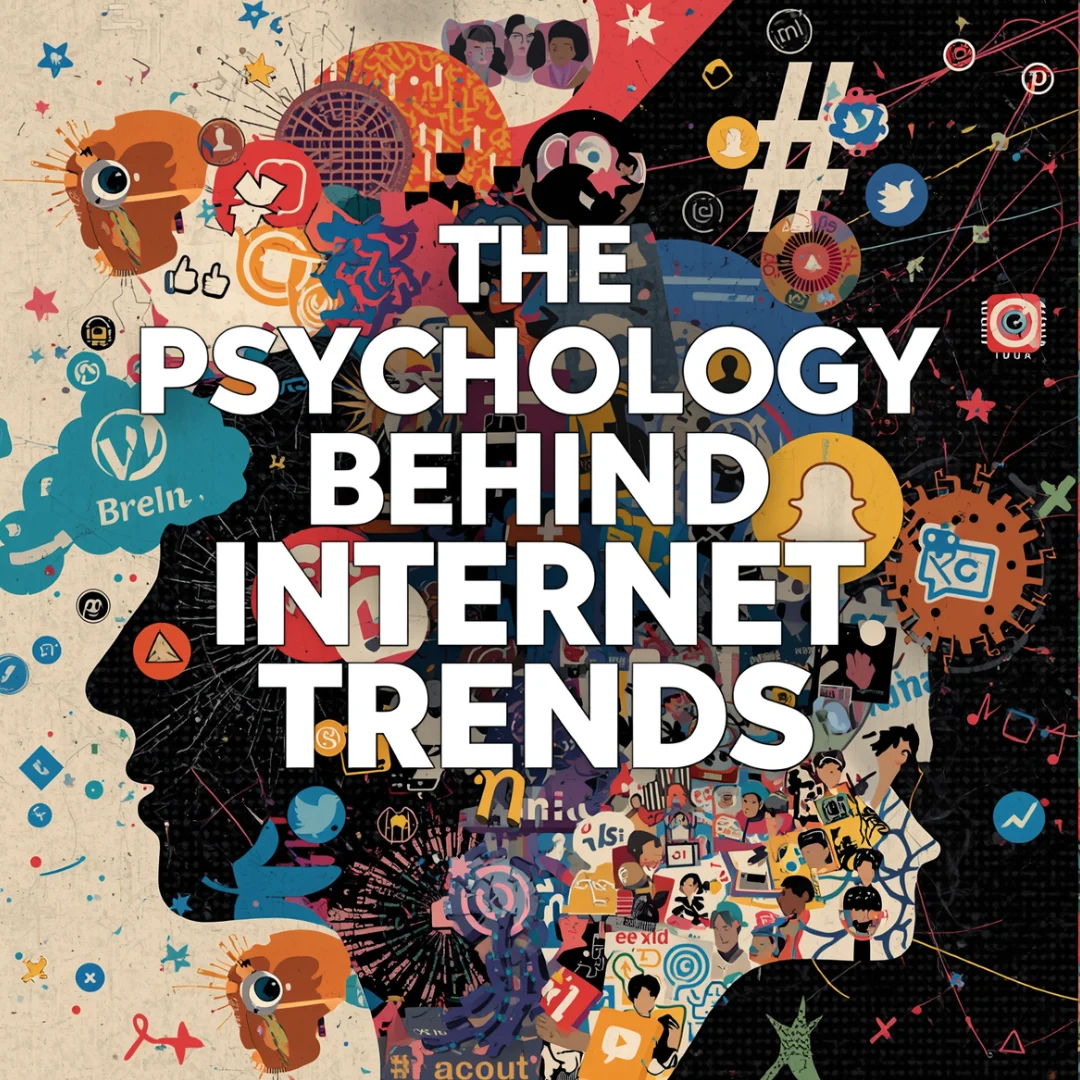
One of the most potent forces influencing contemporary culture is the internet. New trends appear on social networking sites every day, quickly gaining traction among millions of users. Internet trends influence how individuals behave, communicate, and express themselves online, from fashion trends and vocabulary to viral challenges and memes. The psychological factors that contribute to these trends' rapid growth are just as fascinating as their pace.
These trends are created and disseminated mostly through platforms like YouTube, Instagram, and TikTok. Their algorithms and human psychology combine to produce an atmosphere in which particular concepts or actions can rapidly garner enormous attention.
The Human Desire to Belong
The human yearning for belonging is one of the most potent psychological forces underlying internet trends. It is human nature to want to be a part of a community or organization. By taking part in popular online activities, people can interact with others who share their experiences.
A sense of collective participation arises when a trend gains popularity. Users are inspired to join the movement when they witness others participating. A person may indicate that they are a part of the cultural moment by posting content that is relevant to a trend.
On social media, where users are continuously observing what others are doing, this sensation of belonging is very strong. Widespread adoption of a trend generates a type of social pressure that promotes further involvement.
In this way, trends become digital social rituals that connect people across different locations and cultures.
Social Proof and Imitation
Social proof is a key psychological concept underlying online trends. The tendency for people to imitate the actions of others, particularly when they are unsure of what to do, is known as social proof.
When users see a large number of people participating in a trend, they assume it must be worthwhile or entertaining. This perception encourages them to imitate the behavior.
The public visibility of engagement indicators like likes, shares, and views on social media amplifies social proof. A post or video gains popularity and credibility when it receives millions of engagements.
This cycle of imitation is a major reason why trends spread so rapidly across the internet.
The Role of Curiosity and Novelty
Humans are naturally drawn to novelty. New ideas, unexpected humor, or creative content capture attention more effectively than familiar material.
Internet trends frequently flourish because they present something novel or unexpected. Curiosity can be sparked by an original challenge, a funny meme, or an inventive video style.
People are inspired to learn more about new things once they come upon them. They might make their own version, share it with friends, or view comparable stuff.
This curiosity-driven engagement allows trends to grow quickly as more users discover and interact with the content.
Internet trends frequently shift quickly, which can also be explained by the ongoing pursuit of novelty. Every time something new emerges, people start focusing on the newest viral sensation.
Emotional Engagement
Emotions play a crucial role in the spread of internet trends. Content that triggers strong emotional responses is more likely to be shared and discussed.
Emotions like humor, excitement, nostalgia, or surprise are frequently evoked by internet trends. People are more likely to share the content with others when they feel these emotions.
Emotionally engaging trends can include:
✔ Humorous memes that make people laugh
✔ Heartwarming stories that inspire positivity
✔ Shocking or surprising moments that capture attention
✔ Relatable experiences that resonate with everyday life
These emotional reactions motivate users to spread content through their social networks.
In this way, emotions act as powerful catalysts for viral behavior.
The Influence of Influencers
Influencers and content creators have a major impact on shaping internet trends. Popular personalities often have millions of followers who watch their content regularly.
An influencer's audience may swiftly embrace a new concept or follow a trend. A minor trend may become a major phenomena as a result of its effect.
Influencers function as trend amplifiers. Their participation provides visibility and credibility that encourages others to join.
Platforms like TikTok are particularly effective at promoting influencer-driven trends because their algorithms prioritize engaging content.
As a result, influencer participation often accelerates the life cycle of internet trends.
Algorithmic Amplification
The transmission of trends is largely influenced by psychology, but technology also plays a big part. Content with a high level of engagement is promoted by social media algorithms.
The platform views user interactions with popular posts—likes, comments, and shares—as important material. It is then disseminated to wider audiences by the algorithm.
This amplification process creates a feedback loop. Increased exposure leads to more engagement, which leads to even greater visibility.
Algorithms therefore act as powerful engines that accelerate the spread of trends across digital platforms.
Without these systems, many trends would likely remain confined to smaller communities rather than reaching global audiences.
Identity and Self-Expression
Individuals can also show their creativity and uniqueness by following online trends. Users are encouraged by several trends to contribute their own spin or interpretation.
For example, dance trends, meme formats, and creative challenges often invite participants to personalize the content.
At the same time, joining a trend signals alignment with a particular cultural moment or community.
Through this process, internet trends become tools for both self-expression and social signaling.
The Fear of Missing Out
Another psychological aspect influencing involvement in online trends is FOMO, or the fear of missing out. People who utilize social media often see others having fun or engaging in activities.
When people see their friends or favorite creators taking part in a popular trend, they may feel compelled to join in order to avoid feeling excluded.
This incentive may cause people to join viral movements quickly. Users are motivated to interact with popular material as soon as possible before the trend disappears in order to stay socially relevant.
FOMO therefore contributes to the speed at which internet trends emerge and disappear.
The Short Life Cycle of Trends
Internet trends often rise and fall very quickly. A meme, challenge, or format may dominate social media for a few days or weeks before being replaced by something new.
This rapid cycle occurs because digital audiences constantly seek fresh content. Once a trend becomes too common, it may lose its novelty and excitement.
Content creators and users then shift their attention toward the next emerging trend.
This constant turnover keeps internet culture dynamic and unpredictable.
Potential Downsides of Internet Trends
While internet trends can be entertaining and creative, they also present certain challenges. Some trends encourage risky behavior or spread misinformation.
Other trends may promote unrealistic expectations or social pressure to participate.
Concerns associated with internet trends include:
✔ Pressure to conform to popular behaviors
✔ Spread of misleading or inaccurate information
✔ Encouragement of risky or unsafe challenges
✔ Online harassment related to viral content
Responsible participation and critical thinking are important for minimizing these risks.
The Future of Internet Trends
Internet trends will probably grow increasingly more deep and participatory as digital technology advances. New forms of online engagement could be introduced by emerging technologies like virtual worlds, augmented reality, and artificial intelligence.
Future trends may involve collaborative digital experiences where users interact with each other in real-time virtual spaces.
The psychological underpinnings of trends will probably not change despite these technological advancements. The dissemination of ideas online will continue to be fueled by human curiosity, emotional involvement, and social connection.
Conclusion
Internet trends are reflections of profound psychological tendencies rather than chance events. Trends spread quickly across digital platforms due to a variety of factors, including the need for creative expression, social proof, emotional connection, and a sense of belonging.
As a result, internet trends have become powerful cultural phenomena that shape communication, entertainment, and social behavior in the digital age.