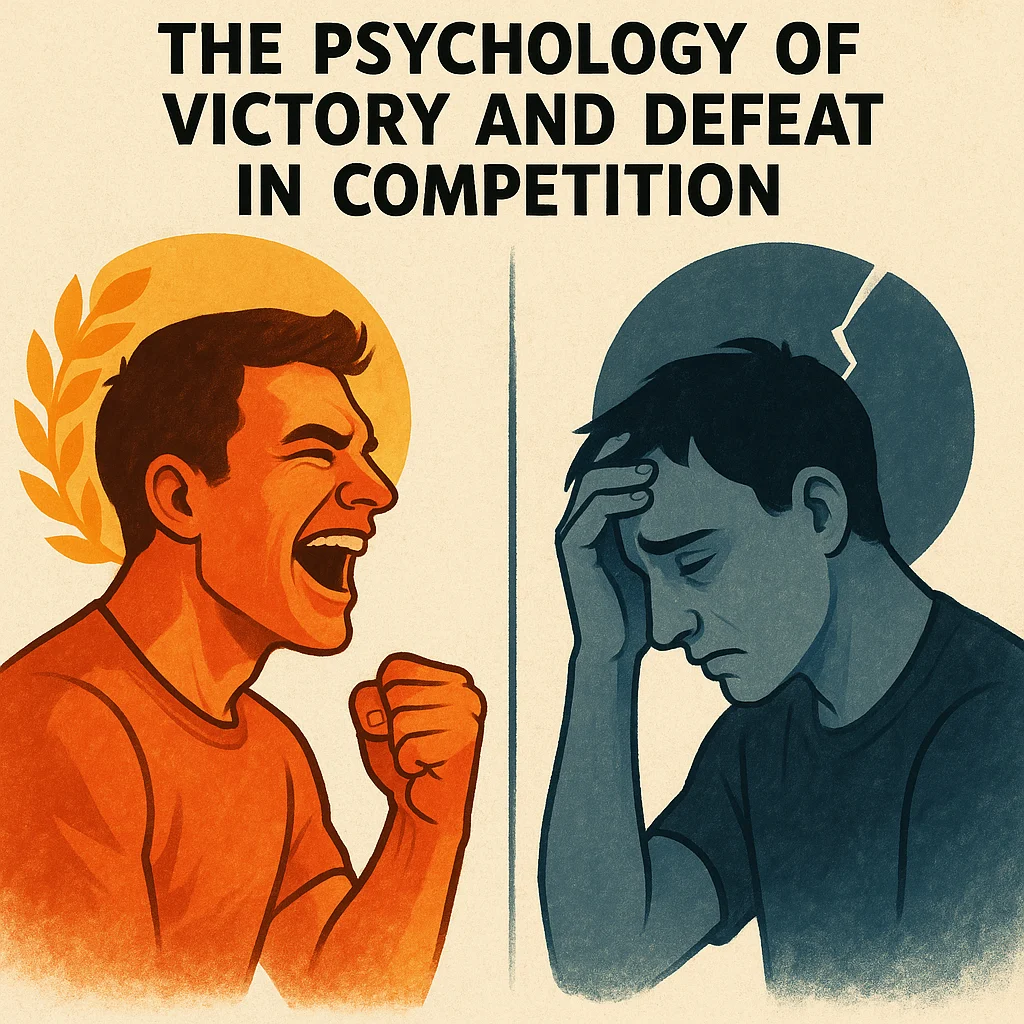
One of the most distinctive aspects of human existence is competition. In sports, business, academia, or even personal objectives, the dynamics of winning and losing influence not only results but also our identities. While losing can feel depressing, discouraging, or even liberating, winning feels thrilling, almost intoxicating. Beneath these feelings, however, is a complex psychological terrain: how people perceive, react to, and develop from winning and losing.
The psychology of winning and losing in competition is examined in this blog, along with how both can teach us about motivation, resilience, and meaning. It also looks at why winning feels so strong and why losing hurts so much.
1. Why Winning Feels So Good
Some of the brain's most primitive and rewarding circuits are triggered when one wins. Dopamine, a neurotransmitter linked to pleasure and reward, is released in our brains when we win. This explains the "high" that athletes experience following a victory or the exuberance that comes with promotions and accomplishments.
Additionally, winning is socially reinforced. Society instills in us from an early age the idea that success equates to respect, status, and approval. Promotions, medals, trophies, and applause all indicate recognition in addition to accomplishment.
-
Evolutionary roots: In the past, winning meant securing resources, mates, or territory in order to survive. These echoes are still present in the psychological gratification associated with winning today.
-
Boosted confidence: A positive cycle where success breeds more success is created when victories strengthen self-belief.
-
Social validation: Peer or societal recognition enhances our feeling of significance and belonging.
Lesson: Victory isn’t just about results—it fulfills deep biological and social needs.
2. Why Defeat Hurts So Much
Our reward systems light up when we win, but the pain centers in our brains light up when we lose. Since rejection has historically meant isolation and a lower chance of survival, humans are hardwired to avoid it. Losing frequently feels like rejection.
Loss aversion is the psychological concept that states that we are more affected by losses than by gains. Compared to winning, losing a competition, job, or game can stick in your memory longer.
-
Ego threat: Our self-image is challenged by defeat, which can occasionally result in feelings of guilt or insecurity.
-
Social embarrassment: It can be humiliating to lose in front of peers, competitors, or the general public.
-
Motivation crash: When they lose, some people give up, retreat, or steer clear of new challenges.
However, not all losses are harmful. Many people find that losing serves as a catalyst for development, resiliency, and change.
Lesson: Defeat hurts because it touches both our self-esteem and our survival instincts—but it can also build strength.
3. The Fine Line Between Confidence and Arrogance After Victory
Learning how to accept victory gracefully is one of the psychological difficulties that come with it. Though it can also inflate the ego, victory can increase confidence.
-
Healthy confidence: Remaining grounded winners continue to put in a lot of effort and use their win as evidence of their progress.
-
Arrogance trap: Others let victory breed complacency or entitlement, which often leads to decline.
Consider sportsmen or businesses that dominate for a while before faltering due to an underestimation of the competition. If victory is not handled with humility, it can lead to blindness to weaknesses.
Lesson: The true test of victory is whether it builds character or corrupts it.
4. The Growth Potential Hidden in Defeat
While winning makes you happy, losing teaches you valuable lessons. According to a number of psychologists, losing presents more chances for development than winning.
-
Resilience training: Overcoming obstacles teaches you how to get back up stronger.
-
Feedback loop: Defeat highlights weaknesses and blind spots more clearly than victory does.
-
Intrinsic motivation: People who keep competing after losing frequently grow more grit and passionate.
Examples abound in history. For instance, Michael Jordan famously claimed that his success was a result of the thousands of times he failed. Entrepreneurs frequently point to unsuccessful endeavors as the basis for their subsequent success.
Lesson: Defeat can be a better teacher than victory—if we’re willing to listen.
5. The Role of Perspective in Victory and Defeat
The psychological effects of winning and losing are shaped by our perception of them. Victory is everything to some, but the journey itself is more important to others.
-
Fixed mindset: Individuals who believe that their ability is innate may become depressed when they lose because they perceive it as a sign of their value.
-
Growth mindset: People are more likely to use failure in a positive way if they see obstacles as opportunities.
Perception shapes even victory. Some people enjoy winning no matter how easy it is, while others find it to be meaningless.
Lesson: Perspective defines whether victory spoils us or inspires us, and whether defeat breaks us or builds us.
6. Competition as Identity and Self-Worth
A lot of people associate winning with who they are. Victory may be seen by students, athletes, and entrepreneurs as evidence of their identity. This may be inspiring, but it may also be harmful.
-
Over-identification: Losing can feel like personal destruction when one's entire sense of value is dependent on winning.
-
Balanced identity: People who view competition as a necessary but not the only aspect of life are better able to deal with both success and failure.
This explains why some champions retire gracefully, while others spiral when they can no longer win.
Lesson: You are not your victories or defeats—you are how you handle them.
7. The Social Psychology of Victory and Defeat
Seldom does competition occur in a vacuum. Audiences, teammates, rivals, or communities are frequently involved in victories and defeats.
-
Shared victory: Joy is amplified when a team wins because it is a collective experience.
-
Shared defeat: Losing together can bond people through shared struggle.
-
Public perception: The pain of defeat and the glory of victory are frequently exaggerated by society.
The idea that people are observing us more intently than they actually are is known as the spotlight effect by psychologists. This can make defeat seem more devastating and victory seem more spectacular.
Lesson: Our emotions in victory and defeat are amplified by the presence of others.
8. The Psychology of the Comeback
Some of the most motivational tales are about triumphs that are followed by victories. This is what psychologists call post-traumatic growth—the notion that hardship can lead to change.
-
Athletes who lose crucial matches often return stronger.
-
Businesses that fail pivot into better models.
-
Individuals who face personal losses sometimes discover new strengths.
Comebacks show that defeat is not an end, but often a beginning.
Lesson: Victory after defeat carries deeper meaning than victory without struggle.
9. Finding Balance Between Winning and Losing
In the end, competition is about meaning rather than just results. A fair strategy for winning and losing entails:
-
Humility in victory: Celebrating without arrogance.
-
Grace in defeat: Accepting loss without despair.
-
Focus on growth: Using both outcomes as stepping stones for personal development.
This balance is strong but uncommon. It enables people to engage in intense competition without allowing their humanity to be defined by the results.
Lesson: The healthiest competitors treat victory and defeat as teachers, not as ultimate verdicts.
10. Why Competition Matters
Why is psychological competition so important? since it is a reflection of life itself. We compete with others, with situations, and frequently with ourselves on a daily basis. Winning brings happiness, losing brings suffering, but both lead to development.
When competition is done well, it does more than just choose winners and losers. It teaches us how to live a meaningful life, develops resilience, and shapes character.
Conclusion: Beyond Winning and Losing
The psychology of success and failure shows that these events are more than just results; they are forming experiences that influence resilience, wisdom, and identity.
Our need for accomplishment, self-assurance, and acknowledgment is satisfied by victory. We are challenged, humbled, and strengthened by defeat. But both are equally important.
Ultimately, how we handle those results is more important than whether we win or lose. Do we allow triumph to inspire us or do we allow it to blind us? Do we allow failure to shape us or to shatter us?
Life is a long game, and true competitors know that. Wins and losses are chapters rather than endings. Understanding the psychology of both is the biggest triumph of all.