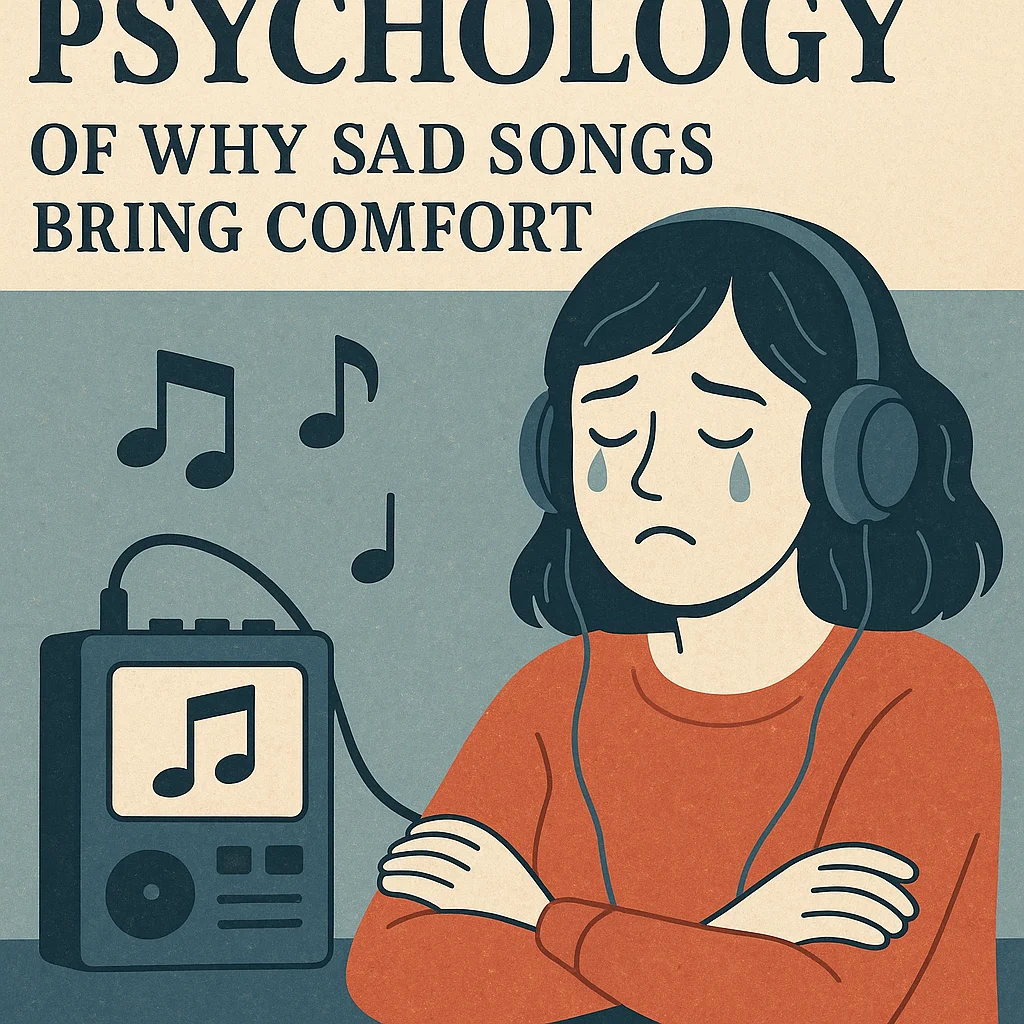
Music has always had a special ability to influence people's thoughts. It has the power to uplift our spirits, invigorate our bodies, or lead us to introspection. One of its great mysteries is why so many individuals find solace in depressing music. Why would we prefer to listen to something that makes us think of loss, longing, or heartbreak? It seems counterintuitive at first glance. However, millions of playlists, ranging from "heartbreak anthems" to "late-night sad vibes," demonstrate the enduring appeal of depressing music.
This blog investigates the psychological underpinnings of the comforting effects of sad songs, revealing the cultural, neurological, and emotional elements that contribute to its special potency.
1. Sad Songs Validate Our Emotions
The world can feel alienating when we are depressed, lonely, or experiencing heartbreak. Sad songs provide us a sense of legitimacy, a recognition that our feelings are genuine and common. We are reminded that others have gone through similar hardships when we hear lyrics that reflect our inner reality.
For instance, a breakup song reminds us that someone else has experienced the same pain as ourselves, rather than just repeating our own. Emotional loneliness is lessened by this affirmation. This is related to the psychological principle of emotional resonance, which holds that we feel less alone when we identify with art.
2. Catharsis Through Music
Sad songs give people a way to let go of their emotions. The term catharsis, dating back to Aristotle, describes the purging of emotions through art. We let suppressed emotions come to the surface when we lose ourselves in melancholy music.
A moving song might make you cry, which releases stress chemicals and helps you feel calmer later. Instead than intensifying melancholy, music offers a secure setting for processing it. It's what separates repressing pain from giving it a voice.
3. The Paradox of Pleasurable Sadness
Why we can appreciate melancholy in music while avoiding it in real life is one of psychology's biggest mysteries. Scholars refer to this as the "sad music paradox." Compared to real-life experiences, the brain reacts differently to depressing music.
Sad music allows us to enjoy the artistic beauty of sadness without having to deal with the repercussions of real life. The slow tempos, gloomy vocals, and minor chords stimulate brain regions associated with reward and grief. According to neuroscience, listening to depressing music causes the release of prolactin, a hormone that eases tension and makes sadness feel calming rather than unpleasant.
4. Nostalgia and Memory
Sad songs frequently bring back memories of people, places, and times that have passed. This link to the past offers a sense of significance that is both bittersweet and positive. Even when the memories are tinged with sadness, nostalgia can still produce a warm emotional glow.
In addition to bringing up memories of the relationship itself, a song associated with a breakup may also evoke feelings of youth, development, and fortitude. Sad songs preserve significant aspects of our identities in this way, serving as emotional time machines.
5. Sad Songs as Companions
Sad music has the ability to be a companion when we are alone. Sad songs accompany us in our loss without passing judgement, in contrast to those who might rush to "fix" our sentiments. They show empathy without expecting anything in return.
For this reason, people frequently listen to depressing music at night, when taking long walks, or when they are reflecting alone. Music turns into a silent companion that communicates without using words. Lyrics that feel intensely intimate and reverberate our thoughts in a way we can't always articulate ourselves enhance this effect.
6. Sad Music Strengthens Emotional Intelligence
In fact, listening to depressing music can help us better comprehend our own and other people's feelings. This has to do with emotional intelligence, which is the ability to identify, understand, and control emotions.
We learn how to deal with difficult emotions in real life by being exposed to them through art. After listening to a song about loss, a person may develop greater empathy for those who are grieving. Therefore, sad music serves as emotional training.
7. Social Connection Through Sad Music
Sad songs have a societal impact that goes beyond personal hearing. On the basis of particular emotional themes, online groups, concerts, and even shared playlists emerge.
At a concert, thousands of fans are connecting with each other as well as the performer while they sing along to a heartbreaking ballad. Individual grief is transformed into a shared experience through this group outpouring, fostering unity.
8. Creativity and Reflection
Additionally, sad music promotes creativity and self-reflection. The reflective lyrics and slower tempos allow for introspection. A lot of poets, painters, and writers have drawn inspiration from melancholy music.
Sad tunes encourage us to stop and think instead of diverting us. They help us better connect with our inner selves and slow down the fast-paced nature of existence.
9. Cultural Universality of Sad Songs
Every culture has a history of melancholy music, ranging from contemporary songs to ancient laments. This universality implies that there is a very human connection between music and grief. Sad songs were incorporated into storytelling or mourning rituals in various countries, which aided in the processing of communal grief.
Sad music's enduring appeal throughout space and time emphasises its essential function in expressing emotions. The human soul has always utilised music to express suffering, whether it is through a folk ballad of longing, a tragic opera, or a blues song.
10. Why Sad Songs Leave Us Stronger
In the end, depressing music makes us stronger rather than weaker. We develop resilience when we deal with sadness in a way that is both safe and beautiful. Instead of denying uncomfortable emotions, listening to melancholic music helps us accept them.
We frequently feel lighter, more at ease, and more understood when the final notes fade. Sad songs have the odd ability to turn pain into solace, meaning, and connection.
Conclusion: The Comfort in Shared Sorrow
Despite having their roots in agony, sad melodies eventually blossom into consolation. They provide us catharsis, legitimise our emotions, and let us relate to something greater than ourselves. They serve as lonely friends, empathetic educators, and reminders that grief can be beautiful when it is turned into art.
Sad songs enable us to accept the whole range of human feeling in a society where sadness is stigmatised and happiness is frequently overvalued. By doing this, they help us cope with sadness more thoroughly rather than by eradicating it.