Introduction: Identity Is Becoming the Price of Convenience
Almost all financial transactions in today's digital environment leave a trace. A person's location, behavior, tastes, habits, social patterns, and even health can all be inferred from a single purchase. Every card swipe or phone tap silently adds to a growing database of personal data. The direct connection between a person's identity and their financial situation has become commonplace, almost expected. However, a countermovement has started to emerge, based on the idea that people ought to be able to transact without disclosing their identities. Anonymous payments are at the heart of this rapidly expanding movement.
For many years, the only way for people to make payments without disclosing who they were was with cash. No identity verification, no digital trace, and no long-term surveillance were necessary when giving someone a banknote. The anonymity that was once ingrained in daily life has gradually diminished as businesses and governments have pushed society toward digital platforms. Now that that lost privacy is being restored by new technology, there is a global discussion about freedom, security, and the future of money.
Why Anonymous Payments Are Becoming a Global Trend
The increase in interest in anonymous payments is not coincidental. It is a direct reaction to the swift deterioration of individual privacy. People are now more conscious of the ways in which personal data is gathered, sold, examined, and kept. Every transaction exposes something personal, and the sense of being watched all the time has grown more pervasive. Millions of people are looking for financial solutions that let them keep control over their identities as a result of this growing unease.
Growing financial surveillance is another important element. In order to monitor illegal activities, governments are implementing more stringent identity verification systems; however, these systems also collect data from regular residents. You can't access financial services, utilize a payment app, or open a bank account in many countries without providing a lot of personal information. Although the goal of these policies is to lower crime, they also centralize authority, raise the possibility of data breaches, and produce comprehensive records of each person's financial situation.
In the meantime, anonymous transactions are now much more accessible than they were before thanks to developments in blockchain and cryptography. Privacy-focused wallets and encryption technologies were once exclusively accessible to experienced users. These days, common people can access privacy without requiring extensive technical knowledge thanks to user-friendly apps, privacy-layer blockchains, and improved design. Anonymous payments are becoming more commonplace due to the emergence of privacy coins, mixers, zero-knowledge proofs, and offline cryptocurrency transfers.
Companies are involved in this process as well. Businesses are becoming more conscious of the dangers associated with retaining client data. Millions of people are impacted by significant breaches that occur every year. Companies are less legally vulnerable when they have less identifying information. By lowering liability and compliance expenses, anonymous payments also provide them with a measure of operational safety.
The Technology That Makes Anonymous Payments Possible
Advanced cryptography techniques, decentralized systems, and creative financial architecture are essential for anonymous payments. One of the primary motivators is privacy-focused cryptocurrencies. It is possible to transmit or receive money using these digital currencies without disclosing the identity of the parties involved. They accomplish this by using methods that hide every layer of the transaction, such as ring signatures, stealth addresses, and zero-knowledge proofs.
The usage of mixing systems is another effective method for anonymous payments. These services make it possible to break the traceable chain by combining, rearranging, and redistributing a large number of unrelated transactions. These technologies are crucial to maintaining anonymity in transparent blockchains, despite their problematic nature.
Additionally, zero-knowledge solutions have revolutionized the field. They enable one side to demonstrate the legitimacy of a transaction without disclosing any private or sensitive information. The way privacy works in digital systems is being completely transformed by this idea. Where necessary, it permits openness, but everywhere else, it protects identity.
Technologies for offline cryptocurrency payments are also developing. Tap-to-pay transactions without an internet connection are now possible with certain hardware wallets. These devices function similarly to contactless cards, except they don't connect the transaction to an identity or bank account. This restores the anonymity that has been vanishing as communities go cashless by creating a type of digital currency.
An alternative perspective is offered by decentralized identification systems. They enable a person to demonstrate their authorization to carry out a task without disclosing their true identity to others. In actual life, a person can present a movie ticket without providing their name, age, or address, just like in this model. These systems have the potential to completely change the way financial privacy operates by combining anonymity with verification.
The Benefits of Anonymous Payments
In a world where personal information has become a sensitive asset, anonymous payments provide significant benefits. The restoration of financial privacy is the most evident advantage. Individuals can once again make purchases without having their actions tracked, examined, or permanently documented. This can shield people from unsolicited advertising, manipulation, and profiling.
Additionally, anonymous payments offer a high level of online security. Cybercriminals have much less to take advantage of when transactions are not linked to an individual's identity. Identity-linked banking systems are susceptible to social engineering, phishing attacks, account takeovers, and SIM switching. These risks are significantly decreased when identification is removed from the transaction chain.
People who live under repressive regimes can also be protected by anonymous payments. In order to live, journalists, activists, whistleblowers, minorities, and others who are persecuted frequently depend on private financial resources. A simple financial donation to the wrong group can result in arrest in many areas. Vulnerable people have a chance thanks to anonymous payments.
Everyday people who just don't want businesses monitoring their spending patterns can also profit from this. Companies are prevented from creating invasive profiles that mold ads, forecast behavior, and affect decision-making by anonymous purchases. Regaining control over their financial expression allows people to donate to charities, purchase delicate goods, or support personal causes.
The Risks and Controversies Surrounding Anonymous Payments
Anonymous payments provide benefits, but they also come with risks. Regulators are primarily concerned about the potential for anonymity to conceal illicit behavior. Criminals may find it simpler to operate in covert networks, launder money, and avoid paying taxes in the absence of a clear identifying trace. Strict regulations and continuous government opposition to completely anonymous banking systems are motivated by these worries.
The erosion of consumer protections is another issue. It is far more difficult to reverse payments, recover money from fraud, or settle disputes when a transaction cannot be traced. While anonymous financial solutions completely transfer responsibility to the user, traditional financial systems provide accountability and support.
Complexity is another problem. Even while privacy tools are getting better, a lot of individuals still have trouble using them. Even a minor error, like misplacing a private key or sending money to the incorrect destination, might have catastrophic consequences. These solutions need to become as easy to use and intuitive as any regular payment app in order for anonymous payments to become widely accepted.
The conflict between security and privacy is the last point of contention. While privacy advocates contend that surveillance threatens freedom, governments contend that anonymity makes society less safe. Although both parties agree that balance is important, they cannot agree on where it should be.
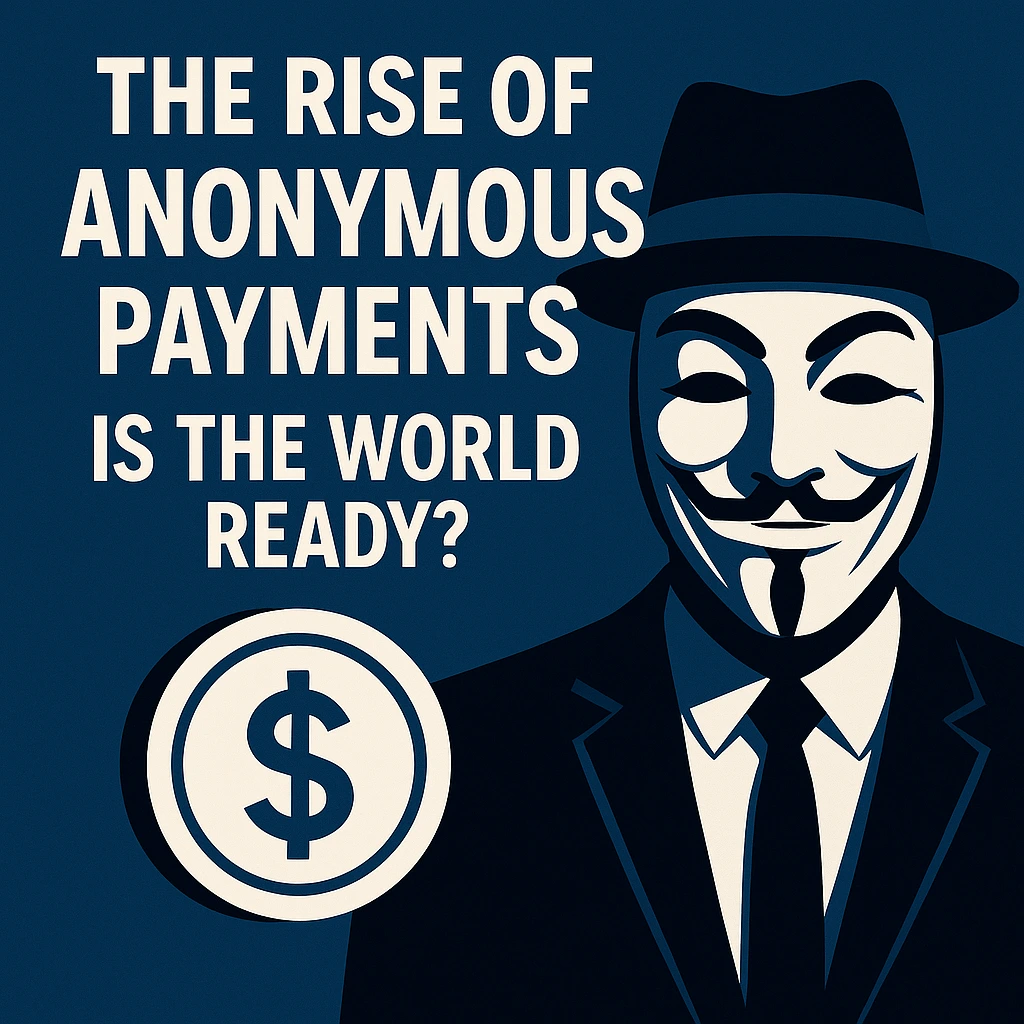
Is the World Ready for Anonymous Payments
The planet is reaching a turning point. A future in which all transactions are tracked, identity-checked, and forever recorded is one side. In contrast, anonymous payments will allow consumers to restore control over their financial privacy in the future. Both futures have advantages and risks.
The world is prepared in many respects. Concerns about privacy, awareness of digital surveillance, and a desire for tools that empower them are all growing. The technology is already sophisticated, accessible, and always evolving. Regulation is not keeping up with the pace of innovation.
The world is not prepared, however, in other respects. Laws are still ambiguous or constrictive. Governments worry about losing control. Compliance is a concern for businesses. Many customers are still cautious to trust systems they don't completely comprehend or are inexperienced with anonymous financial instruments.
A hybrid arrangement, in which privacy is permitted but regulated, is most likely the way forward. Larger transactions might need authentication, but smaller, routine payments might automatically become anonymous. This well-rounded strategy would safeguard individual liberty while satisfying fundamental legal requirements.
Conclusion: A New Financial Future Is Emerging
There is more to anonymous payments than just a fad in technology. They signify a more profound change in how society views identity, power, and privacy. The need for anonymity increases with the growth of digital systems. People want to be able to shop, support, donate, and explore without feeling like they're being monitored. Instead of computerized systems that reveal their life, they prefer those that uphold their rights.
Anonymous payments will inevitably become more common. How governments, businesses, and individuals will react is now the question. Will society accept a financial future that protects privacy, or will it oppose the notion of untraceable transactions for security reasons?