From being a specialized online movement, biohacking has become a popular wellness phenomena. What began as a group of self-optimizers experimenting with their bodies, habits, and diets has grown into a worldwide movement supported by tech entrepreneurs, longevity experts, and celebrities. Biohacking is all over the place these days, from customized supplements to wearable trackers to cold plunges. But what is real and what is simply hype?
We need to examine why people are initially drawn to biohacking in order to comprehend its rise. Biohacking gives people a sense of control in a world where chronic illness is prevalent, stress is omnipresent, and modern lives frequently feel divorced from health. More energy, better sleep, enhanced concentration, sharper thinking, and even a longer life are all promised. However, not all biohacks live up to expectations, as is the case with any rapidly gaining popularity.
This blog dissects the movement, examines its emergence, and discusses the science underlying the most well-known biohacks, distinguishing between those that work and those that are overstated.
The Cultural Rise of Biohacking
Early in the 2010s, biohacking started to gain traction due to Silicon Valley's fixation with longevity and productivity. Entrepreneurs wanted to work at their best, think more quickly, and sleep less. The movement gradually extended to mainstream lifestyle brands, fitness communities, and health influencers.
Its rising popularity is tied to several cultural shifts:
People want more control over their health.
Conventional healthcare frequently seems reactive, waiting for issues to arise rather than taking action to prevent them. By encouraging self-tracking, self-experimentation, and early intervention, biohacking reverses this.
Wearable technology made self-quantification easy.
Health data is now available to everyone, not just athletes, thanks to gadgets like Oura rings, Apple Watches, and continuous glucose monitoring.
The wellness industry exploded.
People desire individualized, practical solutions to enhance their lives, from meditation applications to supplements.
Longevity scientists became pop-culture icons.
The notion that aging can be slowed or even reversed was made famous by individuals such as Bryan Johnson, Andrew Huberman, and David Sinclair.
When taken as a whole, these elements changed biohacking from an underground movement to a popular way of life.
So, What Actually Works? Science-Backed Biohacks
While not all biohacks are created equal, some have strong scientific support. These are the ones that regularly provide tangible outcomes.
Intermittent Fasting
One of the biohacking practices that has been studied the most is intermittent fasting (IF). According to studies, it can lower inflammation, control blood sugar, enhance metabolic health, and even promote longevity.
Why it works:
In addition to providing a break for the digestive system, fasting initiates cellular repair mechanisms including autophagy, which removes and recycles damaged cells.
Consistency, not severe limitation, is the key. For most people, a 14–16 hour fast is sufficient to get the benefits.
Cold Exposure (Cold Showers + Ice Baths)
Due in large part to the impact of the Wim Hof Method, cold treatment has gone viral. Its effects on mood, immunity, and recuperation are supported by science.
Norepinephrine is released when exposed to cold, which increases alertness and lowers stress. Additionally, by stimulating brown fat, it may increase metabolism and assist reduce inflammation.
Even a 30–60 second cold shower can provide noticeable benefits.
Wearable Tracking and Smart Health Data
One of the most useful instruments for biohacking is wearable technology. People can more successfully modify their habits by keeping an eye on sleep cycles, recuperation, heart rate variability (HRV), and stress patterns.
Understanding how your particular body reacts to diet, exercise, sleep, and stress is where wearables truly shine.
When used consistently, they help identify patterns that lead to better health choices.
Nootropics (With Caution)
Focus, memory, and mental clarity can all be enhanced by nootropics, or cognitive-enhancing vitamins. Some are supported by studies, such as:
-
L-theanine + caffeine (reduces anxiety and smooths energy)
-
Omega-3 fatty acids (supports brain health)
-
Creatine (boosts cognitive performance, especially for vegans and vegetarians)
-
Lion’s Mane Mushroom (may promote nerve growth factor)
But there are also unregulated nootropics in the biohacking realm that could be harmful in the long run. It's crucial to stick to well-researched chemicals.
Red Light Therapy
Low-level light wavelengths are used in red light treatment (RLT) to promote cellular energy generation. Research backs up advancements in:
-
Skin health
-
Muscle recovery
-
Inflammation
-
Pain reduction
Because RLT has cumulative and quantifiable effects, athletes, dermatologists, and physiotherapists are using it more and more.
Sleep Optimization
Sleep is the ultimate biohack — and the most underrated.
Biohackers focus on:
-
lowering bedroom temperature
-
reducing blue light exposure
-
using magnesium or glycine supplements
-
tracking sleep patterns
-
maintaining regular sleep-wake cycles
Improving sleep has a ripple effect on mood, metabolism, cognition, and longevity.
Gut Health Optimization
Because gut health affects immunity, mental health, and metabolic function, it has emerged as a key biohacking emphasis.
Effective gut biohacks include:
-
Prebiotic fiber
-
Probiotics
-
Fermented foods
-
Minimizing ultra-processed foods
-
Personalized microbiome testing
A healthy gut supports overall well-being, making these hacks some of the most impactful.
Biohacks That Are Mostly Hype
Misinformation spreads with any quickly expanding trend. Some well-known hacks make inflated claims or have scant scientific support.
Extreme Supplement Stacks
Every day, some biohackers consume dozens of drugs. Supplements can be beneficial, but excessive use can strain the liver and upset the natural equilibrium. It's not always better to have more.
Unproven Longevity Treatments
Many "anti-aging hacks," such as peptide injections and hyperbaric oxygen chambers, are still in the experimental stage. The long-term consequences remain uncertain.
Continuous Glucose Monitors for People Without Diabetes
There is limited proof that continuous tracking enhances health outcomes for healthy people, although CGMs are useful for athletes and data enthusiasts.
Why Biohacking Is Becoming the Future of Wellness
The transition from passive to active health management is exemplified by biohacking. People want to proactively enhance their bodies and minds rather than waiting for symptoms.
Tech advancements support this shift:
-
AI-based nutrition plans
-
DNA-based fitness programs
-
Personalized supplement blends
-
Smart gyms with real-time biometric data
-
VR-based cognitive training
As these technologies evolve, biohacking will become even more personalized, accessible, and effective.
How to Biohack Safely
Biohacking should enhance life, not complicate it. Safe practices include:
• Start with basic habits like sleep, hydration, movement, and nutrition
• Introduce one biohack at a time
• Track results to see what actually works
• Avoid extreme methods or unregulated substances
• Consult professionals for advanced hacks
Simplicity often wins. The best biohacks are sustainable, gentle, and easy to integrate into daily life.
Final Thoughts: What Really Works?
A greater drive for better health and self-improvement is reflected in the growth of biohacking. Many hacks have tangible, quantifiable advantages supported by research, but some are more hype than science.
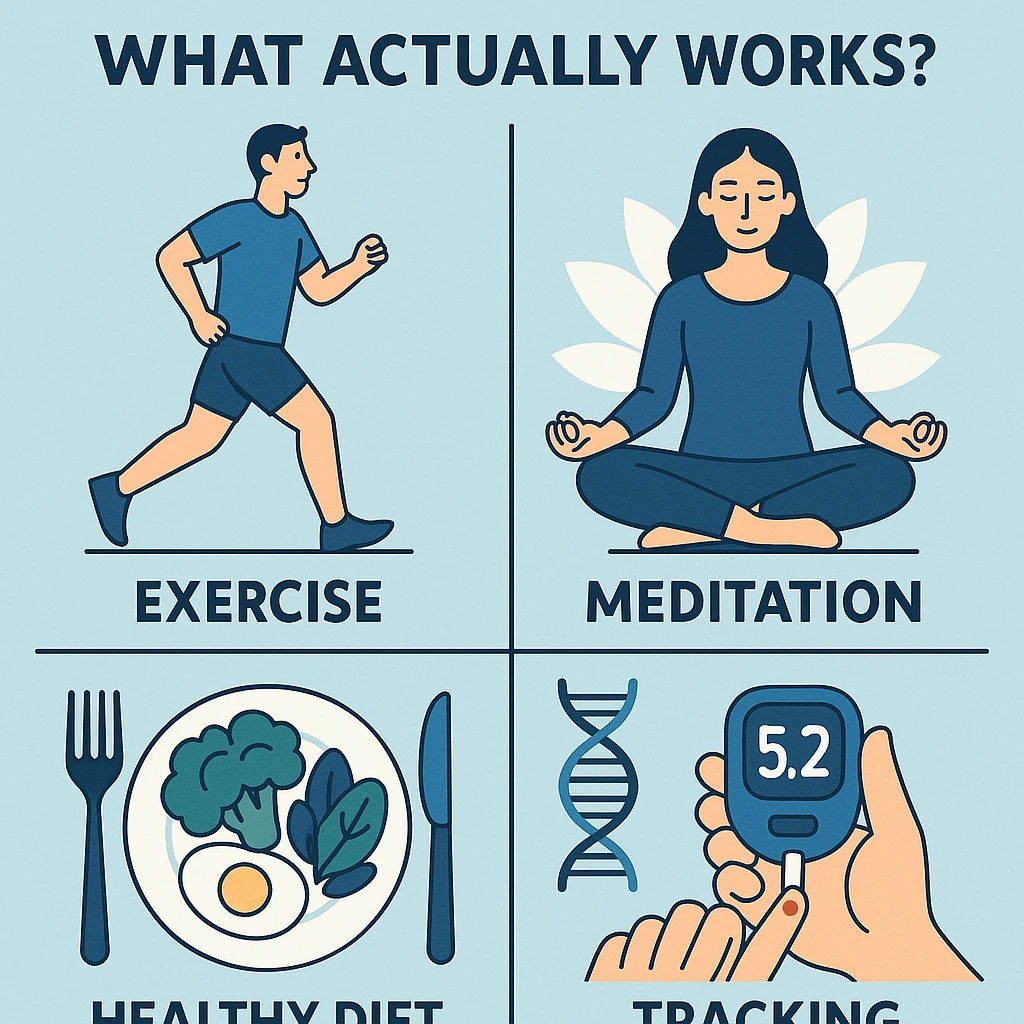
What actually works tends to be simple:
improved sleep, a healthy diet, exposure to cold, frequent exercise, stress reduction, and customized data monitoring.
Biohacking is about understanding how your body functions and supporting it in more intelligent, purposeful ways, not about becoming superhuman.