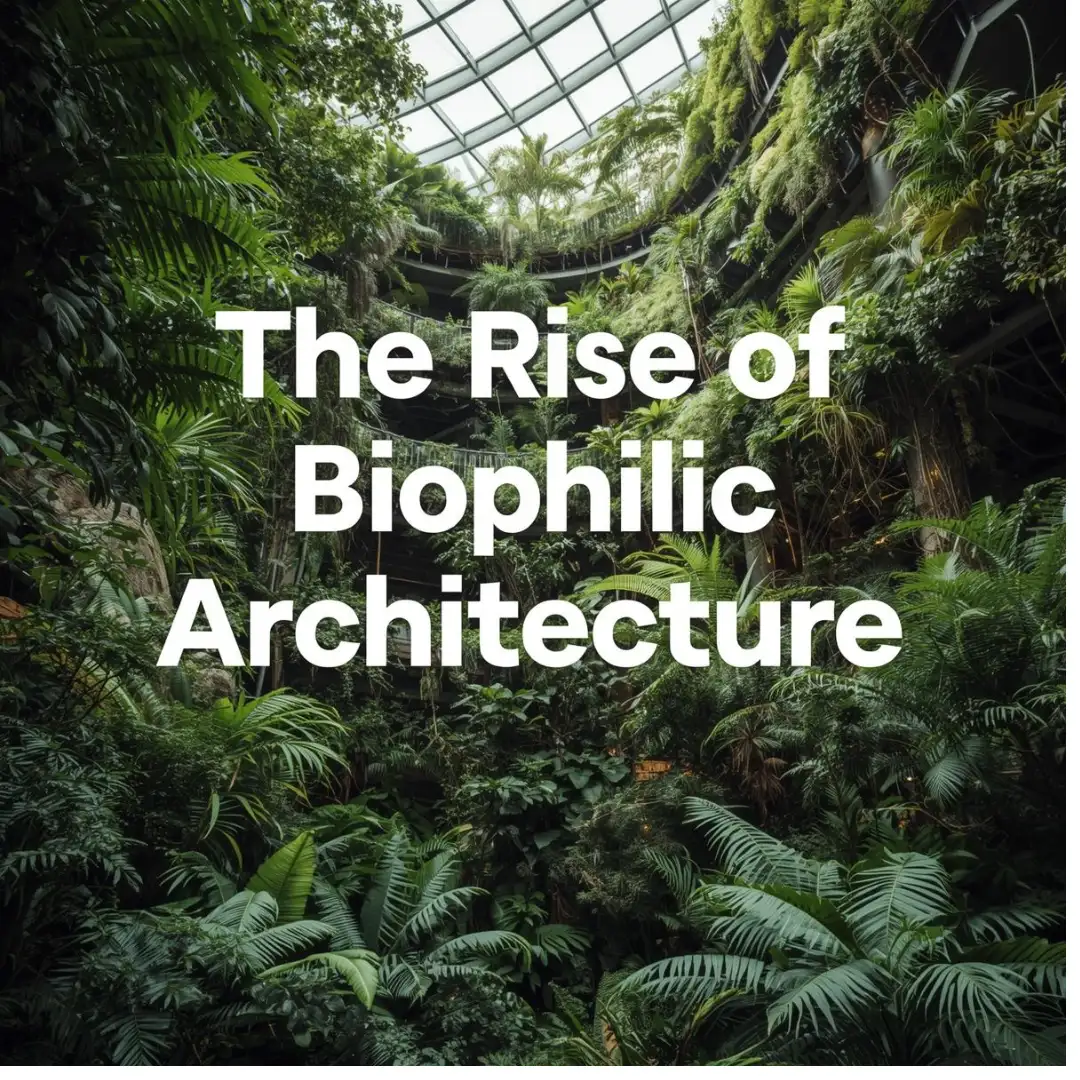
Introduction: Reconnecting Architecture with Nature
Human existence has gotten more and more cut off from the natural world as cities get denser and taller. Nowadays, a lot of individuals spend the majority of their time indoors, surrounded by glass, concrete, and artificial lighting. Environmental sustainability, physical well-being, and mental health have all been significantly impacted by this change. In response, designers and architects are using the potent idea of "biophilic architecture."
The foundation of biophilic design is the notion that people are inherently connected to the natural world. The literal definition of "biophilia" is "love of life or living systems." By incorporating natural aspects into the constructed world, this design concept aims to reestablish that connection. Biophilic design incorporates nature into everyday environments rather than viewing it as something that exists outside the structure.
What started out as a specialized idea is now a worldwide movement influencing households, workplaces, schools, hospitals, and urban areas. A rising understanding that buildings should not only operate well but also promote human health, emotional well-being, and environmental balance is reflected in the growth of biophilic architecture.
The Science Behind Biophilic Design
Biophilic design is based on scientific study and is not only an aesthetic trend. Exposure to nature provides quantifiable advantages for the human body and mind, according to research in environmental science, psychology, and neuroscience. Stress, blood pressure, mood, and cognitive performance are all improved in natural settings.
When people are exposed to natural light, greenery, water features, and organic materials, their nervous systems tend to shift from a state of chronic alertness to one of relaxation. Better sleep, increased concentration, and emotional fortitude are all supported by this adjustment. Positive impacts can result from even indirect exposure to nature, such as using natural textures or taking in vistas of trees.
Biophilic architecture translates these findings into design strategies. Architects design surroundings that are more in line with human biology by incorporating natural processes, materials, and patterns into structures. In doing so, they help occupants feel calmer, more energized, and more connected to their surroundings.
Key Elements of Biophilic Architecture
Biophilic design is characterized by a variety of components that collectively foster a close relationship with nature rather than by a single characteristic. These components, which might be direct, indirect, or symbolic, frequently combine to influence a space's overall experience.
✔️ Natural light, interior plants, water features, and outdoor views are examples of direct ties to nature.
✔️ Natural materials, organic shapes, earthy hues, and textures influenced by the natural world are examples of indirect links.
✔️Airflow, shifting light patterns, seasonal changes, and sensory interaction are examples of experiential qualities.
A key component of biophilic architecture is natural light. Daylight enhances mood, promotes circadian cycles, and lessens the need for artificial illumination. Sunlight can enter interior rooms more deeply in buildings with wide windows, skylights, and light wells.
Another distinguishing characteristic is the greenery. Rooftop terraces, courtyard plants, indoor gardens, and living walls all add life to constructed spaces. These eco-friendly components enhance the quality of the air, control the temperature, and provide comfort both mentally and visually.
Despite being less prevalent, water is a potent biophilic component. The sound and motion of the water can cover noise, promote calmness, and induce relaxation. Even small water features, such reflected pools or fountains, can greatly improve a room.
Wood, stone, clay, bamboo, and cork are examples of natural materials that offer both visual and physical warmth. Spaces feel more grounded and human because of their irregularities and textures, which contrast with the homogeneity of industrial materials.
The Role of Biophilic Architecture in Mental Health
The impact of biophilic architecture on mental health is one of the strongest arguments for its popularity. People who live in cities are frequently exposed to noise, artificial lighting, social isolation, and long-term stress. Anxiety, sadness, and burnout may be exacerbated by these conditions.
By designing areas that seem rejuvenating rather than taxing, biophilic habitats mitigate these consequences. Seasonal affective disorder symptoms are lessened by natural light, and mental stability and stress reduction have been associated with greenery. Natural features are often used into spaces to provide a more welcome, peaceful, and safe atmosphere.
It has been demonstrated that biophilic design in the workplace increases job satisfaction, lowers absenteeism, and improves cognitive function. Higher levels of concentration, creativity, and general well-being are frequently reported by workers in settings with natural light and vegetation.
Biophilic architecture promotes healing in healthcare environments. Patients who have access to outdoor areas or views of the outdoors tend to heal more quickly and use less pain medication. Additionally, these settings lessen stress for healthcare professionals, which enhances patient care and employee wellbeing.
Biophilic Design in Homes and Residential Spaces
Perhaps the most intimate places people live are their homes, and biophilic architecture has a significant impact on residential design. Large windows, open floor plans, indoor plants, natural materials, and smooth transitions between indoor and outdoor areas are all becoming more common features in modern homes.
With this method, houses become havens instead of just somewhere to stay. Living spaces are filled with natural light, outdoor areas become extensions of inside life, and plants soften hard surfaces. These design decisions promote calm, awareness, and a closer bond with everyday cycles like daylight, weather, and seasonal shifts.
Additionally, biophilic environments promote healthier lifestyles. Better ventilation, less exposure to artificial materials, and more access to outdoor spaces all improve physical activity, sleep, and air quality. In this sense, architecture stops being a passive background and starts actively promoting wellness.
Sustainability and Environmental Responsibility
Sustainable design ideas are closely aligned with biophilic architecture. Designers can lessen their impact on the environment and improve human experience by incorporating natural systems into their structures. Living walls, green roofs, and landscape integration all aid in stormwater management, temperature regulation, and the mitigation of urban heat island impacts.
Daylighting and natural ventilation lessen the need for mechanical equipment, which lowers energy use and operating expenses. Utilizing low-impact, locally sourced, renewable materials promotes sustainable resource management and lowers carbon footprints.
Biophilic design encourages a cultural change toward environmental consciousness in addition to technical sustainability. People are more inclined to appreciate and preserve the natural world when they live and work in environments that honor it. In this way, architecture becomes an ethical and instructional instrument in addition to a practical one.
Biophilic Architecture in Urban Design
Beyond individual structures, biophilic architecture is becoming more and more prevalent in the larger urban landscape. Urban woods, vertical gardens, green infrastructure, and nature-integrated public areas are all being adopted by cities worldwide.
Some of the most urgent issues facing contemporary cities, such as air pollution, heat stress, social isolation, and declining mental health, are addressed by urban biophilic design. Opportunities for leisure, relaxation, and social connection are provided by parks, green spaces, and waterfront developments.
Cities that incorporate greenery on several levels—from rooftop farms to street-level gardens—are more resilient and livable. Cities are transformed from concrete landscapes into living ecosystems by these designs, which blur the lines between nature and the built world.
The Future of Biophilic Architecture
Biophilic design will probably become more than just a choice as urbanization, climate change, and mental health issues worsen. Buildings of the future will increasingly be constructed as adaptable systems that react to natural cycles, human demands, and environmental conditions.
This change will be further supported by technological advancements. Architects will be able to design spaces that dynamically adapt to light, temperature, air quality, and occupancy patterns thanks to smart building technologies, responsive facades, and sustainable materials. These developments will reduce their negative effects on the environment while improving comfort.
But mindset—rather than just technology—holds the key to the real future of biophilic architecture. It necessitates a fundamental change in society's perception of buildings as interrelated parts of social and ecological systems rather than as separate entities.
Conclusion: Designing with Life in Mind
Growing awareness of the close connection between environmental health and human well-being is reflected in the growth of biophilic design. Architects are promoting mental health, physical fitness, and ecological responsibility in addition to enhancing comfort and beauty by bringing nature into the spaces we live in.
Despite living in cities or working in tall buildings, biophilic design serves as a reminder that we are inextricably linked to the natural world. Natural cycles, materials, and forms continue to influence our bodies, thoughts, and emotions. Architecture that respects this relationship produces environments that are meaningful, nurturing, and alive.
Biophilic architecture provides a potent counterpoint in a society increasingly influenced by urbanization and technology. It challenges us to build for life itself rather than merely efficiency or financial gain.