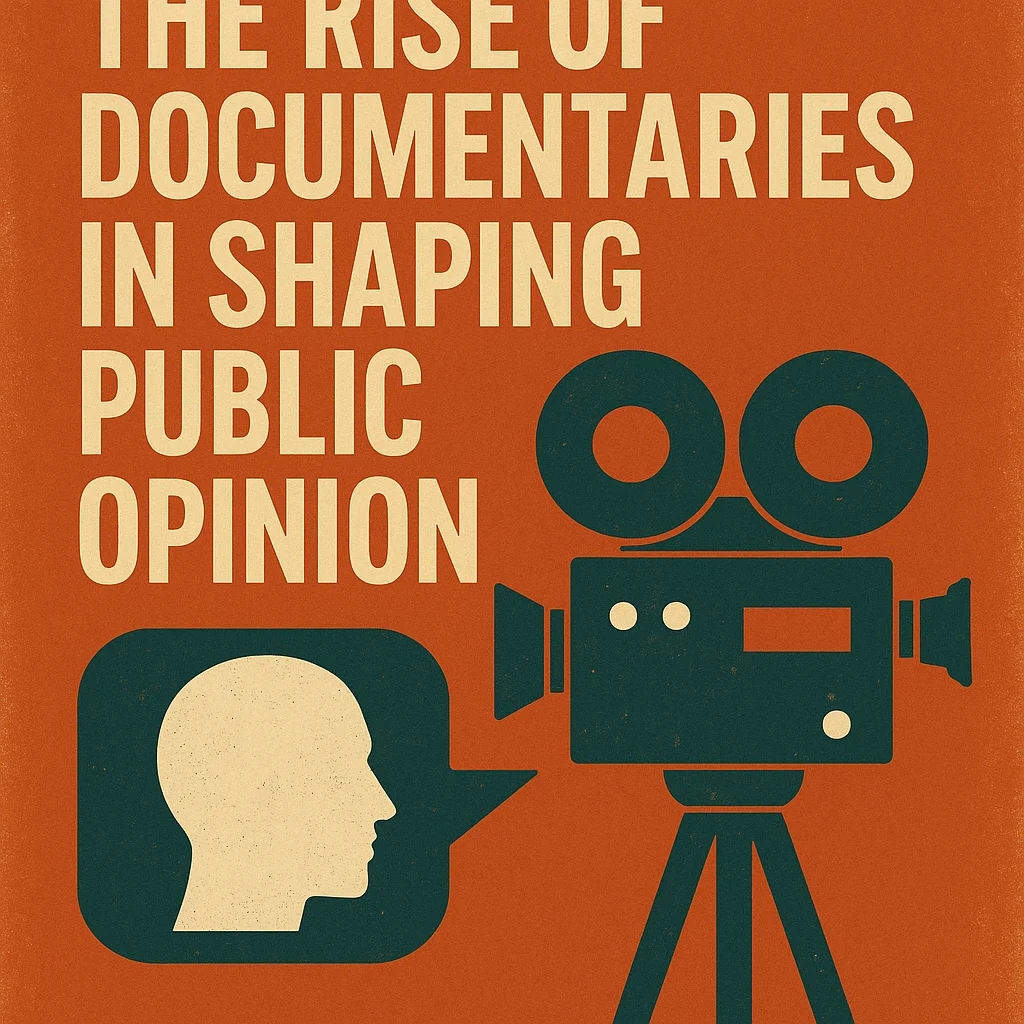
One type of storytelling has established a distinct role in influencing how societies think, act, and react in the fast-paced media landscape of today, where attention spans are getting shorter and false information spreads swiftly: the documentary. Documentaries, which were once thought of as specialized movies only seen by scholars, activists, or movie buffs, are now widely accepted in society. They influence public opinion, provoke discussion, and motivate action on some of the most important issues of our day.
Documentaries highlight issues that are frequently overlooked by traditional news or entertainment media, such as political corruption, health, technology, personal identity, and environmental crises. Millions of people are now able to interact with thought-provoking stories that were previously limited to film festivals or classrooms thanks to streaming services like Netflix, Hulu, and YouTube.
However, what precisely makes documentaries so effective? And why are they more powerful than ever in a time of information overload?
The Unique Power of Documentary Storytelling
Documentaries are based on reality, as opposed to fiction. They create engaging and educational stories using real people, real events, and real evidence. Even though documentarians frequently approach their subjects with a clear perspective or bias, this authenticity gives documentaries credibility.
The ability of documentaries to combine emotion and facts is what makes them unique. While news articles may present data, documentaries use voices, faces, and firsthand accounts to make statistics come to life. A climate change chart may provide information, but nothing compares to the visceral impact of witnessing glaciers melt in real time.
Documentaries are in a unique position to affect how people view issues and act because of this blend of knowledge and empathy.
A Historical Perspective: From Education to Influence
Documentaries have been around for nearly as long as movies. While Robert Flaherty's Nanook of the North (1922) pioneered the ethnographic style, it was controversial. Early films, such as the Lumière brothers' short reels, captured everyday life. At first, documentaries—from World War II newsreels to government-funded initiatives—were frequently employed as teaching or propaganda tools.
However, documentaries began to take on a more critical and artistic quality by the 1960s and 1970s. Filmmakers started exposing injustice, challenging authority, and giving voice to underrepresented groups. The distinction between journalism and storytelling was blurred by films like Gimme Shelter (1970) and Hearts and Minds (1974), paving the way for the current era in which documentaries have the power to make or break public discussions.
Documentaries as Catalysts for Social Change
Certain documentaries have had a direct impact on legislation, public opinion, or grassroots movement mobilization. Some noteworthy instances are as follows:
-
“An Inconvenient Truth” (2006) – Global warming became a household issue after Al Gore's climate change documentary brought it into the public eye.
-
“Blackfish” (2013) – Widespread outrage over SeaWorld's treatment of orcas resulted in a drop in ticket sales and modifications to company policies.
-
“13th” (2016) – By tying historical racism to current injustices in the justice system, Ava DuVernay's documentary on mass incarceration influenced activism and policy debates.
-
“The Social Dilemma” (2020) – This movie sparked discussions about digital privacy and mental health by revealing the deceptive algorithms that underlie social media.
These documentaries all accomplished more than just educating viewers. They evoked feelings of urgency, empathy, and indignation that were potent enough to change cultural narratives.
The Role of Streaming Platforms
The way documentaries are viewed by viewers has changed as a result of the growth of Netflix, Amazon Prime, Hulu, Disney+, and YouTube. Millions of people around the world can now access content on-demand, eliminating the need to wait for public television broadcasts or attend specialized screenings.
This democratization of access has two key impacts:
-
Wider Reach – Within days, a single documentary can become a global sensation, igniting discussions in many languages and cultures.
-
Niche Topics Find Audiences – These days, documentaries that focus on topics like veganism (What the Health), true crime (Making a Murderer), or minimalism (The Minimalists) flourish in niche markets that have a strong emotional connection with local populations.
The outcome? In terms of public influence, documentaries have risen from the fringes to the center of culture, frequently surpassing fictional films.
Why Documentaries Shape Public Opinion So Effectively
Several psychological and cultural factors explain their power:
1. They Humanize Data
Documentaries ground statistics in human experiences, but statistics themselves can feel cold and abstract. People's stories resonate with viewers, making problems like addiction, poverty, and war emotionally relatable.
2. They Create Shared Conversations
A documentary that goes viral starts a conversation among people. Suddenly, the same topic is being discussed in online forums, workplaces, and schools, highlighting its significance in the public domain.
3. They Tap Into Visual Memory
Images are easier for people to recall than words. A news headline about rising global temperatures is much easier to forget than a polar bear stuck on melting ice (Our Planet).
4. They Inspire Action
Documentaries frequently conclude with a call to action by fusing urgency with evidence. This encourages viewers to take proactive measures like signing petitions, altering their lifestyles, or applying pressure to legislators.
The Criticisms and Challenges
Of course, documentaries are not without limitations. Critics argue that:
-
They Can Be Biased – Filmmakers frequently use a specific lens to portray issues, which can distort the truth.
-
Emotional Manipulation – Sensationalizing elements like music, editing, and framing can occasionally lead viewers to draw conclusions without providing fair evidence.
-
Information Fatigue – Viewers may experience short-term inspiration in this era of endless content, but they may not be able to maintain sustained action.
The influence of documentaries is still indisputable in spite of these criticisms. Although they must be viewed critically, viewers can benefit greatly from their ability to spark discussions.
The Future of Documentaries
As technology evolves, documentaries are expanding into new forms:
-
Interactive Documentaries – Viewers can now customize their experiences by selecting their own narrative paths on platforms.
-
Virtual Reality (VR) – Immersion storytelling increases empathy by allowing viewers to "step into" historical reenactments, ecosystems, or refugee camps.
-
Citizen Documentaries – Ordinary people are using smartphones to record and share events in real time, thereby creating documentary culture from the ground up.
These developments guarantee that documentaries will keep evolving and influencing public opinion.
Conclusion: Why Documentaries Matter More Than Ever
In a time of divisive news cycles, social media bubbles, and quick entertainment, documentaries stand out for their urgency, empathy, and depth. They ask us to slow down, face hard realities, and broaden our horizons.
Documentaries are more than just movies; they are educational resources, change agents, and windows into the complexity of our society. Documentaries give us the stories we need to take action on the issues we cannot ignore, whether that be rethinking justice, saving the environment, or challenging technology.
The popularity of documentaries has grown, but so has their ability to serve as a reminder that empathy and knowledge can change societies.