Introduction: The Smartphone Revolution in Esports
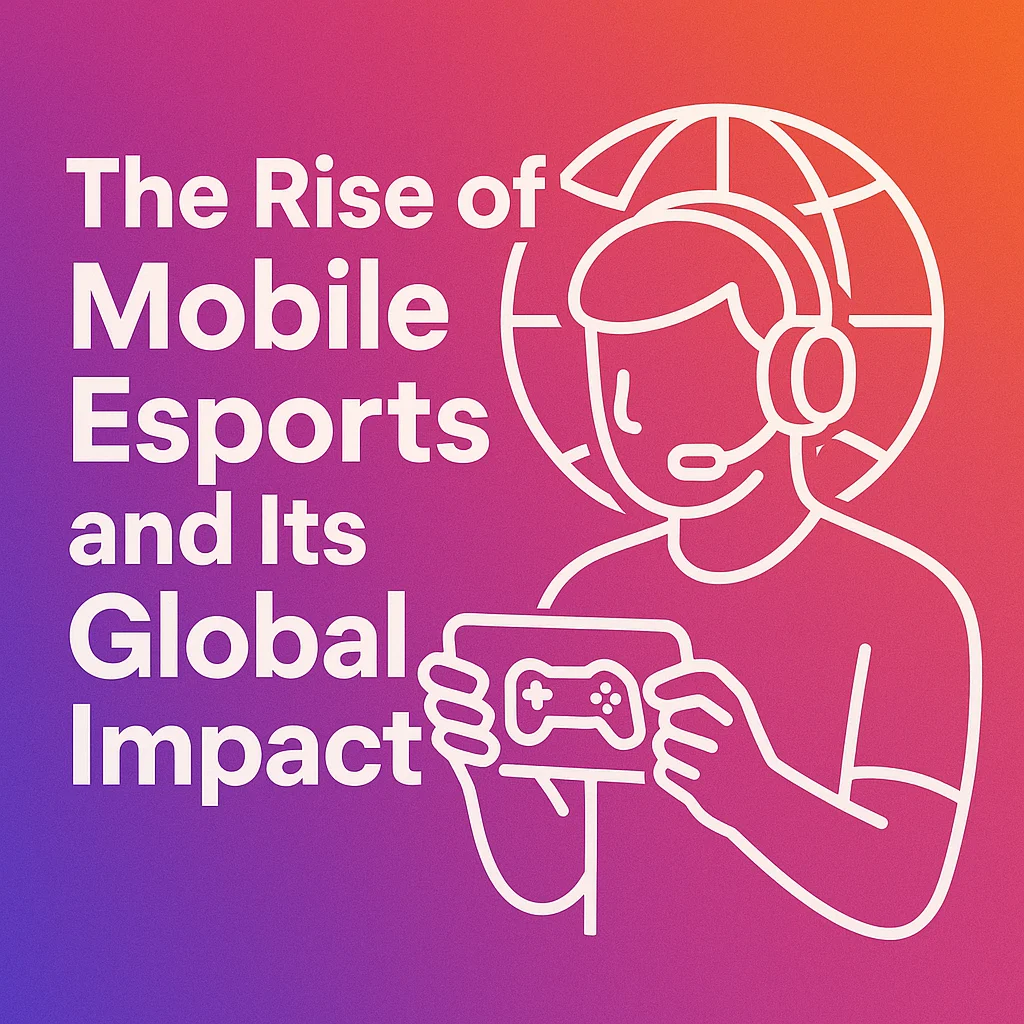
Ten years ago, the term "professional gamer" evoked thoughts of pricey peripherals, high-end PCs, and state-of-the-art gaming sets. In the present day, the biggest esports stars in the world may be carrying something much simpler: a smartphone.
Preconceived notions about what competitive gaming looks like have been shattered by the explosion of mobile esports in recent years. Esports have moved from arenas into people's pockets thanks to games like Call of Duty: Mobile, Mobile Legends: Bang Bang, PUBG Mobile, and Free Fire.
Esports are no longer limited to high-end PCs or consoles; they are now a truly global and democratic phenomenon that flourishes in nations where mobile connection surpasses traditional gaming infrastructure.
Convenience is not the only reason for this increase. It has to do with accessibility, culture, and the ability of technology to bring people together beyond national boundaries. Entertainment, economy, and even the notion of what it is to be a "gamer" are all changing due to mobile esports.
1. From Casual Gaming to Competitive Spectacle
Initially, mobile gaming was a lighthearted hobby. It was characterized by early hits like Angry Birds and Candy Crush as straightforward, enjoyable, and approachable, but far from competitive.
But a new era was ushered in by improvements in internet access, smartphone hardware, and the popularity of free-to-play multiplayer games. Real-time competitive forms that demanded skill, strategy, and teamwork—the cornerstones of esports—were introduced by games like Clash Royale (2016) and Mobile Legends (2017).
Mobile gaming had evolved beyond light entertainment by 2018, when PUBG Mobile and Free Fire started their international esports competitions. Millions of people were suddenly vying for fame and six-figure prize pools.
This development signaled a significant change: esports were no longer constrained by wealth, hardware, or geography. Anyone with a smartphone could participate.
2. The Democratization of Esports
Many people couldn't afford the costly gaming PCs, monitors, accessories, and high-speed internet needed for traditional esports. That was altered by mobile esports.
With more than 6.8 billion smartphones in use globally, gaming is now practically universal. Mobile games became the gateway to esports in emerging countries such as the Philippines, Brazil, Indonesia, and India.
Once disregarded by PC-based competitions, these areas are now major players in the mobile esports market. For instance:
-
PUBG Mobile India Series drew millions of viewers before its temporary ban.
-
Free Fire World Series 2021 in Singapore reached a record 5.4 million concurrent viewers, surpassing even major PC esports events.
-
Mobile Legends: Bang Bang consistently dominates Southeast Asian gaming, with massive tournaments like M5 World Championship gaining global attention.
Mobile esports is an equalizer rather than only a gaming craze. It gives areas that were previously excluded from the gaming revolution a voice and visibility.
3. The Business Boom: How Mobile Esports Became Big Money
An entirely new economic environment was produced by the growth of mobile esports.
Tencent, Garena, and Moonton are just a few of the game producers that make significant investments in esports infrastructure, including tournament organization, player sponsorship, and collaboration with international businesses.
Realizing the potential to engage youthful, digital-native audiences, corporations like Red Bull, Intel, and even automakers have gotten into mobile esports sponsorships.
Prize pools now rival traditional PC tournaments. For instance:
-
Prizes for the PUBG Mobile Global Championship 2023 totaled $4 million.
-
The 2021 Free Fire World Series brought in more than $2 million.
-
With regional leagues and international championships supported by multimillion-dollar investments, Mobile Legends is growing its ecosystem.
In the meanwhile, streaming services like Facebook Gaming, YouTube Gaming, and TikTok Live—which monetize content through sponsorships, advertisements, and virtual gifts—have emerged as key components of the mobile esports experience.
The outcome? Mobile esports is a booming, billion-dollar worldwide industry, not just a hobby.
4. How Asia Became the Epicenter of Mobile Esports
When it comes to the adoption of mobile esports, Asia is leading the way. Large populations of people that prefer mobile gaming may be found in nations like China, India, Indonesia, and the Philippines.
cell gaming is more than just amusement in Southeast Asia, where internet cafes are dwindling and cell penetration is strong. It is an integral element of youth culture.
-
Indonesia hosts massive tournaments with national-level recognition.
-
The Philippines has professional mobile esports leagues broadcast on national TV.
-
India, before certain bans, had millions of players competing in PUBG Mobile events, making esports a mainstream career path.
Global esports trends are also influenced by this regional supremacy. A significant step toward the legitimacy of esports is the official recognition of Mobile Legends: Bang Bang and PUBG Mobile as medal sports at major events like the Asian Games 2022.
One mobile battle at a time, Asia is clearly influencing the future of competitive gaming.
5. The Cultural Impact: Redefining Who Gets to Be a Gamer
Not only did mobile esports alter how games are played, but it also altered who plays them.
Traditional gaming was seen as exclusive or unreachable in many areas. However, mobile gaming transformed it into a cultural, social, and even familial pastime.
A console is not necessary. A PC is not necessary. All you need is a phone, which almost everyone has.
This shift has diversified the gaming community:
-
Women and non-traditional players are entering esports in growing numbers.
-
Casual gamers now participate in competitive events through mobile-friendly formats.
-
Streamers and influencers have emerged as celebrities, creating crossovers between gaming, fashion, and lifestyle content.
The distinction between enjoyment and competition has been dissolved by mobile esports, making gaming more widely accepted in society.
6. The Role of Streaming and Social Media
Streaming is the fuel if mobile esports are the engine.
Content creation has become more accessible because to platforms like Facebook Gaming, YouTube Gaming, and TikTok Live. With just their phone, players may broadcast games, develop fan bases, and make money through donations or sponsorships.
Similar to traditional sports, this accessibility has produced grassroots communities where people watch, learn, and support their favorite athletes.
Additionally, esports storylines have been magnified by social media platforms. Memes, highlight reels, and brief videos went viral, turning mobile gaming into a global cultural phenomenon that cuts beyond linguistic and geographical boundaries.
It's not unusual to witness a Mobile Legends broadcaster get millions of followers overnight or a Free Fire play go viral and spread across continents.
7. The Challenges: Lag, Legitimacy, and Longevity
Despite its rapid rise, mobile esports faces real challenges.
-
Technical Barriers: The performance of mobile devices varies greatly, leading to irregularities in the fairness of competition.
-
Connectivity Issues: In many underdeveloped nations where mobile esports flourish, stable internet is still a problem.
-
Legitimacy Questions: Mobile esports are sometimes written off by traditional gamers as "less skillful," but the intricacy of the competition shows otherwise.
-
Health Concerns: Among mobile professionals, long gaming sessions, eye strain, and repetitive strain injuries are becoming more prevalent.
Additionally, tournaments have occasionally been hampered by regulatory difficulties like game bans, data privacy, and disputes over in-game monetization.
It will be essential to overcome these obstacles if mobile esports are to continue to be regarded and sustainable.
8. The Future: A World Built Around Mobile Gaming
The next frontier of esports will likely be mobile-first.
Mobile gaming experiences will be significantly improved by developments in 5G, cloud gaming, and AI optimization. Cloud platforms will completely eliminate the need for hardware by enabling even low-end devices to play high-performance games via streaming.
Additionally, mobile VR and AR gaming is becoming more popular, which may lead to the emergence of completely new competitive genres.
In the meantime, esports is becoming acknowledged as a respectable career by governments and academic organizations. National leagues, training programs, and scholarships are growing, with many of them concentrating on mobile games.
The mobile esports ecosystem is expected to dominate the next ten years due to the continued investment by international brands and the exponential growth of mobile user bases.
9. How Mobile Esports Redefines Global Connectivity
The ability of mobile esports to foster cross-border connections may have the biggest impact.
Esports has evolved into a common experience and a generally known language in a time frequently characterized by digital isolation. In a matter of seconds, players in Indonesia can collaborate with players in Mexico or Nigeria.
Global connectivity promotes intercultural cooperation, teamwork, and even educational and entrepreneurial prospects.
To put it briefly, mobile esports is altering not only how we play but also how we interact with each other in a world that is becoming more and more digital.
Conclusion: The Future Belongs to the Players in Our Pockets
Mobile esports is a revolution in accessibility, culture, and international solidarity rather than just a development in gameplay.
It has produced a completely new kind of contemporary sport that anybody can participate in by lowering entrance barriers, empowering different groups, and fusing technology with entertainment.
It's possible that neither a sponsored team boot camp nor an upscale PC lab will produce the next great esports champion. They may be using a gadget that is both compact enough to fit in their pocket and capable of connecting them to the outside world when they are playing from a park bench, a town, or a busy subway.