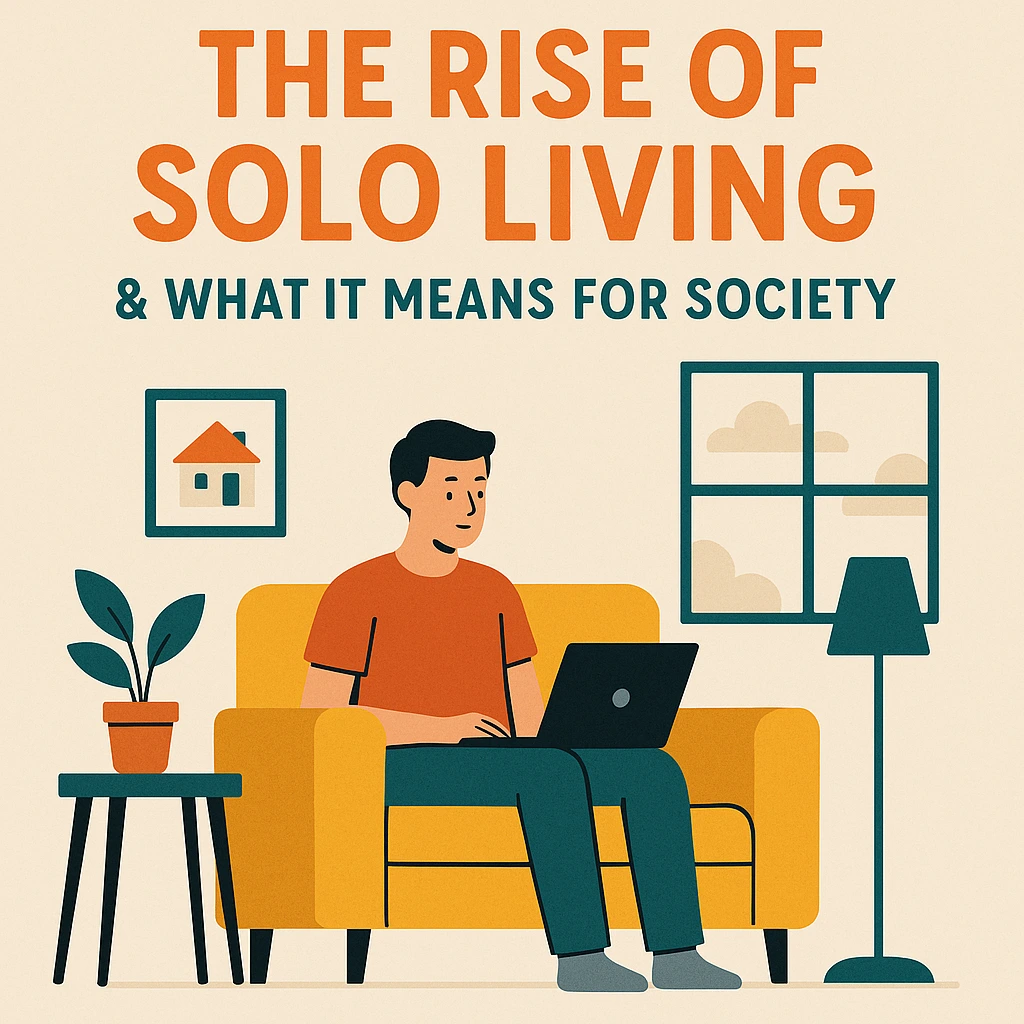
Introduction: A Silent Social Revolution
A subtle but significant shift is occurring all throughout the world: more people are opting to live alone. What was formerly considered as strange or lonely has become a sign of independence and self-respect. Single-person households are one of the fastest-growing living arrangements in industrialized and quickly urbanizing nations equally. Cities like Tokyo, London, Seoul, and New York are teeming with individuals who are exploring life on their own terms.
Solo living is no longer a fallback for people who “didn’t find a partner.” It’s a lifestyle choice.
People are characterizing adulthood not by marriage or family duties but by personal independence, self-growth, and career ambition. But although the solo-living trend shows progress and empowerment, it also offers issues that society must acknowledge.
Freedom Over Tradition: Why People Choose to Live Alone
For many years, the conventional view of adulthood—growing up, getting married, and starting a family—was shaped by society, familial pressure, and tradition. But today, individuals are rewriting that narrative. People are wondering if traditional timelines actually result in happiness.
Several motivations are shaping this shift toward independence:
✔ Focus on careers and financial autonomy
✔ Desire for privacy and personal space
✔ Emotional and mental boundaries after past conflicts
✔ Urban lifestyles offering everything nearby
✔ Changing norms around marriage and relationships
Women especially are preferring to live alone more boldly than ever. Education, financial empowerment, and lowered gender standards have opened doors to a lifestyle once considered socially unacceptable.
Instead of waiting for “the perfect time” or “the perfect partner,” people are constructing a life that works for them - right now.
The New Meaning of Home: A Personal Sanctuary
People who live alone frequently discuss how powerful it is to plan their lives without compromising. Their home becomes a tranquil area where:
• They set their own rules
• They decide how to spend time
• They build hobbies and routines that reflect their personality
In the past, home represented a shared adventure. Today, for many, home is a personal refuge — a place that protects mental health and encourages self-expression. Solitude is now viewed as a sign of emotional clarity rather than loneliness, and introversion is no longer considered a weakness.
Technology Makes Solo Living Easier
If this tendency occurred 50 years ago, survival alone would be more tough. But technology has become the ultimate support system:
✔ Food delivery replaces the need for shared cooking
✔ Video calls allow distant family connections
✔ Smart home devices provide safety and convenience
✔ Online entertainment fills evenings once spent socially
✔ Mental-health apps support emotional well-being
People can feel connected through digital platforms even when they are not in close proximity to others. That convenience supports — and normalizes — independent life.
The Financial Side: Living Alone Isn’t Cheap
However, independence has a cost. Solo living means one individual is responsible for:
• Rent or mortgage
• Utilities and housing essentials
• Groceries and healthcare
• Entertainment and transport
Nobody is available to divide bills with. This makes solo living more popular in countries with greater salaries, strong social security systems, or highly developed cities with micro-housing alternatives.
Still, people are willingly spending extra because freedom matters more than shared financial convenience.
Urban Boom: The Single Household Cities
Global cities are organically responding to this trend. Developers increasingly create compact apartments, single-size food containers, and smaller furniture to accommodate one-person living. Businesses are changing the services they offer:
✔ Travel brands promote solo tourism
✔ Restaurants include single-seating arrangements
✔ Home decor marketplaces cater to personal styling
✔ Wellness and fitness companies focus on specific customers.
The economy increasingly celebrates self-sufficiency because individuals are becoming their own households, each a powerful market.
Relationships Are Changing — But Not Ending
People living alone are not always anti-relationship. They are merely moving away from past emotional dependencies. Instead of prioritizing marriage as a milestone, they seek relationship that is genuine and equal.
This lifestyle also challenges outdated assumptions:
• Being single is not failure
• Living alone is not loneliness
• Marriage is not the only path to happiness
Shared addresses are not as important in today's relationships as emotional respect.
Many prefer “living apart together” - committed relationships where partners keep separate houses. This model gives space while keeping love.
But What About Loneliness? The Hidden Reality
Despite the pleasure of freedom, living alone can sometimes intensify emotional challenges. Humans are social beings, and too much isolation can impair mental and physical health.
Key concerns include:
✔ Lack of daily emotional interactions
✔ Rising anxiety and depressive thoughts
✔ Decreased participation in community life
✔ Health risks if emergencies occur alone
A single-occupant home may undergo quiet pain – the kind nobody notices until it becomes serious. The warmth of physical presence cannot be replaced by virtual connections, even when technology facilitates communication.
Ageing Alone: A Growing Challenge
Younger generations choose independence. But what happens when they grow older?
Due to the death of spouses or the relocation of children, many elderly people already live alone. Seniors who have lived alone for the majority of their lives may become much more prevalent in the future.
This raises important questions:
• Who will take care of them?
• How will governments support aging individuals without family assistance?
• Will society build community-based care structures?
As solo living grows, social safety systems must evolve too.
A Shift in Social Values
The rise of solo life indicates a deeper philosophical transformation: People are choosing self-fulfillment over social expectation.
Society is moving toward valuing:
✔ Autonomy
✔ Personal identity
✔ Delayed or optional marriage
✔ Flexible relationships
✔ Mental health prioritization
Traditional happiness metrics — marriage, kids, big families — are being challenged. The new narrative says:
“I choose my life, my pace, my joy.”
This independence boosts confidence, creativity, and self-awareness. People learn who they truly are — without needing validation from others.
How Society Must Respond to This Future
Governments, businesses, and communities must react to the reality that solitary households are here to stay. That includes:
• Affordable small housing models
• Urban safety enhancements
• More inclusive social spaces
• Healthcare designed for single patients
• Programs to connect and protect elders living alone
• Reducing stigma toward single lifestyles
A supportive society sees solo living not as a threat to tradition but as a different kind of progress.
Conclusion: A New Way of Belonging
Solo living is not about rejecting love or relationships – it is about embracing independence as the cornerstone of life. It signifies the emergence of personal freedom, emotional maturity, and modern survival abilities.
However, independence functions best when it is tempered with community. Living alone does not equate to being disengaged. Creating a world where people can appreciate isolation without losing their sense of belonging is the challenge for the future.
The rise of solo living tells a powerful story:
People today value their identity and dreams enough to build a life on their own — and that is a beautiful evolution.
A society that respects every lifestyle — shared or solo — becomes stronger, more compassionate, and truly modern.