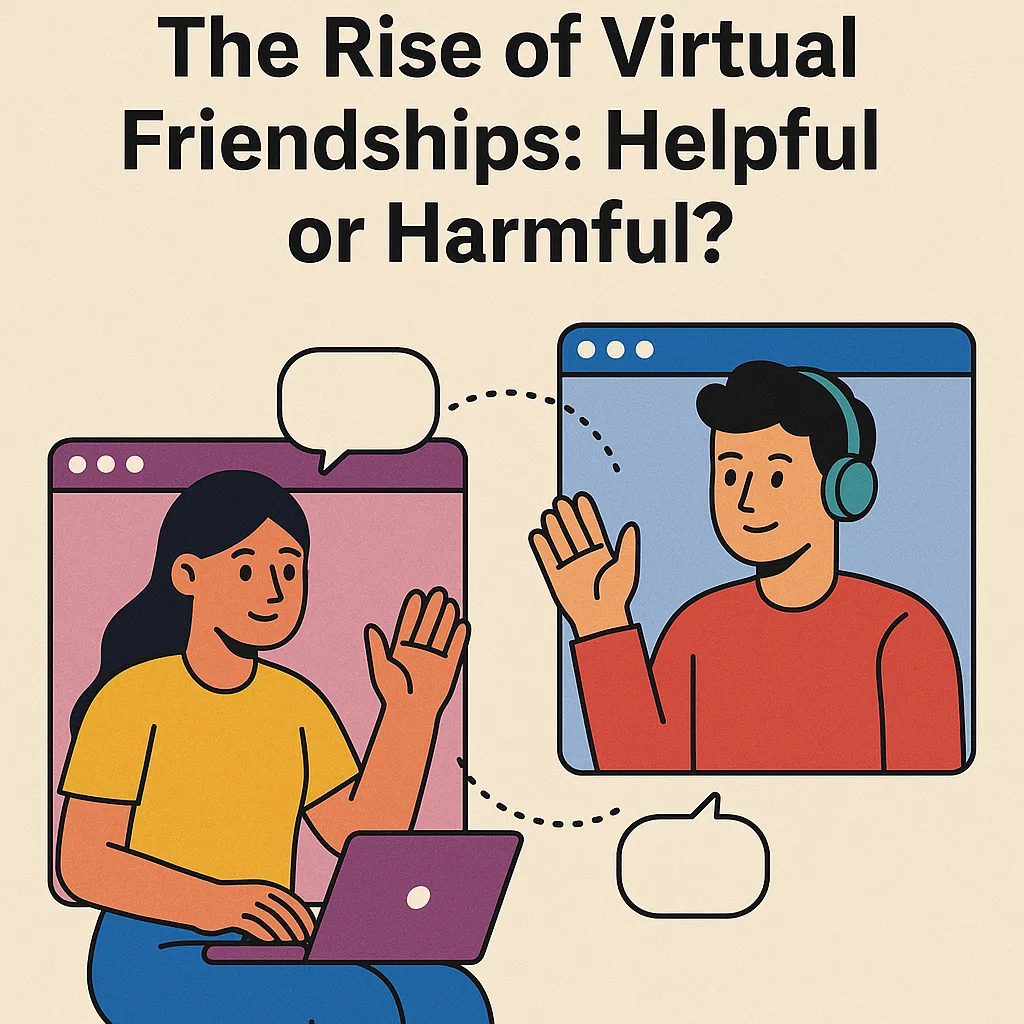
One of the most significant facets of human existence has always been friendship. It molds our identities, affects our choices, and offers consolation when things are most difficult. However, a new type of relationship has evolved as the globe moves more and more into digital spaces: virtual friendships. Instead of being in close proximity, these relationships are formed via screens, messaging, voice chats, and online groups. Millions of people today believe that those they have never met in person are their closest friends.
One of the most intriguing social changes of the digital age is the emergence of virtual friendships. They introduce new opportunities, hazards, and emotional landscapes while challenging conventional notions of what friendship should entail. The topic of whether virtual friendships are beneficial or detrimental persists as social media, gaming groups, and messaging apps transform human connection. Or are they a complicated combination of the two?
A New Kind of Connection in a Changing World
In the past, friendships developed organically in shared settings, such as schools, communities, workplaces, temples, and public areas. Physical presence was the foundation of interaction. However, individuals began spending more time online than offline as digital platforms expanded and lifestyles became busier. As a result of this change, a new social environment emerged in which friendships developed based more on common interests than geographic proximity.
These days, online games, fandom communities, study groups, international chat forums, and even sporadic comment sections help people form deep connections with strangers. Even though they are thousands of kilometers apart, two people can laugh about, celebrate successes, and help one other through trying times.
Because digital venues eliminate many of the obstacles that come with socializing in person, virtual friendships thrive. Perfect looks, self-assurance, and social skills are not necessary. All you need is a sincere conversation.
Why Virtual Friendships Feel So Easy
Virtual friendships are more comfortable than in-person friendships for a lot of people. The absence of instantaneous judgments based on social background, status, or appearance creates a special sense of emotional safety in the digital world.
✔ You can express your thoughts without fear
✔ You can respond at your own pace
✔ You can open up without physical discomfort
✔ You can choose who stays in your life
Social pressure is a common part of real-life friendships. However, people can be more open about their personalities when they have virtual friendships. You don't have to worry about uncomfortable in-person reactions when you express your humor, inventiveness, or sensitivity.
For introverts, those with social anxiety, or those who feel misinterpreted in their offline life, this emotional distance becomes a comfort zone. Virtual buddies frequently have a deeper understanding of them than others they engage with on a regular basis.
Shared Interests Build Stronger Bonds than Physical Proximity
Because people interact based on shared interests rather than geography, virtual friendships can flourish quickly. It's possible that no one in your community has your interests in games, music, or pastimes. However, the globe becomes your social pool when you're online, and all of a sudden you have thousands of possible buddies that share your thoughts, emotions, and creative abilities.
It's possible for an Indian student to meet an Italian friend who shares their passion for anime. A Brazilian gamer and a Japanese player may develop a close team bond. A Canadian poet and a Kenyan writer might work together. These relationships are strong because they are based on a common interest rather than practicality.
In the past, friendships were frequently made by accident. They develop through choice in virtual community, and decisions frequently strengthen bonds between people.
The Emotional Strength of Digital Bonds
Because virtual friendships don't require physical presence, some individuals believe they are weaker. However, in-person communication is not always necessary for emotional intimacy. In actuality, a lot of people use their virtual pals as emotional pillars.
Online, people divulge secrets that they are unable to disclose with their loved ones. They talk to someone who listens without passing judgment about their aspirations, anxieties, and personal challenges. Even if they are not physically close, virtual pals can be quite encouraging on an emotional level.
In a world where loneliness is rising despite increased connectivity, virtual friendships have become a lifeline.
But Virtual Friendships Have a Darker Side
While virtual friendships offer comfort, they come with risks and emotional vulnerabilities that traditional friendships rarely carry.
1. False Identities and Misleading Behaviour
Online celebrities are carefully chosen. Individuals may portray exaggerated or wholly untrue representations of themselves. In chats, someone could seem devoted and caring, yet IRL, they might behave entirely otherwise.
✔ People hide flaws
✔ People exaggerate achievements
✔ People pretend to be someone they’re not
This leads to emotional perplexity and problems with trust, particularly when sentiments intensify.
2. Lack of Accountability
Visible responsibilities accompany physical friendships. You can see each other's feelings and responses. However, virtual connections take place behind screens, making it simpler for someone to vanish without a reason.
One day, conversations flow deeply. The next day, the person vanishes.
The absence of closure can hurt more than real-life conflicts because you may never know the truth behind the silence.
3. Emotional Dependence
Some people overlook their offline relationships because they are so devoted to their cyber friends. Emotional instability and loneliness result from this. When digital connection falls down, relying only on online affirmation can cause emotional instability and erode confidence in real life.
4. Miscommunication and Overthinking
Body language, tone, and facial expression are absent from texting. Emotional distance might result from a minor miscommunication. Unnecessary anxiety may result from people overanalyzing signals, responding slowly, or reacting cryptically.
5. Safety and Privacy Concerns
There are always hazards associated with sharing personal information online. If the wrong person has access to private information, some friendships can become damaging or exploitative.
Although virtual friendships can be beautiful, they require awareness and smart boundaries.
When Virtual Friendships Become More Real Than Real Life
The fact that digital connections can occasionally feel more genuine than in-person interactions is one of their most unexpected results. In real life, people frequently suppress their feelings to avoid being judged. They feel more free to be honest while they are online.
You can express your sadness to a virtual pal without worrying about awkward silence. You don't have to worry about jealousy when you share accomplishments. When someone truly listens, you can talk about dreams.
Virtual connections can feel deeper than real ones because of this emotional intimacy. However, the balance becomes unstable when virtual friendships surpass all in-person relationships. Although the internet world offers comfort, face-to-face contacts shouldn't be completely replaced by it.
Can Virtual Friendships Become Real-Life Friendships?
Indeed, a lot of people eventually meet their internet buddies in person. Online, thousands of friendships and even marriages began. Meeting in person strengthens the relationship even more by converting digital trust into a tangible connection.
However, virtual friendships can last for years even in the absence of physical meetings. Mutual effort and open communication are the only requirements. Because you can't rely on impromptu face-to-face engagement, digital relationships demand greater intentionality.
Helpful or Harmful? The Reality Is Complicated
In actuality, virtual friendships are neither totally beneficial nor totally detrimental. They are a contemporary extension of human connection that is simultaneously potent, optimistic, and dangerous.
Helpful When:
✔ They provide emotional support
✔ They connect people with shared interests
✔ They reduce loneliness
✔ They create spaces for self-expression
Harmful When:
✔ They replace all offline relationships
✔ They lead to identity confusion or dependence
✔ They involve manipulation or dishonesty
✔ They create unrealistic expectations
The impact depends entirely on how people handle them.
A Balanced Approach: Blending the Digital and Real Worlds
When properly balanced, virtual connections can enhance life. The objective is to broaden the social realm rather than to replace in-person relationships. Instead of competing with genuine connections, digital buddies should enhance them.
A healthy approach includes:
✔ Keeping personal boundaries
✔ Not depending on one person for emotional stability
✔ Meeting offline when safe and possible
✔ Maintaining strong real-life connections
Friendship is not defined by distance or medium — it is defined by care, trust, and honesty.
Conclusion: The Future of Friendship Is Hybrid
Friendships made virtually are here to stay. People will form connections across nations, cultures, and time zones as long as digital spaces continue to expand. These friendships have the potential to be immensely transforming, encouraging, and significant. However, they need to be managed with emotional maturity and understanding.
When they work well, virtual friendships serve as a reminder that understanding is all that is required for connection. At their worst, they draw attention to how dangerous it is to put your trust in someone who is hidden behind a screen.
The future of friendship is a blend of both worlds — digital and physical. And if we learn to balance them, we unlock a richer, more connected human experience than ever before.