Introduction
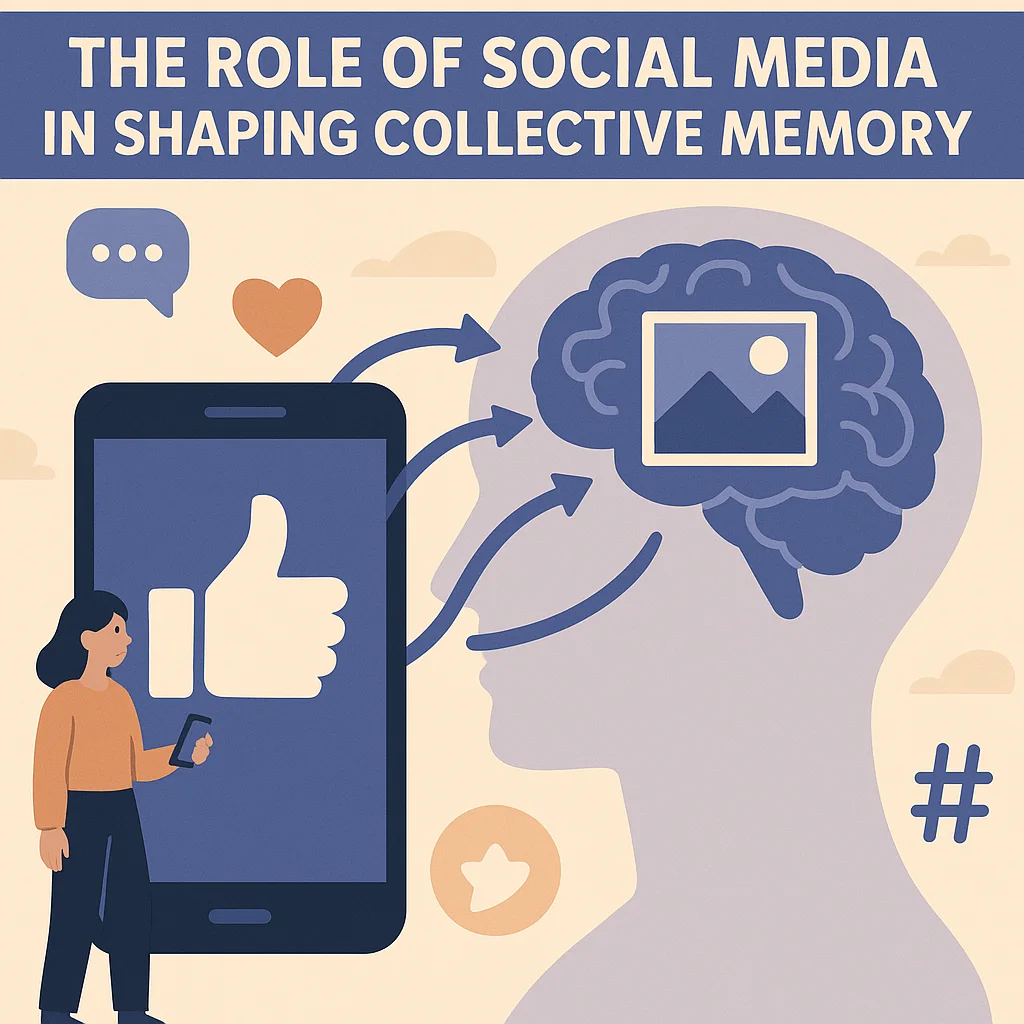
Culture has always been based on memory. Through records, customs, and storytelling, societies preserve their history, forming their identities and directing their course. However, this process has changed significantly in the modern era. In addition to being tools for communication, social media sites like Facebook, Instagram, TikTok, and Twitter (X) also actively influence how we document, analyze, and preserve history. Collective memory is being produced in real time in the digital age, shared via viral content, and preserved in hashtags.
Important questions are brought up by this: Who decides what is remembered? What is forgotten? And what impact does the never-ending barrage of pictures, memes, and updates have on how we perceive the past?
We'll look at how social media is changing collective memory in this blog, why it matters, and the difficulties it presents for coming generations.
1. What Is Collective Memory?
A community's collective memory is the knowledge and cultural experiences that have been passed down through the generations. Collective memory is shaped by shared narratives, customs, and symbols, as opposed to individual memory, which is subjective and personal. Historically, collective memory was maintained by:
-
Oral traditions like myths, songs, and folklore.
-
Written records such as books, newspapers, and archives.
-
Monuments and memorials commemorating significant events.
Today, however, a major chunk of this process happens digitally—and much of it is driven by social media.
2. Social Media as a Digital Archive
Social media is created by regular people in real time, unlike books or museums, which are curated by professionals. Each tweet, video, and post adds to a vast, ever-expanding archive.
-
Hashtags as memory markers: #MeToo, #BlackLivesMatter, or #NeverForget have become shorthand for movements, events, and tragedies.
-
User-generated documentation: Videos of demonstrations, natural disasters, or political events go viral right away, frequently influencing public opinion before official documentation is created.
-
Personal milestones: Online sharing of anniversaries, weddings, and birthdays makes it difficult to distinguish between private and public history.
In essence, social media has democratized memory-making—anyone with a phone can contribute to the collective record.
3. The Speed of Memory Formation
It took time for memory to settle in pre-digital times. Events were written about, discussed, and gradually incorporated into cultural narratives. This is significantly accelerated by social media:
-
Instant memorialization: After a tragedy, communities come together, profile pictures change, and hashtags trend within minutes.
-
Virality and emotion: Content that provokes anger, sorrow, or comedy spreads more quickly and frequently takes precedence over less sentimental but more important events in the collective memory.
-
Shorter attention spans: Social media speeds up the creation of memories, but it also speeds up forgetting because the newest trending topic soon eclipses the previous one.
This creates a paradox: societies remember more events than ever before—but perhaps with less depth.
4. Whose Memories Are Preserved?
Although social media appears to be democratic, the truth is more nuanced. Platforms enforce content moderation guidelines, while algorithms decide which posts become visible. This implies:
-
Selective amplification: While equally important events might go unnoticed, viral content is remembered.
-
Corporate gatekeeping: By deleting content, tech companies subtly choose which memories are preserved or deleted.
-
Global inequities: While some voices struggle for visibility, others from particular regions or groups are more likely to be amplified.
Thus, collective memory in the digital age is shaped not only by people but also by platforms and their invisible rules.
5. The Emotional Power of Shared Digital Memory
One reason social media is so influential in shaping memory is its emotional immediacy. A photo, video, or tweet can connect millions of strangers through shared grief, joy, or outrage.
-
Shared mourning: Online memorials following the passing of famous people (such as Kobe Bryant or Chadwick Boseman) show how platforms bring people together in shared memory.
-
Global solidarity: Cross-border empathy is mobilized by social media, for example, during humanitarian crises or natural disasters.
-
Everyday nostalgia: People can relive and reinterpret cultural and personal memories through resurfaced memes or "on this day" reminders on Facebook.
This shared emotional resonance makes social media memories especially powerful.
6. The Problem of Digital Forgetting
Social media makes forgetting more likely even though it preserves an astounding amount of data.
-
Ephemeral content: Stories and snaps disappear within 24 hours unless archived.
-
Platform instability: If a platform goes down, what happens to our collective memory? (Remember MySpace or Vine.)
-
Information overload: With so much content produced daily, meaningful events often get buried under trivial updates.
The irony is clear: despite unprecedented storage capacity, digital culture risks making memory fleeting.
7. Memory Wars: Social Media as Battleground
Social media is not neutral—it is also a space of contestation over what gets remembered and how.
-
Competing narratives: Political groups frame events differently through selective images and hashtags.
-
Misinformation: False memories can be created and spread as easily as true ones.
-
Rewriting history: Events are remembered differently when old posts reappear, frequently reframed in different contexts.
In this sense, social media is both a recorder and a battlefield of memory.
8. The Future of Memory in the Digital Age
Looking ahead, several questions emerge:
-
Will AI shape memory? Future generations' memories may be shaped by tools that surface or summarize historical content.
-
What about digital preservation? Will tweets and posts be accessible to historians in the future, or will a lot of information be obscured by private servers?
-
Can memory be more inclusive? Social media gives underrepresented groups a way to tell their stories, but will they hold up over time?
The responses will influence how future generations perceive the twenty-first century as well as how we remember the present.
Conclusion
Social media has made collective memory a dynamic, rapidly evolving, user-driven phenomenon rather than something that was curated gradually by institutions and historians. The foundation of contemporary remembrance is made up of digital tributes, viral videos, and hashtags. However, selective amplification, digital forgetting, and memory wars are problems that come with this democratization.
How can we, as societies, make sure that, in a time when information is shared instantly, our collective memory is accurate, inclusive, and long-lasting?
How we respond to this question will determine how we construct the future as well as how we comprehend the past.