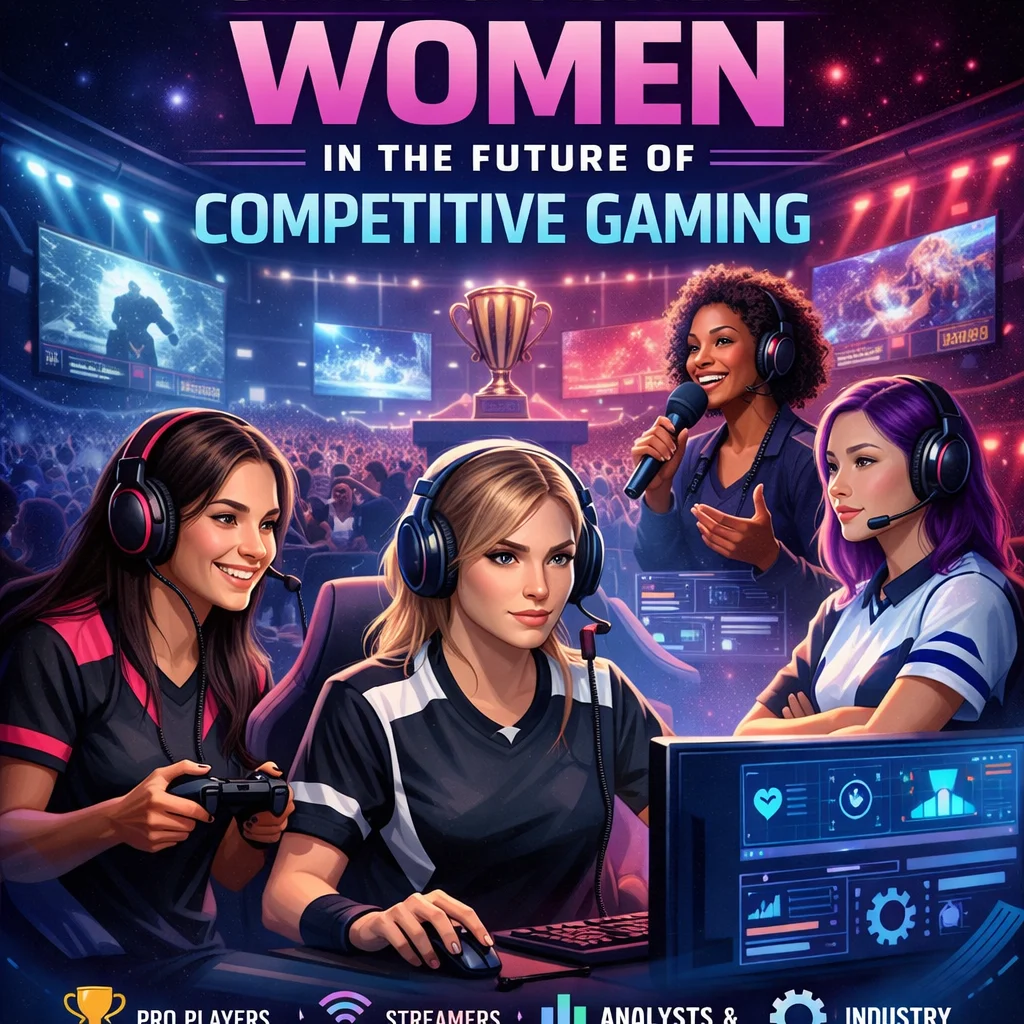
From modest local competitions, competitive gaming has grown into a major global entertainment sector. Professional gamers become celebrities, esports stadia sell out, and livestreams draw millions of people. However, competitive gaming has historically been seen as dominated by men. These days, that story is gradually evolving. Not just as players, but also as streamers, executives, developers, analysts, and community leaders, women are increasingly influencing the direction of esports.
There is more to women's roles in competitive gaming than just participation figures. Influence, representation, creativity, and the evolution of gaming culture itself are all important. Inclusion is becoming a strategic and commercial objective as well as a social one as the sector expands.
Breaking Stereotypes in Competitive Play
For many years, it was believed by cultural prejudices that competitive gaming was mostly the domain of men. Nonetheless, statistics indicate that women make up a sizable share of the world's gaming audience. The difference is in visibility in professional esports, not in gaming.
Competitive scenes are flourishing in video games like League of Legends, Valorant, and Counter-Strike 2. Through grassroots competitions, women-focused leagues, and mixed-gender tournaments, more and more women are joining these venues.
It takes visibility to break stereotypes. When skilled female athletes compete at the highest levels, they dispel stereotypes and encourage more people to participate.
Representation influences aspiration. Young players are more likely to pursue competitive gaming when they see someone like themselves succeeding.
The Growth of Women-Focused Esports Initiatives
Numerous organizations have started programs to assist women in competitive gaming in recognition of historical obstacles. For instance, competitions like Riot Games' Game Changers series offer organized competitive settings intended to promote women and underrepresented genders.
These programs have several uses. They establish professional avenues, foster confidence, and provide secure competitive environments. Supporters see separate leagues as transitional platforms that solve fundamental inequities, while detractors sometimes claim that they perpetuate divisiveness.
Such programs have already demonstrated success by increasing talent visibility and attracting sponsors interested in promoting diversity.
Beyond Players: Women in Leadership and Management
Competitive gaming has a bright future that goes beyond the stage. In esports organizations, marketing, broadcasting, event management, and game development, women are increasingly assuming prominent positions.
Their presence affects audience engagement, strategic choices, and business culture. Stronger innovation and a wider market appeal are frequently the results of diversity in leadership.
Esports companies may benefit from long-term competitive benefits if they embrace inclusive recruiting procedures. A more varied executive team is better able to comprehend and cater to a wide range of global audiences.
Leadership representation also signals that esports is a viable career path beyond playing professionally.
Streaming and Content Creation as Gateways
Streaming platforms such as Twitch and YouTube have enabled many women to build personal brands independent of traditional esports structures.
Financial independence, flexibility, and direct audience connection are all provided by content development. By encouraging inclusive cultures, successful female streamers frequently build devoted groups and combat harmful habits.
Streaming acts as a gateway into broader esports involvement, whether through sponsorships, casting roles, or team ownership opportunities.
The democratization of content distribution empowers individuals to bypass traditional gatekeeping structures.
Addressing Toxicity and Cultural Barriers
Online harassment and toxic behavior are among the biggest obstacles that women encounter in competitive gaming. Participation has historically been deterred by voice chat abuse, gender-based insults, and exclusive community customs.
For the sector to grow sustainably, these problems must be resolved. Stronger moderation tools, reporting systems, and behavioral rules have started to be implemented by platform operators and game creators.
Creating a healthier competitive environment requires:
✔ Clear anti-harassment policies
✔ Active community moderation
✔ Educational initiatives promoting inclusivity
✔ Visible consequences for abusive behavior
Cultural transformation takes time, but progress is visible. The long-term viability of esports depends on fostering safe and welcoming environments.
Economic Impact of Inclusion
Inclusion is an economic opportunity as well as a social obligation. Increasing the number of female participants boosts consumer engagement, sponsorship diversity, and audience size.
Brands increasingly seek partnerships that reflect inclusive values. Companies are more likely to invest in leagues and teams that demonstrate commitment to diversity.
Greater representation can lead to:
✔ Broader fan demographics
✔ Increased merchandise sales
✔ Stronger brand loyalty
✔ Expanded global reach
By embracing inclusion, esports organizations tap into previously underrepresented markets.
Skill, Strategy, and Competitive Evolution
Skill, quick thinking, cooperation, and strategic thinking are all rewarded in competitive gaming. These qualities are not gender-specific. Talent pools naturally diversify as training infrastructure becomes more widely available.
As cultural barriers lessen, mixed-gender teams may become increasingly prevalent. Perceptions of competitive excellence may change as diverse lineups become more commonplace.
Esports is uniquely positioned to lead inclusivity compared to traditional sports because physical differences play a smaller role in performance outcomes.
The future competitive landscape may focus less on identity and more purely on performance metrics.
Education and Grassroots Development
Sustainable change begins at the grassroots level. Schools, universities, and community gaming clubs play essential roles in encouraging participation among young women.
Professional careers are becoming more accessible through scholarship programs and collegiate esports leagues. Female participation in gaming is normalized from an early age by educational institutions that actively support inclusive gaming initiatives.
Grassroots development ensures that representation is not symbolic but structural.
Encouraging mentorship programs and peer support networks strengthens retention and long-term engagement.
Media Representation and Cultural Narratives
Public opinion is greatly shaped by media coverage. Cultural narratives are changed by showcasing female accomplishments in executive leadership, casting, and competitions.
When commentators, analysts, and journalists present women as serious competitors rather than exceptions, it normalizes diversity within the industry.
Positive storytelling can influence sponsorship decisions and fan attitudes.
Media responsibility extends beyond celebrating milestones; it involves consistent and balanced representation.
The Future Outlook
Competitive gaming will probably be more inclusive in the future than it was in the past. This change is a result of global connectedness, technological accessibility, and changing societal attitudes.
While challenges remain, progress is measurable. Women are entering professional leagues, founding organizations, leading development studios, and shaping online communities.
The industry’s long-term success depends on its ability to evolve culturally as well as economically.
As esports continues to expand, inclusion will shift from being a special initiative to becoming an industry standard.
Conclusion
Women will have a revolutionary role in competitive gaming in the future. Women are transforming the industry, not just entering it. They are creating a more robust and varied esports environment through community building, leadership, content production, and competitive excellence.
Innovation and agility are key components of competitive gaming. Accepting variety enhances both attributes. Esports can create a future that represents its worldwide audience by removing cultural barriers, increasing possibilities, and promoting inclusive workplaces.