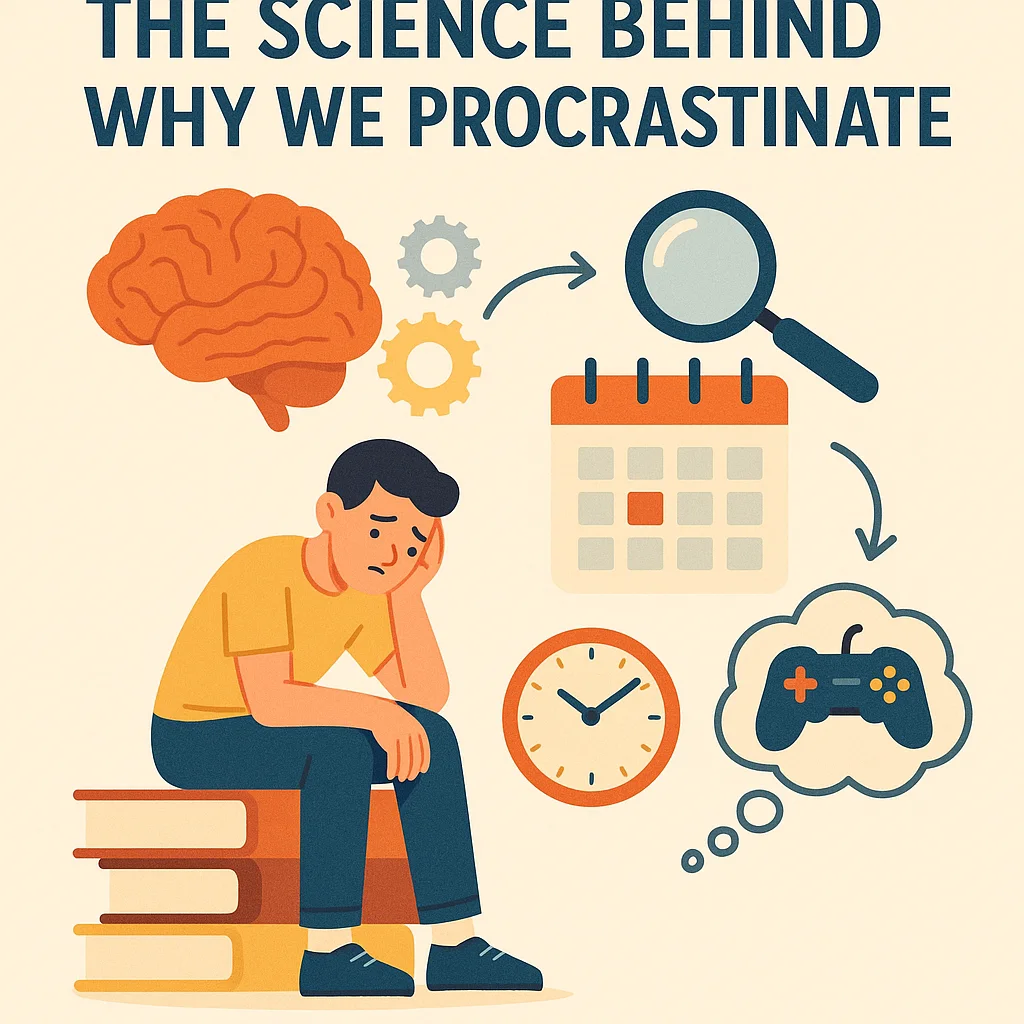
One of the most common human behaviors is procrastination. Almost everyone has procrastinated at some point, whether it's putting off writing an essay, avoiding a challenging conversation, or postponing their morning workout. Even though we are aware that procrastination is harmful, why do we still do it?
Is it laziness? A lack of time? Poor organization?
Actually, science says it’s far more complex.
We'll look at the behavioral, psychological, and neurological theories of procrastination in this blog. You can overcome it with strategy and self-awareness, not with guilt or self-criticism, if you know what the underlying causes are.
What Is Procrastination?
Procrastination is fundamentally the act of putting off or delaying a task even when one is aware that there will be unfavorable effects. It's an active decision to avoid something significant, not a matter of unwinding or taking a break.
Scholars make a distinction between strategic delay and procrastination. One productivity tactic is to put off checking email until the end of the day. But starting a project late at night before a deadline? Procrastination is what that is.
The Psychology of Procrastination
1. Temporal Discounting
Temporal discounting, or the propensity to value present benefits over those that will come later, is one of the main psychological causes of procrastination.
Example: You are aware of the long-term health benefits of jogging. However, Netflix provides you with immediate satisfaction. Therefore, even though jogging is a better option, your brain prefers Netflix.
The further away a reward or punishment is, the less motivation we feel to act on it.
For this reason, short-term pleasures frequently take precedence over long-term objectives like learning a new skill, writing a novel, or saving for retirement.
2. The Procrastination-Emotion Cycle
Procrastination is often linked not to time management, but to emotional regulation.
Procrastination is a type of emotional avoidance, according to renowned procrastination researcher Dr. Tim Pychyl. We put off doing things that make us feel:
-
Bored
-
Anxious
-
Inadequate
-
Frustrated
-
Overwhelmed
We choose to do something else that helps us cope with the uncomfortable feeling, like cleaning, gaming, binge-watching a show, or browsing social media.
The catch is that we experience stress, guilt, or shame after avoiding the task. We become even less inclined to act as a result of this increase in negative emotions, and the cycle continues.
3. The Role of Perfectionism
Perfectionists are among the worst procrastinators.
Why? Because fear of failure is a result of perfectionism. You might decide not to begin at all if you feel that something needs to be done perfectly.
Your brain says:
“If I don’t start, I can’t fail.”
This becomes a defense mechanism. It protects your ego in the short-term but sabotages your growth in the long-term.
The Neuroscience of Procrastination
Understanding how your brain contributes to procrastination can be empowering.
🧠 The Prefrontal Cortex vs. the Limbic System
Planning, impulse control, and decision-making are all governed by your prefrontal cortex. It aids in maintaining long-term objectives.
The emotional brain, however, is your limbic system. It steers clear of pain and pursues pleasure. Evolutionarily, it is also stronger and much older.
The limbic system frequently takes precedence over the prefrontal cortex when faced with a challenging or tedious task. It diverts your focus toward transient dopamine rewards, such as snacking or checking your phone.
This internal tug-of-war determines whether you focus or flee.
Behavioral Science and Procrastination
1. Task Aversion
The more unpleasant a task feels, the more likely you are to procrastinate. This includes tasks that are:
-
Confusing
-
Ambiguous
-
Unstructured
-
Long or overwhelming
Your brain registers them as threats—so it looks for a way to escape.
2. Lack of Clear Goals
You are more likely to put things off if you are unsure of what to do. The phrase "start working on taxes" is ambiguous. The phrase "Sort receipts from January" is precise.
Clarity reduces resistance.
3. Low Self-Efficacy
You will put off beginning a task if you don't think you can finish it. This is frequently observed in insecure students or recent graduates.
Types of Procrastinators
Psychologists categorize procrastinators into different types. Understanding your type can help you design better strategies.
1. The Avoider
Fears judgment, failure, or imperfection. Avoids tasks to protect self-image.
2. The Optimist
Underestimates how long tasks take and overestimates how much time is left.
3. The Pleasure Seeker
Chooses fun, impulsive activities over boring or hard work.
4. The Perfectionist
Won’t start unless everything is ideal. Fears not doing it “right.”
The Cost of Chronic Procrastination
Procrastination isn’t just an annoying habit—it can affect nearly every area of life:
-
Mental health: Increased anxiety, depression, and low self-esteem
-
Productivity: Missed deadlines, poor performance, and rushed results
-
Health: Delayed doctor visits, poor sleep, unhealthy eating habits
-
Relationships: Letting down others or avoiding difficult conversations
It’s a silent killer of potential.
How to Stop Procrastinating (Backed by Science)
The good news? You can start altering the how once you know why. The following are procrastination-busting techniques supported by science:
✅ 1. Break Tasks Into Tiny Steps
The brain avoids vague or overwhelming tasks. Instead of “write report,” try:
-
Open document
-
Write the first sentence
-
Draft 3 bullet points
This reduces resistance and creates momentum.
✅ 2. Use the “5-Minute Rule”
Tell yourself:
“I’ll just work on this for five minutes.”
The hardest part is usually getting started. The Zeigarnik effect, a psychological pull to complete what you started, occurs in your brain once you start.
✅ 3. Time-Block Your Day
Instead of using ambiguous to-do lists, assign tasks to specific time slots. This lessens decision fatigue and empowers your prefrontal cortex to take charge.
Example:
-
9:00–9:30 AM: Outline presentation
-
10:00–10:45 AM: Reply to emails
-
2:00–3:00 PM: Edit blog post
✅ 4. Practice Self-Compassion
Self-forgiveness lowers future procrastination, according to studies. Emotional avoidance only gets worse when you beat yourself up.
Instead, say:
“I messed up, but I’m learning. Let’s try again.”
✅ 5. Reward Progress, Not Just Outcomes
Instead of waiting to celebrate until the task is done, reward small wins:
-
Finished the intro? Grab a coffee.
-
Cleaned your inbox? Take a walk.
Dopamine from small achievements keeps your brain engaged.
✅ 6. Eliminate Distractions
Don’t rely on willpower. Design your environment for focus:
-
Use website blockers (e.g., Cold Turkey, Freedom)
-
Put your phone in another room
-
Work in full screen mode
-
Use noise-canceling headphones
✅ 7. Identify the Emotion Behind the Delay
Ask yourself:
“What am I feeling right now?”
“What am I trying to avoid?”
Naming the emotion reduces its power. Once identified, you can address it rather than avoid it.
Final Thoughts
Laziness is not the cause of procrastination. Emotions, brain chemistry, and decision-making processes interact in a complicated way. You can better control your behavior the more you understand it.
So, next time you catch yourself procrastinating, don’t ask “What’s wrong with me?”
Ask:
“What am I feeling?”
“What’s the first small step I can take?”
“How can I make this easier to start?”
Awareness is the first step toward change.