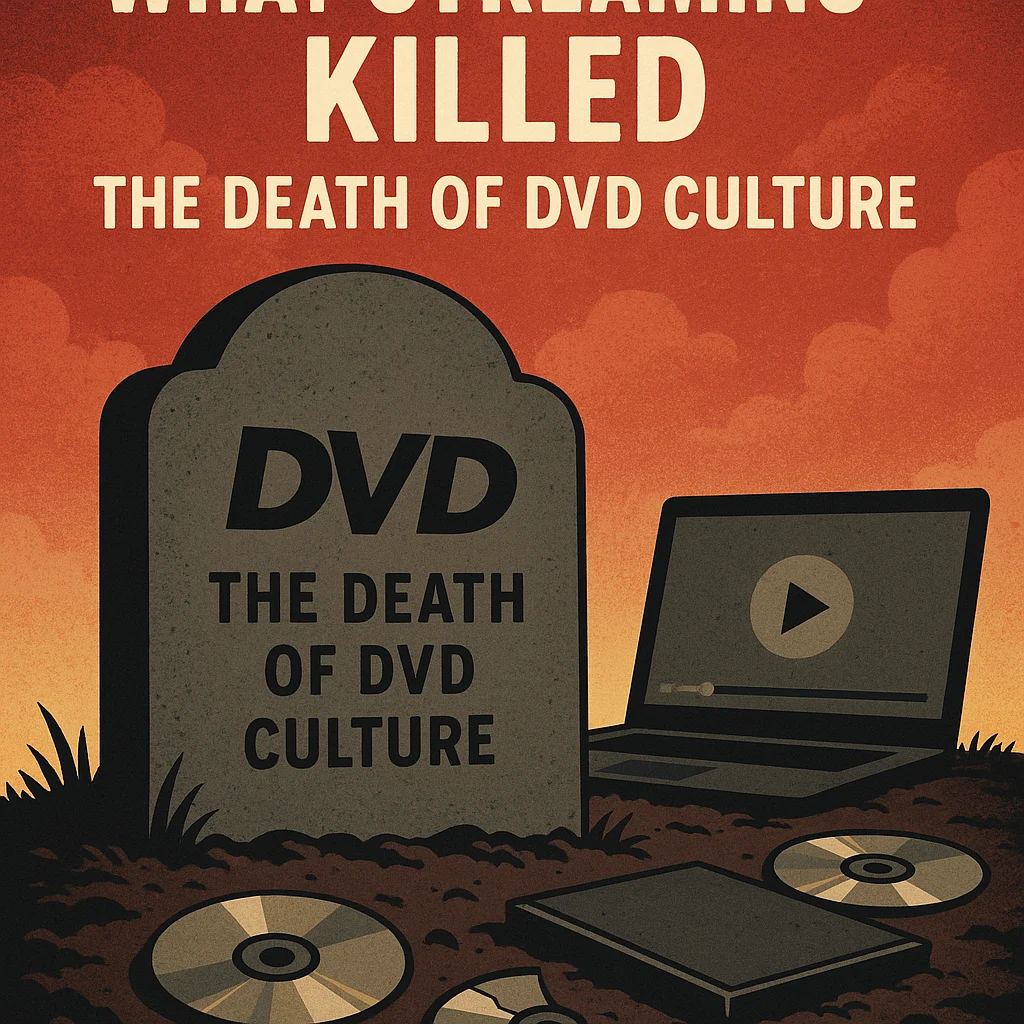
Having a DVD-lined shelf was a mark of prestige in the early 2000s. Individuals lent copies to friends like priceless heirlooms and proudly displayed their collections, which were meticulously alphabetized or arranged by genre. However, that time is over. Streaming services are now the norm. Originally a DVD rental business, Netflix made the switch to digital content delivery and hasn't looked back. DVD aisles in stores are all but extinct these days, and DVD players collect dust.
This goes beyond the advancement of technology. Not only has streaming altered the way we consume media, but it has completely destroyed a whole culture centered on connection, ownership, and discovery. Let's examine in more detail what streaming destroyed and what we lost in the process.
The Golden Age of DVDs
DVDs transformed home entertainment when they became widely available in the late 1990s. With features like deleted scenes, commentary tracks, menus with special features, and higher picture quality than VHS tapes, DVDs were more than just a means of watching movies; they were a window into the creative process.
Why DVDs Mattered:
-
Ownership and Permanence: You owned it after purchasing it. Neither a subscription nor a license existed. Your film wouldn't vanish in a flash.
-
Special Features: Behind-the-scenes videos, bloopers, director commentary, and other materials helped viewers relate to the material more deeply.
-
Collectability: Box sets, steelbook cases, and limited editions made movie ownership a pastime.
-
Gifting and Lending: A physical medium for sharing media and feelings was the DVD. A well-made film could be a very intimate statement.
The DVD era wasn't just about watching movies — it was about building a relationship with them.
Enter Streaming: The Ultimate Convenience
The ideal environment for streaming was created by the growth of broadband internet and gadgets like smart TVs. After the 2007 launch of Netflix, other streaming services like Hulu, Amazon Prime Video, Disney+, HBO Max, and numerous specialized services swiftly followed.
The offer was too good to refuse: watch anything at any time, without ever getting up from your couch or switching out discs. No need for physical storage, no playback being ruined by scratches, and no late fees.
Streaming won on convenience. But in doing so, it changed more than just the medium. It changed the entire media mindset.
What We Lost Along the Way
More than the DVD industry, streaming platforms destroyed cultural touchpoints, customs, and habits. What we've lost is as follows:
1. The Joy of Browsing Physical Collections
Do you recall spending half an hour in a Blockbuster attempting to make a weekend rental decision? Or browsing the bookshelves at home, deciding whether to read a thriller or a romantic comedy?
Digital catalogs are now driven by algorithms. Instead of browsing, you are presented with a pre-selected loop of suggested or trending titles. Most of the unexpected discovery and the randomness are gone.
2. Bonus Features and Commentaries
The demise of the special feature is among the biggest casualties of the streaming era. The majority of streaming services only include the essential parts of movies. No Easter eggs, no deleted scenes, no commentary.
This has reduced the educational value of film analysis, particularly for aspiring filmmakers, and separated fans from the magic that happens behind the scenes.
3. True Ownership
You owned a DVD when you bought it. You are renting access when you stream. Because of expired licensing agreements, a movie or television program may vanish from your queue overnight. Digital "purchases" on websites such as Amazon may also be deleted.
Streaming can never replace the sense of permanence that physical media provided.
4. Shared Experiences
Watching DVDs was frequently done in groups. They brought discs to parties, hosted movie nights, and exchanged recommendations with real handoffs. It's more solitary streaming. You click, observe, and proceed.
Although watch parties are beginning to return on platforms, they are not quite the same as getting together in person in front of a screen.
5. Video Rental Stores and Their Communities
More than just locations to rent movies, Blockbuster and independent local stores served as cultural and conversational centers. Honest recommendations were made by clerks. Cult classics and undiscovered treasures adorned the walls.
Today, algorithmic recommendations dominate. No personality. No passion. Just data.
The Cultural Shift: From Curators to Algorithms
The transition from human curation to algorithmic suggestion is arguably the largest cultural loss. When it came to DVDs, people had to rely on friends, critics, or their own instinct. Streaming reinforces viewing bubbles and limits diversity in discovery by limiting options to what is "trending" or "recommended for you" based on prior behavior.
Streaming caters to convenience and consumption, not reflection or appreciation.
The Environmental Argument: A Complicated Trade-Off
Digital streaming, according to some, is more ecologically friendly than making plastic discs and cases. There is less physical waste, it is true. Streaming isn't carbon neutral, though. It relies on enormous data centers that use a lot of electricity. Furthermore, the steady stream of fresh material promotes wasteful bingeing rather than attentive viewing.
Despite being physical, DVDs frequently lasted for decades. One disc could be archived, sold again, or shared. Streaming services, on the other hand, encourage ephemerality—here today, gone tomorrow.
The Collector's Renaissance (And Why It Matters)
It's interesting to note that while DVDs are becoming less popular in society, moviegoers and collectors are reviving them. Boutique labels that provide restored editions, exclusive interviews, and exquisite packaging—all of which are lost in the streaming era—such as Criterion Collection, Arrow Video, and Shout! Factory are flourishing.
These companies prove there’s still demand for depth, quality, and artistic preservation.
Having physical media is now more than just a way to pass the time; it's a way to rebel against the transience of the digital age.
What the Future Looks Like
We’re unlikely to see a full return to DVD dominance. But the death of DVD culture doesn’t have to mean the death of thoughtful, intentional media consumption.
There are ways to bring back some of what we’ve lost:
-
Support boutique physical media companies
-
Buy physical copies of your favorite movies and series
-
Host movie nights and discuss films in person
-
Resist binge-watching by engaging more deeply with individual titles
-
Demand better archival and feature-rich content from streaming platforms
The future might be digital, but that doesn’t mean it has to be shallow.
Conclusion
Streaming killed the DVD star. In its quest for ease and accessibility, it replaced ownership with access, discovery with recommendation engines, and artistry with commoditization.
But with every cultural shift comes reflection. As more people grow nostalgic for the rituals and rewards of DVD culture, we may yet see a balance — where convenience coexists with curation, and depth returns to how we experience films.
Until then, maybe dust off that DVD shelf and relive a time when movies were more than just something to watch — they were something to keep, study, and share.