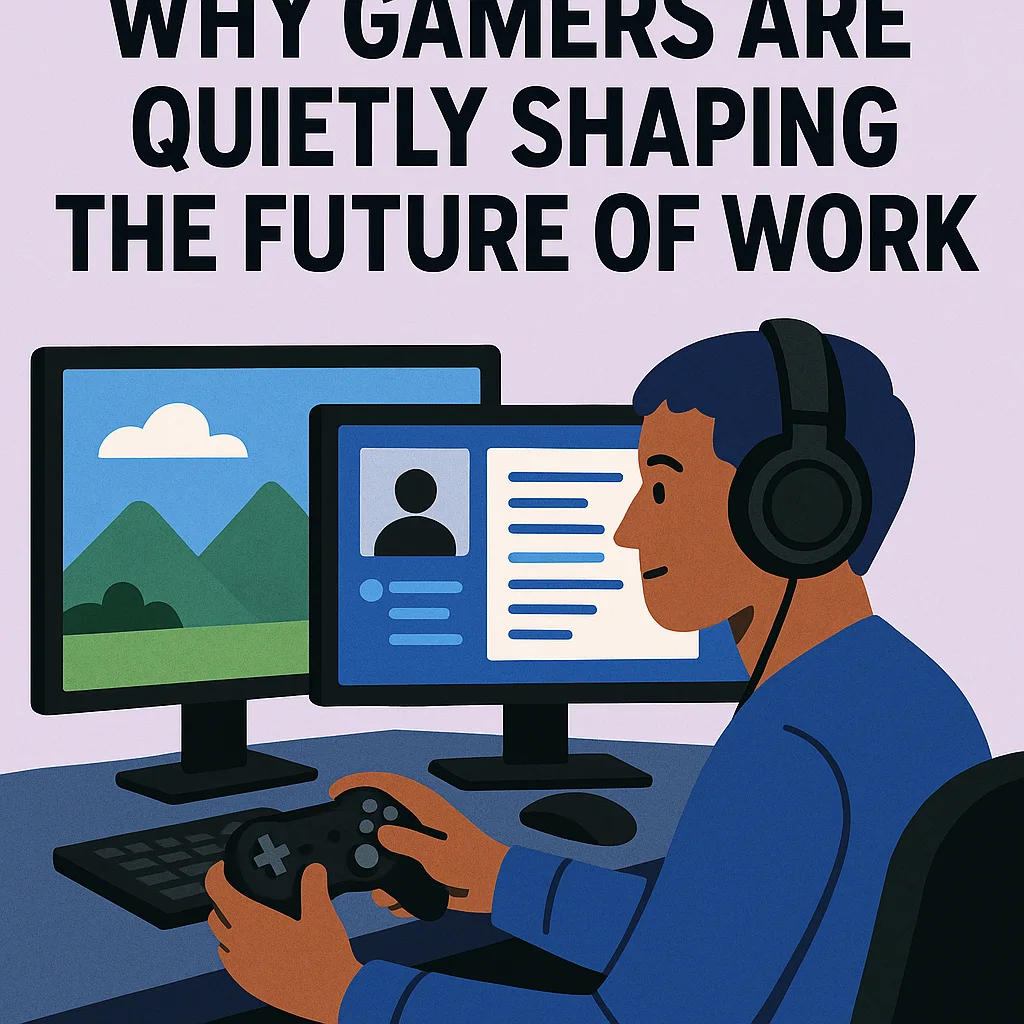
The workplace is changing more quickly than it has in the past. Ten years ago, no one could have predicted how industries would change due to remote work, digital collaboration, and AI-powered tools. One demographic, however, sticks out as remarkably prepared in this changing environment: gamers.
Gamers may actually have the very skills that will define the workforce of the future, despite their frequent dismissal as hobbyists or accusations of wasting time in front of screens. Few people are aware of how the skills acquired in virtual worlds are transferring into the workplace, from problem-solving and teamwork to flexibility and digital fluency.
Let's examine how gamers are subtly influencing the nature of work in the future and why businesses should take notice.
1. Gamers Excel in Problem-Solving Under Pressure
In essence, games—particularly competitive and strategy games—are organized problem-solving activities. Gamers are continuously faced with problems that need to be resolved fast, frequently under pressure.
-
In real-time strategy games Similar to StarCraft, players have to plan long-term strategies, manage resources, and adjust to threats that change quickly.
-
In battle royale games Making decisions quickly can make the difference between winning and losing in games like Fortnite or PlayerUnknown's Battlegrounds.
This has a direct impact on the job. The ability to assess issues, maintain composure under pressure, and successfully implement solutions is crucial in a world where businesses must contend with swift technological advancements and ongoing market disruption.
Gamers aren’t intimidated by complex problems—they’re energized by them.
2. Digital Collaboration is Second Nature
Collaboration on digital platforms such as Slack, Zoom, Microsoft Teams, and Asana is essential in today's workplace. For decades, gamers have been working together online.
-
Multiplayer environments such as World of Warcraft, which frequently involve hundreds of players collaborating across time zones and skill levels to achieve a common goal.
-
Esports teams Teach members how to match individual actions with group objectives by honing communication techniques down to split-second callouts.
It comes naturally to gamers to collaborate with a diverse group of teammates on virtual platforms. They were, in many respects, utilizing teamwork software before the majority of companies were even aware that it existed.
3. Adaptability is Hardwired Into Gaming Culture
One of the few things that is constant in both games and contemporary work is change. Game developers frequently add new mechanics, changing "metas," and changing challenges to their games. Gamers adjust with ease and frequently take pleasure in relearning and becoming proficient in new techniques.
Contrast this with the workplace, where employees may become overwhelmed by new tools and technologies. Gamers embrace change and even thrive on it. Instead of seeing it as something to be feared, they see it as a necessary component of the challenge.
This kind of thinking is essential as globalization, automation, and artificial intelligence disrupt industries. Organizations will be led by the employees who are most accustomed to change.
4. Gamers Build Resilience Through Failure
Games are made to fail. Every unsuccessful quest, every lost match, and every defeat is a teaching moment. Gamers view failure as feedback rather than as final.
In contrast, failure is frequently stigmatized in traditional work cultures. However, failure is unavoidable in today's fast-paced world, and the capacity to recover swiftly is crucial.
Because they have taught themselves to keep trying, gamers are resilient. They have created what psychologists refer to as a "growth mindset," which is the conviction that skills can be developed via work. In professions that require perseverance and creativity, that viewpoint is extremely beneficial.
5. Gamers Understand Systems Thinking
These days, games are intricate systems with many interconnected levels. Gamers need to understand how minor decisions have bigger repercussions.
For example:
-
Early in the game, investing in science rather than the military could make you vulnerable in the short term but powerful in the long run.
-
Players can create intricate machines and worlds in Minecraft by comprehending the interactions between various mechanics.
This systems-based method is similar to actual industries. The capacity to think holistically is crucial for tasks like supply chain management, workflow design, and market forecasting. For years, gamers have been honing this ability.
6. The Rise of the “Gamified” Workplace
Work is starting to resemble gaming more and more. Nowadays, businesses employ gamification strategies to boost motivation, productivity, and engagement. Challenges, achievement badges, point systems, and leaderboards all mimic game mechanics.
However, gamers not only comprehend these systems, they flourish within them. Rankings, rewards, and progress bars increase their motivation. Gamers have an advantage in workplaces where work is treated like a game.
As more businesses use gamified training, productivity, and performance tracking platforms, the gamer's innate understanding of these features will become even more important.
7. Gamers Are Innovators at Heart
A lot of games promote creativity and experimentation. In essence, sandbox environments such as Roblox, Kerbal Space Program, and Minecraft are innovation labs where users create, test, and improve new concepts.
Gamers often see opportunities that others miss, bringing this inventiveness to the workplace. They are at ease defying expectations, thinking creatively, and trying out novel solutions.
This way of thinking is ideal for the needs of a quickly evolving economy where maintaining competitiveness requires innovation.
8. Gamers Are Natural Leaders
There are many similarities between leadership in the workplace and leadership in games. Community organizers, esports captains, and guild leaders need to:
-
Delegate tasks
-
Keep morale high
-
Resolve conflicts
-
Inspire others to work toward long-term goals
These leadership traits are also highly regarded in business settings. Even though they may not be aware of it, many gamers have been honing leadership abilities that they can use in the workplace.
9. The Generational Shift: Gamers as the Workforce Majority
It is important to keep in mind that gaming is no longer a specialized pastime. The majority of today's young professionals grew up playing video games, and over 3 billion people play them globally.
The habits, abilities, and viewpoints of these generations will influence workplace culture as they join the workforce. The gamer mindset will essentially become the norm.
Employers who write off gaming as unimportant run the risk of missing out on a talent pool that is especially well-suited to the fast-paced, collaborative, digital-first world of modern work.
Conclusion: Gamers Are the Workforce of the Future
The idea that gamers are solitary, unproductive, and disinterested is no longer accurate. Today's gamers are adept leaders, innovators, problem solvers, and team players. They are adept at digital communication, flexible in the face of change, and resilient in the face of failure.
Instead of being a diversion, gaming has evolved into a practice for the very skills that the workplace of the future requires. Gamers will not only prosper as industries continue to change, but they will also influence the nature of the workplace.
Whether or not gamers are prepared for the workplace of the future is not the question. It concerns whether they are prepared for the workplace of the future.