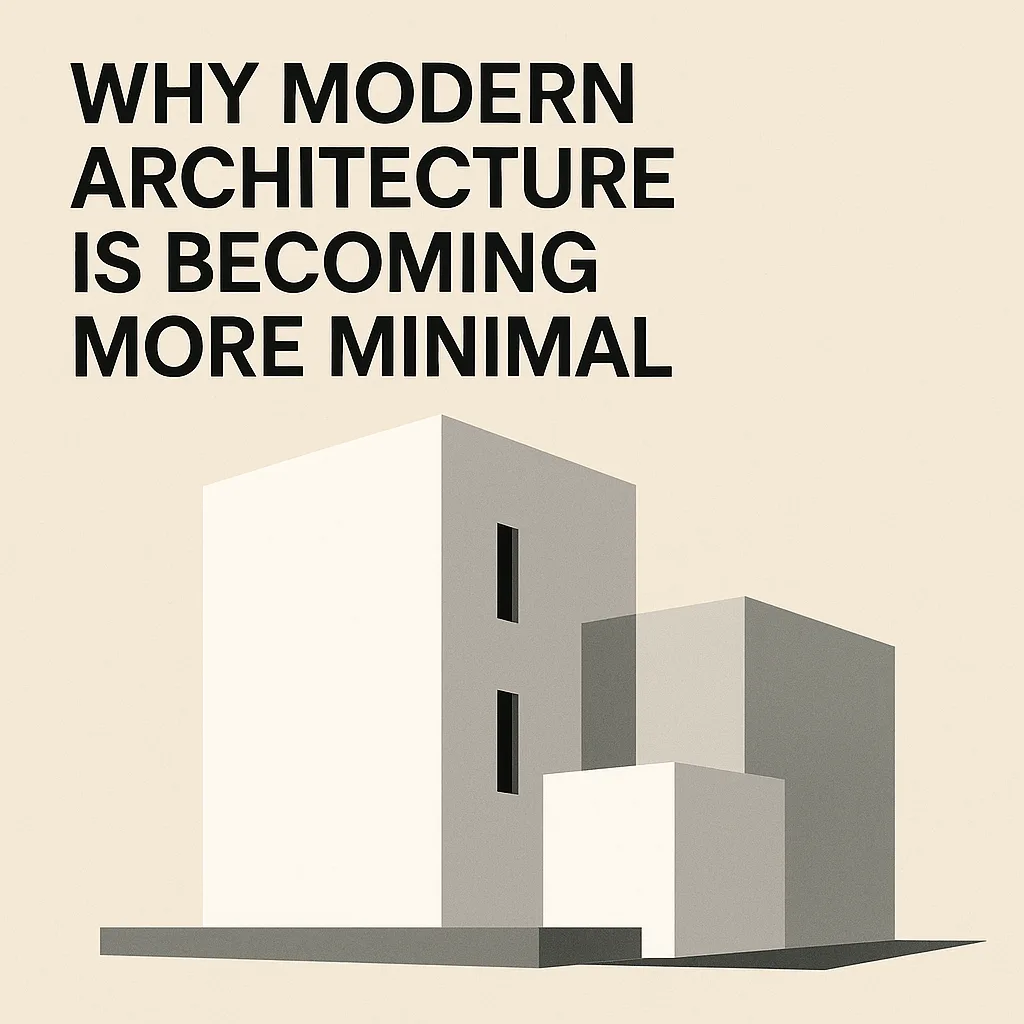
Why Modern Architecture Is Becoming More Minimal
Nowadays, minimalism is a strong design trend that can be seen in each developing metropolis. Homes are more open, buildings are shaped more neatly, and natural materials are used. Architecture has eschewed luxury in favor of a future focused on efficiency, significance, and simplicity.
Not only is minimalist architecture aesthetically pleasing, but it has evolved into a cultural reaction to the fast-paced, disorganized, and technologically advanced modern world.
What, therefore, is causing simple design to become more popular in architecture? Let's examine the various potent causes that underlie this trend.
A Philosophy of “Less But Better”
The main goal of minimalism is to eliminate extraneous components so that the important things stand out. It emphasizes easy beauty, clarity, and purpose.
Core principles of minimalist architecture
-
Simple geometric forms
-
Clean lines without heavy ornamentation
-
Clutter-free open spaces
-
High-quality materials with natural textures
-
“Function-first” design choices
-
Focus on light, shadows, and spatial flow
The goal is to eliminate distractions rather than personalities. People can breathe, think, and live comfortably when there is minimalism.
Digital Overload: Spaces Designed for Calm
Screens, alerts, and constant digital activity are all around us. Visual cacophony in our surroundings has an impact on mental health.
Minimal architecture acts like a physical detox:
-
Reduces stress through fewer visual distractions
-
Enhances peace, focus, and relaxation
-
Creates environments that allow the mind to reset
Instead of becoming places to store an infinite number of possessions, homes are evolving into havens.
People want places where they can briefly disconnect from technology.
Smaller Homes Demand Smarter Design
The best response to the ongoing reduction in accessible living space caused by urbanization is minimalism.
Why minimalist architecture suits small spaces
-
Open floor layouts make areas feel larger
-
Built-in storage reduces clutter
-
Multipurpose furniture helps functionality
-
Bright colors and natural light expand visual depth
Land is costly, and cities are overcrowded. Even a small house can feel contemporary, cozy, and functional thanks to minimalism.
Sustainability Is Shaping Architecture’s Future
Environmental considerations are now crucial when making design choices. Sustainability is inherently supported by minimalist architecture:
Eco-friendly advantages
-
Less resource consumption
-
Fewer unnecessary materials
-
Long-lasting structural simplicity
-
Efficient heating and cooling
-
Use of recycled or natural elements (wood, stone, bamboo, etc.)
Durability is prioritized over ornamentation in minimalist architecture. This change guarantees that spaces age nicely while also reducing waste.
Technology Enables Sleek, Modern Builds
Architects are able to achieve minimal aesthetics without sacrificing functionality thanks to modern construction systems and advanced smart technology.
Examples include:
-
Hidden lighting and automation systems
-
Smooth surfaces without visible hardware
-
Prefabricated components for seamless lines
-
Smart home features that eliminate clutter
-
Large windows supported by stronger materials
With the use of technology, places can have a minimalist exterior and a highly functioning inside.
Flexible Architecture for Modern Lifestyle Needs
Homes are no longer just homes — they are also:
-
Offices
-
Entertainment hubs
-
Gyms
-
Study zones
Minimal architecture supports multifunctional living with:
-
Movable walls
-
Modular designs
-
Neutral backdrops
-
Transformable furniture
-
Open spaces that adapt to change
A space can evolve over time without major renovations.
The design stays relevant — even as lifestyles shift.
Global Cultural Influence: Japan to Scandinavia
Architectural ideologies that emphasize nature and simplicity are the source of minimalism.
Influential inspirations
-
Japanese Zen design
-
Natural materials, harmony, emptiness
-
-
Scandinavian design
-
Light colors, functional comfort, nature connection
-
Minimal styles have become a universal representation of contemporary elegance as design culture expands throughout the globe.
Cost Efficiency with High Impact
Decorative features are expensive and need regular maintenance. These expenses are greatly decreased with minimal design:
-
Faster construction timelines
-
Lower labor and maintenance
-
Durable materials that require less repair
In addition to being aesthetically pleasing, minimalism is also economical. Homeowners and builders can get a contemporary appearance with optimal long-term value while saving money.
Mental Wellness Through Space
Emotions are influenced by architecture, a fact that is widely acknowledged today. Living in small places promotes healthier living conditions:
Emotional benefits of minimal architecture
-
Encourages mindfulness
-
Reduces visual stress and panic
-
Boosts productivity and clarity
-
Promotes better organization habits
-
Enhances natural creativity
Light, air, space, and simplicity contribute to mental well-being every day.
Interior & Exterior Working Together
The rigid division between inside and exterior is eliminated by minimal architecture. Harmony with nature is achieved through large glass walls, open patios, and natural materials.
Key exterior-interior integrations:
-
Expansive windows frame natural views
-
Indoor gardens or green courtyards
-
Sunlight as a functional design tool
-
Smooth transitions between rooms and outdoors
Being in touch with nature makes people happier, and minimalist design encourages this feeling.
Timeless Design That Lasts
Architecture that is overly ornamental quickly becomes outdated. In contrast, minimalism never really goes out of style.
Why it remains stylish longer:
-
Simplicity is universally appealing
-
Styles remain adaptable for decades
-
Spaces can be personalized without structure change
Long after fads expire, minimalist buildings continue to be valuable and relevant.
The Core Values Behind Minimal Architecture
Minimalist design aligns with modern society’s key values:
|
Modern Value |
Minimalist Response |
|---|---|
|
Sustainability |
Low material use + energy efficiency |
|
Flexibility |
Adaptable spaces + modular design |
|
Well-being |
Calm environments + natural light |
|
Budget-conscious choices |
Lower construction & maintenance |
|
Technological lifestyle |
Integrated smart features |
Minimalism is not a “look” — it’s a long-term strategy for living better.
Is Minimalism Cold or Empty? The Big Misunderstanding
Minimal architecture is perceived by some as being emotionless. However, when well structured, the opposite is true.
Minimalism allows:
-
Personal style to shine
-
Individual memories to become décor
-
Spaces to feel emotionally warm
It’s not about removing character —
It’s about making room for what matters most.
Conclusion: The Future Is Mindful and Minimal
Because society is changing, modern architecture has grown more minimalist. Our priorities have shifted. We desire:
-
Calm homes in a chaotic world
-
Sustainable living solutions
-
Smart and flexible spaces
-
Designs that balance beauty and purpose
-
Fewer belongings but deeper value
People's desire for a simpler, healthier, and more connected lifestyle is reflected in minimalism.
It is not a temporary trend…
It is the architecture of the future, built with mindfulness, intention, and clarity.